
İHALE DÜNYASI
İHALE DÜNYASI
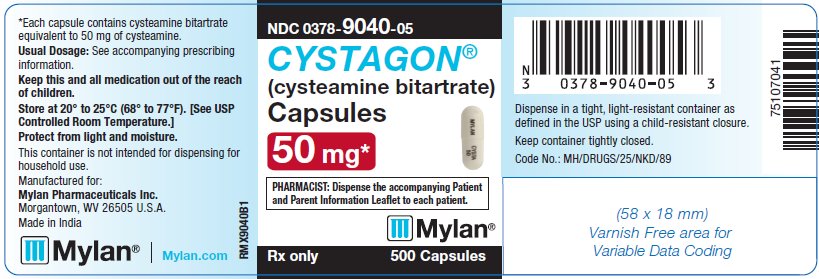
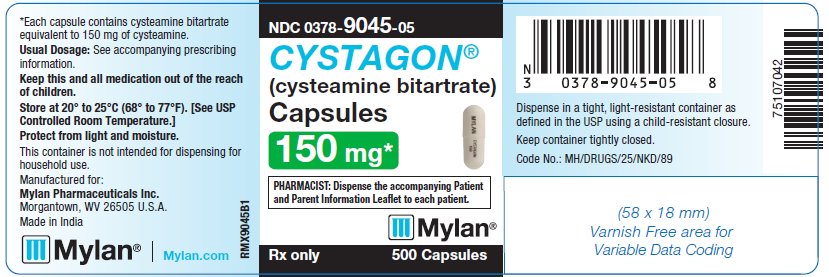
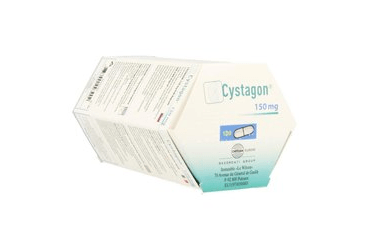
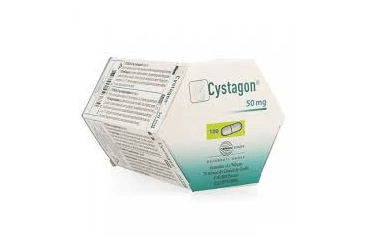
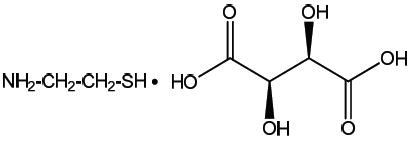
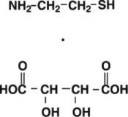
CYSTAGON (R) (cysteamine bitartrate) Capsules for oral administration, contain cysteamine bitartrate, a cystine depleting agent which lowers the cystine content of cells in patients with cystinosis, an inherited defect of lysosomal transport. CYSTAGON (R) is the bitartrate salt of cysteamine, an aminothiol, beta-mercaptoethylamine. Cysteamine bitartrate is a highly water soluble white powder with a molecular weight of 227 and the molecular formula C 2 H 7 NS * C 4 H 6 O 6 . It has the following chemical structure: Each CYSTAGON (R) Capsule contains 50 mg or 150 mg of cysteamine free base as cysteamine bitartrate. CYSTAGON (R) Capsules contain the following inactive ingredients: ammonium hydroxide, black iron oxide, colloidal silicon dioxide, croscarmellose sodium, gelatin, magnesium stearate, microcrystalline cellulose, pharmaceutical glaze, pregelatinized starch, propylene glycol, sodium lauryl sulfate and titanium dioxide. Cysteamine Bitartrate Structural Formula
CYSTAGON (R) is indicated for the management of nephropathic cystinosis in children and adults.
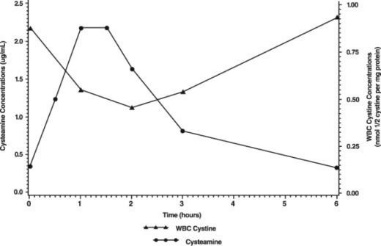
For the management of nephropathic cystinosis, cysteamine therapy should be initiated promptly once the diagnosis is confirmed (i.e., increased white cell cystine). New patients should be started on ¼ to 1/6 of the maintenance dose of CYSTAGON (R) . The dose should then be raised gradually over four to six weeks to avoid intolerance. The recommended CYSTAGON (R) maintenance dose for children up to age 12 years is 1.30 grams/m 2 /day of the free base, given in four divided doses. Intact CYSTAGON (R) capsules should not be administered to children under the age of approximately six years due to the risk of aspiration. CYSTAGON (R) capsules may be administered to children under the age of approximately six years by sprinkling the capsule contents over food. Patients over age 12 and over 110 pounds weight should receive 2.0 grams/day, divided four times daily. If a dose is missed, it should be taken as soon as possible. If it is within two hours of the next dose, skip the missed dose and go back to the regular dosing schedule. Do not double dose. When CYSTAGON (R) is well tolerated, the goal of therapy is to keep leukocyte cystine levels below 1 nmol/½ cystine/mg protein five to six hours following administration of CYSTAGON (R) . Patients with poorer tolerability still receive significant benefit if white cell cystine levels are below 2 nmol/½ cystine/mg protein. The CYSTAGON (R) dose can be increased to a maximum of 1.95 grams/m 2 /day to achieve this level. The dose of 1.95 grams/m 2 /day has been associated with an increased rate of withdrawal from treatment due to intolerance and an increased incidence of adverse events. Cystinotic patients taking cysteamine hydrochloride or phosphocysteamine solutions may be transferred to equimolar doses of CYSTAGON (R) capsules. The recommended maintenance dose of 1.30 grams/m 2 /day can be approximated by administering CYSTAGON (R) according to the following table, which takes surface area as well as weight into consideration. Weight in Pounds mg of Cysteamine Free Base Every 6 Hours 0 - 10 100 11 - 20 150 21 - 30 200 31 - 40 250 41 - 50 300 51 - 70 350 71 - 90 400 91 - 110 450 > 110 500 Patients over age 12 and over 110 pounds should receive 2.0 grams/day given in four divided doses as a starting maintenance dose. This dose should be reached after 4 to 6 weeks of incremental dosage increases as stated above. The dose should be raised if the leukocyte cystine level remains > 2 nmol/½ cystine/mg/protein. Leukocyte cystine measurements, taken 5 to 6 hours after dose administration, are recommended for new patients after the maintenance dose is achieved. Patients being transferred from cysteamine hydrochloride or phosphocysteamine solutions to capsules should have their white cell cystine levels measured in 2 weeks, and thereafter every 3 months to assess optimal dosage as described above. If CYSTAGON (R) is poorly tolerated initially due to gastrointestinal tract symptoms or transient skin rashes, therapy should be temporarily stopped, then re-instituted at a lower dose and gradually increased to the proper dose.
CYSTAGON (R) is contraindicated in patients who have developed hypersensitivity to it or to cysteamine or penicillamine.
In three clinical trials, cysteamine or phosphocysteamine have been administered to 246 children with cystinosis. Causality of side effects is sometimes difficult to determine because adverse effects may result from the underlying disease. The most frequent adverse reactions seen involve the gastrointestinal and central nervous systems. These are especially prominent at the initiation of cysteamine therapy. Temporarily suspending treatment, then gradual re-introduction may be effective in improving tolerance. Adverse reactions were not collected systematically in the NCCS, but were often listed by investigators. The following rates may therefore be underestimated. The most common events (> 5%) were vomiting 35%, anorexia 31%, fever 22%, diarrhea 16%, lethargy 11%, and rash 7%. Less common adverse events are: Body as a whole: Dehydration. Cardiovascular: Hypertension. Digestive: Nausea, bad breath, abdominal pain, dyspepsia, constipation, gastroenteritis, duodenitis, gastrointestinal ulceration and bleeding. Central Nervous System: Somnolence, encephalopathy, headache, seizures, ataxia, confusion, tremor, hyperkinesia, decreasing hearing, dizziness, jitteriness. Psychiatric: Nervousness, abnormal thinking, depression, emotional lability, hallucinations, nightmares. Integumentary: Urticaria. Urogenital: Interstitial nephritis, renal failure (see WARNINGS ). Clinical Laboratory: Abnormal liver function, anemia, leukopenia. Adverse reactions or intolerance leading to cessation of treatment occurred in 8% of patients in the U.S. Studies. Withdrawals due to intolerance, vomiting associated with medication, anorexia, lethargy, and fever appeared dose related, occurring more frequently in those patients receiving 1.95 grams/m 2 /day as compared to 1.30 grams/m 2 /day. Dose in Grams/m 2 /day 1.30 ( n = 42 ) % 1.95 ( n = 51 ) % Vomiting Considered Related to Medicine 31 67 Anorexia 33 51 Lethargy 17 27 Diarrhea 31 31 Fever 28 45 Sudden deaths have been reported in this disease state. Post-marketing surveillance Benign intracranial hypertension (or pseudotumor cerebri; PTC) with papilledema; skin lesions, molluscoid pseudotumors, skin striae, skin fragility; joint hyperextension, leg pain, genu valgum, osteopenia, compression fracture and scoliosis have been reported (see PRECAUTIONS ).
If a skin rash develops, CYSTAGON (R) should be withheld until the rash clears. CYSTAGON (R) may be restarted at a lower dose under close supervision, then slowly titrated to the therapeutic dose. If a severe skin rash develops such as erythema multiforme bullosa or toxic epidermal necrolysis, CYSTAGON (R) should not be readministered. CNS symptoms such as seizures, lethargy, somnolence, depression, and encephalopathy have been associated with cysteamine. If CNS symptoms develop, the patient should be carefully evaluated and the dose adjusted as necessary. Neurological complications have been described in some cystinotic patients not on cysteamine treatment. This may be a manifestation of the primary disorder. Patients should not engage in hazardous activities until the effects of CYSTAGON (R) on mental performance are known. Gastrointestinal ulceration and bleeding have been reported in patients receiving cysteamine bitartrate. Physicians should remain alert for signs of ulceration and bleeding and should inform patients and/or guardians about the signs and symptoms of serious G.I. toxicity and what steps to take if they occur. Post-marketing reports include one report of interstitial nephritis with early renal failure. A causal relationship between this event and cysteamine bitartrate therapy has not been established.
None have been described. CYSTAGON (R) can be administered with electrolyte and mineral replacements necessary for management of the Fanconi Syndrome as well as vitamin D and thyroid hormone.