İHALE DÜNYASI
İHALE DÜNYASI
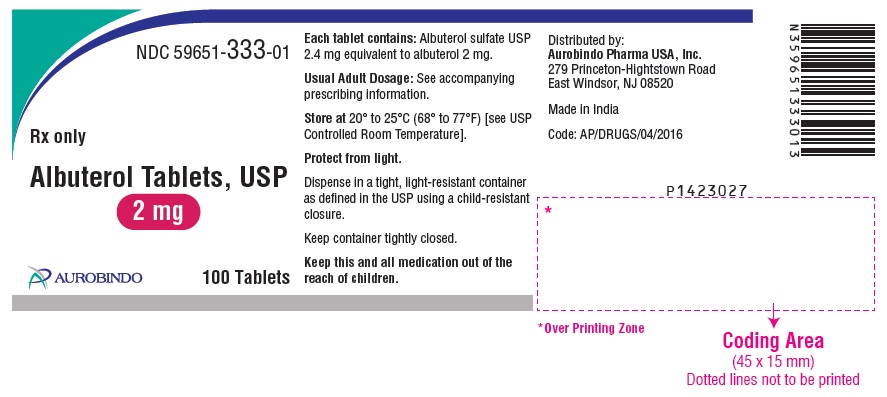
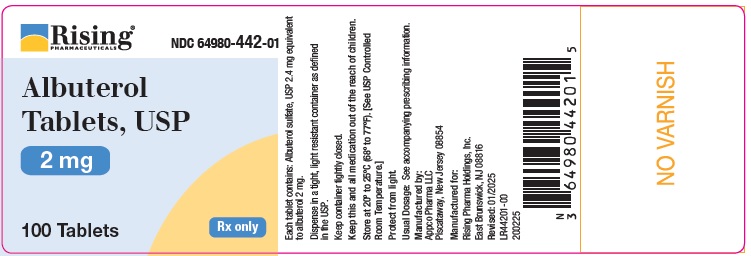
Albuterol Tablets, USP contain albuterol sulfate, USP, the racemic form of albuterol and a relatively selective beta 2 -adrenergic bronchodilator. Albuterol sulfate has the chemical name 4-hydroxy- 3-hydroxymethyl-?-[(tert-butylamino) methyl]benzyl alcohol, sulfate and the following structural formula: The molecular weight of albuterol sulfate is 576.70, and the molecular formula is (C 13 H 21 N O 3 ) 2 * H 2 S O 4 . Albuterol sulfate, USP is a white or practically white powder, freely soluble in water and slightly soluble in alcohol, in chloroform, and ether. Each Albuterol tablet for oral administration contains 2 or 4 mg of albuterol as 2.4 mg or 4.8 mg of albuterol sulfate, USP respectively. The inactive ingredients for Albuterol tablets, 2 mg and 4 mg include: co-processed starch , lactose hydrate , magnesium stearate, partially pregelatinized maize starch and sodium lauryl sulfate. structure
INDICATIONS & USAGE Albuterol tablets are indicated for the relief of bronchospasm in adults and children 6 years of age and older with reversible obstructive airway disease.
DOSAGE & ADMINISTRATION The following dosages of Albuterol tablets are expressed in terms of albuterol base. Usual Dosage Pediatric Patients 6 to 12 Years of Age: For pediatric patients 6 to 12 years of age, the usual dosage is 2 mg three or four times a day. Adults and Pediatric Patients Over 12 Years of Age: For adults and pediatric patients over 12 years of age, the usual starting dosage is 2 or 4 mg three or four times a day. Dosage Adjustment Pediatric Patients 6 to 12 Years of Age Who Fail to Respond to the Initial Starting Dosage of 2 mg Four Times a Day : For pediatric patients from 6 to 12 years of age who fail to respondto the initial starting dosage of 2 mg four times a day, the dosage may be cautiously increasedstepwise, but not to exceed 24 mg/day (given in divided doses). Adults and Pediatric Patients Over 12 Years of Age: For adults and pediatric patients over 12 years of age, a dosage above 4 mg four times a day should be used only when the patient fails to respond to lower dose. The dosage should be cautiously increased stepwise up to a maximum of 8 mg four times a day as tolerated if a favorable response does not occur with the 4 mg initial dosage. Elderly Patients and Those Sensitive to Beta-adrenergic Stimulators : An initial dosage of 2 mg three or four times a day is recommended for elderly patients and for those with a history of unusual sensitivity to beta-adrenergic stimulators. If adequate bronchodilation is not obtained, dosage may be increased gradually as tolerated to as much as 8 mg three or four times a day. The total daily dose should not exceed 24 mg per day in pediatric patients from 6 to 12 years of age and 32 mg in adults and pediatric patients over 12 years of age.
Albuterol tablets are contraindicated in patients with a history of hypersensitivity to albuterol, or any of their components.
The adverse reactions to albuterol are similar in nature to those of other sympathomimetic agents. Albuterol Tablets Adverse Experience Incidence (% of patients) in Adults and Children 6 Years of Age and Older Adverse Event Percent Incidence Central nervous system Nervousness 20 Tremor 20 Headache 7 Dizziness 2 Weakness 2 Sleeplessness 2 Irritability <1 Drowsiness <1 Restlessness <1 Cardiovascular Palpitations 5 Tachycardia 5 Flushing <1 Chest discomfort <1 Musculoskeletal Muscle cramps 3 Gastrointestinal Nausea 2 Genitourinary Difficulty in micturition <1 Cases of urticaria, angioedema, rash, bronchospasm, oropharyngeal edema and arrhythmias (including atrial fibrillation, supraventricular tachycardia, and extraystoles) have been reported after the use of Albuterol tablets. In addition to those adverse reactions reported above, albuterol, like other sympathomimetic agents, can cause adverse reactions such as angina, central nervous system stimulation, drying or irritation of the oropharynx, hypertension, unusual taste, and vertigo. The reactions are generally transient in nature, and it is usually not necessary to discontinue treatment with Albuterol tablets. In selected cases, however, dosage may be reduced temporarily; after the reaction has subsided, dosage should be increased in small increments to the optimal dosage.
Paradoxical Bronchospasm Albuterol tablets can produce paradoxical bronchospasm, which may be life threatening. If paradoxical bronchospasm occurs, Albuterol tablets should be discontinued immediately and alternative therapy instituted. Deterioration of Asthma Asthma may deteriorate acutely over a period of hours, or chronically over several days or longer. If the patient needs more doses of Albuterol tablets than usual, this may be a marker of destabilization of asthma and requires reevaluation of the patient and the treatment regimen, giving special consideration to the possible need for anti-inflammatory treatment, e.g., corticosteroids. Use of Anti-Inflammatory Agents The use of beta-adrenergic agonist bronchodilators alone may not be adequate to control asthma in many patients. Early consideration should be given to adding anti-inflammatory agents, e.g., corticosteroids. Cardiovascular Effects Albuterol tablets, like all other beta-adrenergic agonists, can produce a clinically significant cardiovascular effect in some patients as measured by pulse rate, blood pressure, and/or symptoms. Although such effects are uncommon after administration of Albuterol tablets at recommended doses, if they occur, the drug may need to be discontinued. In addition, beta-agonists have been reported to produce electrocardiogram (ECG) changes, such as flattening of the T wave, prolongation of the QTc interval, and ST segment depression. The clinical significance of these findings is unknown. Therefore, Albuterol tablets, like all sympathomimetic amines, should be used with caution in patients with cardiovascular disorders, especially coronary insufficiency, cardiac arrhythmias, and hypertension. Immediate Hypersensitivity Reactions Immediate hypersensitivity reactions may occur after administration of albuterol, as demonstrated by rare cases of urticaria, angioedema, rash, bronchospasm, anaphylaxis and oropharyngeal edema. Rarely, erythema multiforme and Stevens-Johnson syndrome have been associated with the administration of oral albuterol sulfate in children.