
İHALE DÜNYASI
İHALE DÜNYASI
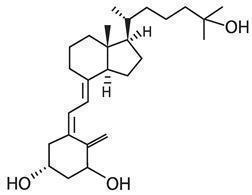
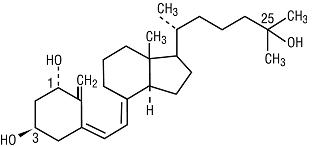
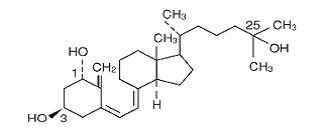
Calcitriol Ointment, 3 mcg/g is a vitamin D analog intended for topical application to the skin. The chemical name of the active ingredient is (5Z,7E)-9, 10-secocholesta-5,7,10(19)-triene-1?, 3?,25-triol. The structural formula is: Calcitriol is a white or almost white crystalline solid. It is practically insoluble in water, soluble in alcohol and in fatty oils. The molecular formula is C 27 H 44 O 3 , and the molecular weight is 416.64. Calcitriol Ointment is a translucent ointment containing 3 mcg/g (0.0003% w/w) of calcitriol, packaged in aluminum tubes with screw caps. Other components of the ointment are mineral oil, dl-?-tocopherol, and white petrolatum. chem-stuct
Calcitriol Ointment is a vitamin D analog indicated for the topical treatment of mild to moderate plaque psoriasis in adults and pediatric patients 2 years and older ( 1.1 ) Limitations of Use The safety and effectiveness of Calcitriol Ointment in patients with known or suspected disorders of calcium metabolism have not been evaluated. ( 1.2 ) 1.1 Indication Calcitriol Ointment is indicated for the topical treatment of mild to moderate plaque psoriasis in adults and pediatric patients 2 years and older. 1.2 Limitations of Use The safety and effectiveness of Calcitriol Ointment in patients with known or suspected disorders of calcium metabolism have not been evaluated.
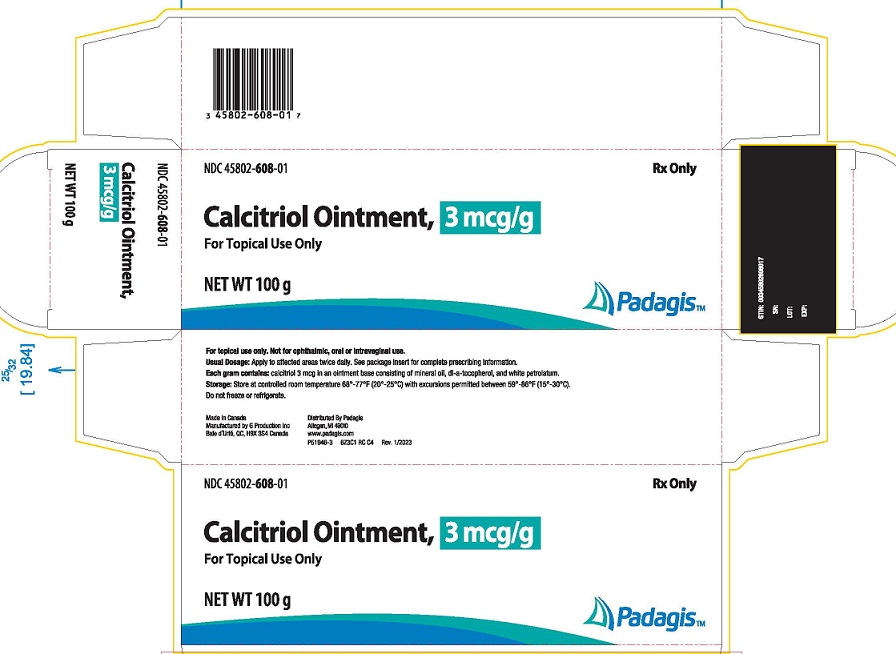
Apply Calcitriol Ointment to affected areas twice daily, morning and evening. Adults: the maximum weekly dose should not exceed 200 grams. Pediatrics: 2 to 6 years of age: the maximum weekly dose should not exceed 100 grams. 7 years of age and older: the maximum weekly dose should not exceed 200 grams Calcitriol Ointment should not be applied to the eyes, lips, or facial skin. Calcitriol Ointment is for topical use only. Calcitriol Ointment is not for oral, ophthalmic or intravaginal use. Apply Calcitriol Ointment to affected areas of the body twice daily ( 2 ). Adults: The maximum weekly dose should not exceed 200 grams. ( 2 ) Pediatrics: 2 to 6 years of age: the maximum weekly dose should not exceed 100 grams. ( 2 ) 7 years of age and older: the maximum weekly dose should not exceed 200 grams. ( 2 ) For topical use only. ( 2 ) Not for oral, ophthalmic, or intravaginal use. ( 2 )
None None ( 4 )
Most common adverse reactions (incidence > 3%) are hypercalcemia, hypercalciuria, and skin discomfort. ( 6.1 ) To report SUSPECTED ADVERSE REACTIONS, contact Padagis at 1-866-634-9120 or FDA at 1-800-FDA-1088 or www.fda.gov/medwatch . 6.1 Clinical Trials Experience Because clinical studies are conducted under widely varying conditions, adverse reaction rates observed in clinical studies of a drug cannot be directly compared to rates in the clinical studies of another drug and may not reflect the rates observed in practice. Calcitriol Ointment was studied in two vehicle-controlled trials and one open label trial, resulting in 743 subjects exposed to Calcitriol Ointment. Table 1 describes adverse events in subjects treated with Calcitriol Ointment twice daily for 8 weeks. The population included subjects ages 13 to 87 years, males (284) and females (135), Caucasians (372) and non-Caucasians (47); with mild (105) to moderate (313) chronic plaque psoriasis. Table 1. Selected Adverse Events Occurring in at least 1% of Subjects in the Two Pooled Vehicle-Controlled Trials Calcitriol Ointment (n=419) Vehicle Ointment (n=420) Discomfort Skin 3% 2% Pruritus 1% 1% Among subjects having laboratory monitoring, hypercalcemia was observed in 24% (18/74) of subjects exposed to active drug and in 16% (13/79) of subjects exposed to vehicle, however the elevation were less than 10% above the upper limit of normal [ see WARNINGS AND PRECAUTIONS ( 5.1 ) ] The open label study enrolled 324 subjects with psoriasis who were then treated for up to 52 weeks and included 239 subjects exposed for 6 months and 116 subjects exposed for one year. Adverse events reported at a rate of greater than or equal to 3% of subjects treated with Calcitriol Ointment were lab test abnormality (8%), urine abnormality (4%), psoriasis (4%), hypercalciuria (3%), and discomfort of skin (3%). Kidney stones were reported in 3 subjects and confirmed in two. 6.2 Postmarketing Experience The following adverse reactions have been identified during the world-wide post-approval use of Calcitriol Ointment: acute blistering dermatitis, erythema,and skin burning sensation. Because these reactions are reported voluntarily from a population of uncertain size, it is not always possible to reliably estimate their frequency or establish a causal relationship to drug exposure.
Effects on Calcium metabolism: Risk of hypercalcemia. If aberrations in parameters of calcium metabolism are noted discontinue Calcitriol Ointment until these normalize. Increased absorption may occur with occlusive use. ( 5.1 ) Calcitriol Ointment should be used with caution in patients receiving medications known to increase the serum calcium level, such as thiazide diuretics, and in patients receiving calcium supplements or high doses of vitamin D. ( 5.1 ) 5.1 Effects on Calcium Metabolism In controlled clinical trials hypercalcemia was observed in subjects exposed to Calcitriol Ointment. If aberrations in parameters of calcium metabolism occur, treatment should be discontinued until these parameters have normalized. The effects of Calcitriol Ointment on calcium metabolism following treatment durations greater than 52 weeks have not been evaluated. Increased absorption may occur with occlusive use. Calcitriol Ointment should be used with caution in patients receiving medications know to increase the serum calcium level, such as thiazide diuretics, and in patients receiving calcium supplements or high doses of vitamin D.