İHALE DÜNYASI
İHALE DÜNYASI
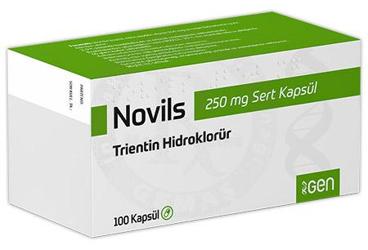
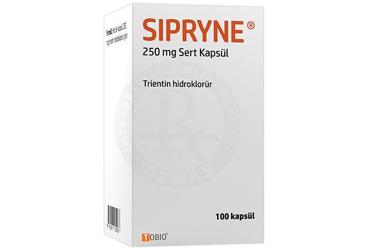
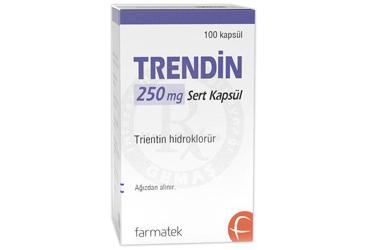
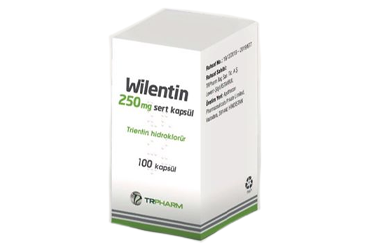
Trientine hydrochloride is N,N' -bis (2-aminoethyl)-1,2-ethanediamine dihydrochloride. It is a white to pale yellow crystalline hygroscopic powder. It is freely soluble in water, soluble in methanol, slightly soluble in ethanol, and insoluble in chloroform and ether. The empirical formula is C 6 H 18 N 4 *2HCl with a molecular weight of 219.2. The structural formula is: NH 2 (CH 2 ) 2 NH(CH 2 ) 2 NH(CH 2 ) 2 NH 2 *2HCI Trientine hydrochloride is a chelating compound for removal of excess copper from the body. Syprine (trientine hydrochloride) is available as 250 mg capsules for oral administration. Syprine capsules contain gelatin, iron oxides, stearic acid, and titanium dioxide as inactive ingredients.
Syprine is indicated in the treatment of patients with Wilson's disease who are intolerant of penicillamine. Clinical experience with Syprine is limited and alternate dosing regimens have not been well-characterized; all endpoints in determining an individual patient's dose have not been well defined. Syprine and penicillamine cannot be considered interchangeable. Syprine should be used when continued treatment with penicillamine is no longer possible because of intolerable or life endangering side effects. Unlike penicillamine, Syprine is not recommended in cystinuria or rheumatoid arthritis. The absence of a sulfhydryl moiety renders it incapable of binding cystine and, therefore, it is of no use in cystinuria. In 15 patients with rheumatoid arthritis, Syprine was reported not to be effective in improving any clinical or biochemical parameter after 12 weeks of treatment. Syprine is not indicated for treatment of biliary cirrhosis.
Systemic evaluation of dose and/or interval between dose has not been done. However, on limited clinical experience, the recommended initial dose of Syprine is 500-750 mg/day for pediatric patients and 750-1250 mg/day for adults given in divided doses two, three or four times daily. This may be increased to a maximum of 2000 mg/day for adults or 1500 mg/day for pediatric patients age 12 or under. The daily dose of Syprine should be increased only when the clinical response is not adequate or the concentration of free serum copper is persistently above 20 mcg/dL. Optimal long-term maintenance dosage should be determined at 6-to 12-month intervals (see PRECAUTIONS, Laboratory Tests ). It is important that Syprine be given on an empty stomach, at least one hour before meals or two hours after meals and at least one hour apart from any other drug, food, or milk. The capsules should be swallowed whole with water and should not be opened or chewed.
Hypersensitivity to this product.
Clinical experience with Syprine has been limited. The following adverse reactions have been reported in a clinical study in patients with Wilson's disease who were on therapy with trientine hydrochloride: iron deficiency, systemic lupus erythematosus (see CLINICAL PHARMACOLOGY ). In addition, the following adverse reactions have been reported in marketed use: dystonia, muscular spasm, myasthenia gravis. Syprine is not indicated for treatment of biliary cirrhosis, but in one study of 4 patients treated with trientine hydrochloride for primary biliary cirrhosis, the following adverse reactions were reported: heartburn; epigastric pain and tenderness; thickening, fissuring and flaking of the skin; hypochromic microcytic anemia; acute gastritis; aphthoid ulcers; abdominal pain; melena; anorexia; malaise; cramps; muscle pain; weakness; rhabdomyolysis. A causal relationship of these reactions to drug therapy could not be rejected or established. To report SUSPECTED ADVERSE REACTIONS, contact Bausch Health US, LLC at 1-800-321-4576 or FDA at 1-800-FDA-1088 or www.fda.gov/medwatch .
Patient experience with trientine hydrochloride is limited (see CLINICAL PHARMACOLOGY ). Patients receiving Syprine should remain under regular medical supervision throughout the period of drug administration. Patients (especially women) should be closely monitored for evidence of iron deficiency anemia.
In general, mineral supplements should not be given since they may block the absorption of Syprine. However, iron deficiency may develop, especially in children and menstruating or pregnant women, or as a result of the low copper diet recommended for Wilson's disease. If necessary, iron may be given in short courses, but since iron and Syprine each inhibit absorption of the other, two hours should elapse between administration of Syprine and iron. It is important that Syprine be taken on an empty stomach, at least one hour before meals or two hours after meals and at least one hour apart from any other drug, food, or milk. This permits maximum absorption and reduces the likelihood of inactivation of the drug by metal binding in the gastrointestinal tract.