
İHALE DÜNYASI
İHALE DÜNYASI
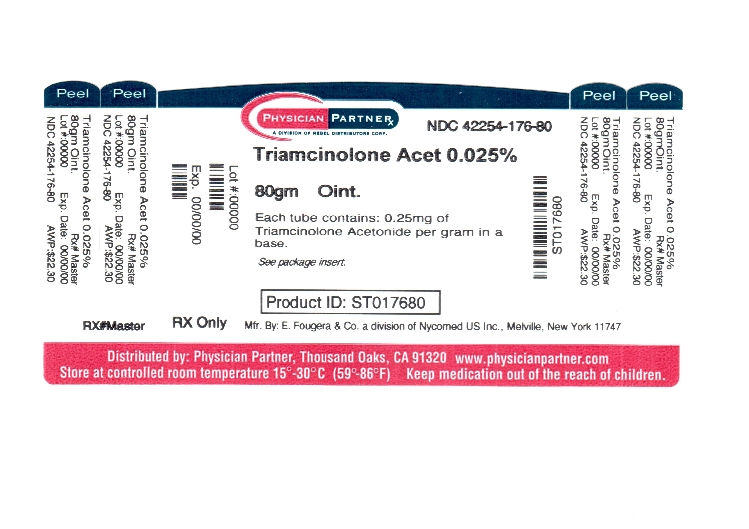
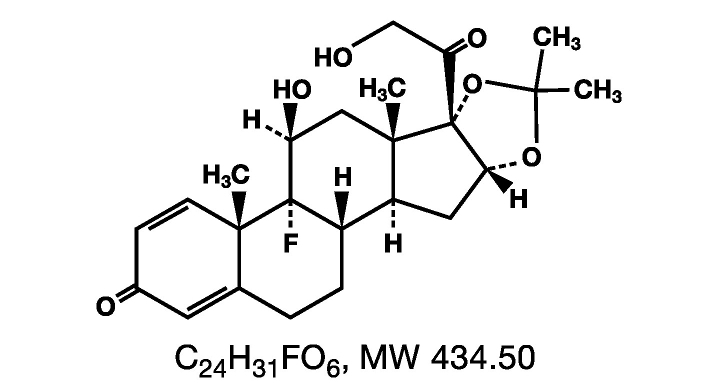
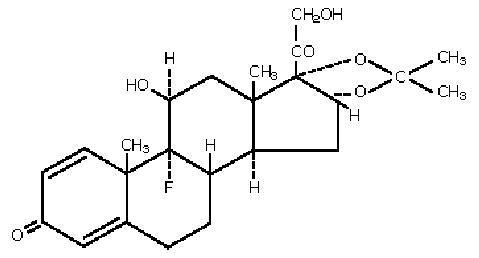
The topical corticosteroids constitute a class of primarily synthetic steroids used as anti-inflammatory and anti-pruritic agents. Triamcinolone Acetonide Ointment USP contains Triamcinolone Acetonide [Pregna-1,4-diene-3,20-dione,9-fluoro-11,21-dihydroxy-16,17-[(1-methylethylidene)bis-(oxy)]-, (11?,16?)-], with the molecular formula C 24 H 31 FO 6 and molecular weight 434.50. CAS 76-25-5. Triamcinolone Acetonide Ointment USP, 0.025% contains: 0.25 mg of triamcinolone acetonide per gram in a base containing white petrolatum and mineral oil. Triamcinolone Acetonide Ointment USP, 0.1% contains: 1 mg triamcinolone acetonide per gram in a base containing white petrolatum and mineral oil. Molecular Formula
Topical corticosteroids are indicated for the relief of the inflammatory and pruritic manifestations of corticosteroid-responsive dermatoses.
Apply to the affected area as a thin film as follows: Triamcinolone Acetonide Ointment USP, 0.025% two to four times daily; Triamcinolone Acetonide Ointment USP, 0.1% two or three times daily depending on the severity of the condition. Occlusive dressings may be used for the management of psoriasis or recalcitrant conditions. If an infection develops, the use of occlusive dressings should be discontinued and appropriate antimicrobial therapy instituted.
Topical corticosteroids are contraindicated in those patients with a history of hypersensitivity to any of the components of the preparation.
The following local adverse reactions are reported infrequently with topical corticosteroids, but may occur more frequently with the use of occlusive dressings. These reactions are listed in an approximate decreasing order of occurrence: burning, itching, irritation, dryness, folliculitis, hypertrichosis, acneiform eruptions, hypopigmentation, perioral dermatitis, allergic contact dermatitis, maceration of the skin, secondary infection, skin atrophy, striae and miliaria.
BOXED WARNING: Triamcinolone Acetonide Ointment USP, 0.025% 80 gram tubes NDC 42254-176-80