
İHALE DÜNYASI
İHALE DÜNYASI
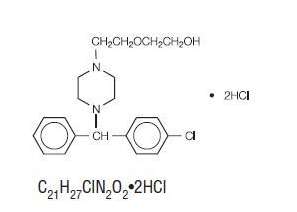
Hydroxyzine hydrochloride is designated chemically as (±)-2-[2-[4-( p - Chloro-?-phenylbenzyl)-1-piperazinyl]ethoxy]ethanol dihydrochloride. M.W. 447.83 Hydroxyzine hydrochloride occurs as a white, odorless powder which is very soluble in water. Hydroxyzine Hydrochloride Tablets USP, 10 mg, 25 mg and 50 mg contain the following inactive ingredients: anhydrous lactose, colloidal silicon dioxide, croscarmellose sodium, FD&C Yellow No. 6, hypromellose, magnesium stearate, microcrystalline cellulose, polyethylene glycol, polysorbate 80 and titanium dioxide. Hydroxyzine Hydrochloride Tablets USP, 25 mg and 50 mg also contain D&C Yellow No. 10 and FD&C Blue No. 2. Hydroxyzine Hydrochloride Chemical Structure
For symptomatic relief of anxiety and tension associated with psychoneurosis and as an adjunct in organic disease states in which anxiety is manifested. Useful in the management of pruritus due to allergic conditions such as chronic urticaria and atopic and contact dermatoses, and in histaminemediated pruritus. As a sedative when used as premedication and following general anesthesia, hydroxyzine may potentiate meperidine and barbiturates , so their use in pre-anesthetic adjunctive therapy should be modified on an individual basis. Atropine and other belladonna alkaloids are not affected by the drug. Hydroxyzine is not known to interfere with the action of digitalis in any way and it may be used concurrently with this agent. The effectiveness of hydroxyzine as an antianxiety agent for long term use, that is more than 4 months, has not been assessed by systematic clinical studies. The physician should reassess periodically the usefulness of the drug for the individual patient.
For symptomatic relief of anxiety and tension associated with psychoneurosis and as an adjunct in organic disease states in which anxiety is manifested: in adults, 50-100 mg q.i.d.; children under 6 years, 50 mg daily in divided doses and over 6 years, 50-100 mg daily in divided doses. For use in the management of pruritus due to allergic conditions such as chronic urticaria and atopic and contact dermatoses, and in histamine-mediated pruritus: in adults, 25 mg t.i.d. or q.i.d.; children under 6 years, 50 mg daily in divided doses and over 6 years, 50-100 mg daily in divided doses. As a sedative when used as a premedication and following general anesthesia: 50-100 mg in adults, and 0.6 mg/kg of body weight in children. When treatment is initiated by the intramuscular route of administration, subsequent doses may be administered orally. As with all medications, the dosage should be adjusted according to the patient's response to therapy.
Hydroxyzine, when administered to the pregnant mouse, rat, and rabbit, induced fetal abnormalities in the rat and mouse at doses substantially above the human therapeutic range. Clinical data in human beings are inadequate to establish safety in early pregnancy. Until such data are available, hydroxyzine is contraindicated in early pregnancy. Hydroxyzine is contraindicated for patients who have shown a previous hypersensitivity to it.
Side effects reported with the administration of hydroxyzine hydrochloride are usually mild and transitory in nature. Anticholinergic: Dry mouth. Central Nervous System: Drowsiness is usually transitory and may disappear in a few days of continued therapy or upon reduction of the dose. Involuntary motor activity including rare instances of tremor and convulsions have been reported, usually with doses considerably higher than those recommended. Clinically significant respiratory depression has not been reported at recommended doses.