
İHALE DÜNYASI
İHALE DÜNYASI
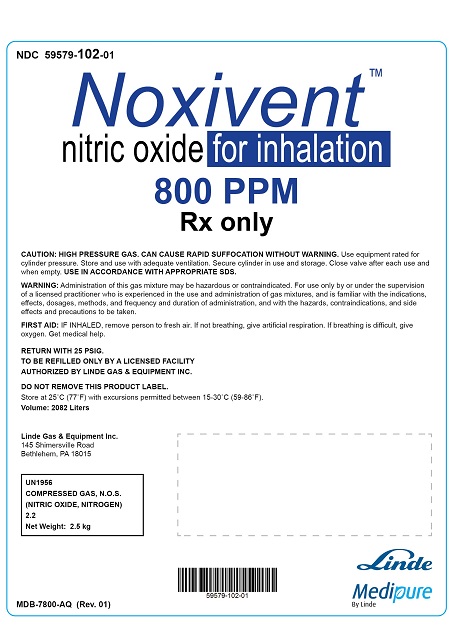
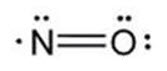
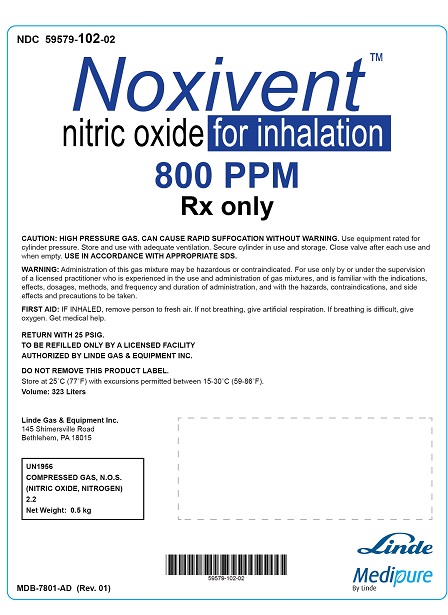
NoxiventTM (nitric oxide gas) is a drug administered by inhalation. Nitric oxide, the active substance in NoxiventTM, is a pulmonary vasodilator. NoxiventTM is a gaseous blend of nitric oxide and nitrogen (0.08% and 99.92%, respectively for 800 ppm; 0.01% and 99.99%, respectively for 100 ppm). NoxiventTM is supplied in aluminum cylinders as a compressed gas under high pressure (2000 pounds per square inch gauge [psig]). The structural formula of nitric oxide (NO) is shown below: formula
NoxiventTM is a vasodilator indicated to improve oxygenation and reduce the need for extracorporeal membrane oxygenation in term and near-term (>34 weeks gestation) neonates with hypoxic respiratory failure associated with clinical or echocardiographic evidence of pulmonary hypertension in conjunction with ventilatory support and other appropriate agents. | 1. INDICATIONS AND USAGE NoxiventTM is indicated to improve oxygenation and reduce the need for extracorporeal membrane oxygenation in term and near-term (>34 weeks gestation) neonates with hypoxic respiratory failure associated with clinical or echocardiographic evidence of pulmonary hypertension in conjunction with ventilatory support and other appropriate agents.
The recommended dose is 20 ppm, maintained for up to 14 days or until the underlying oxygen desaturation has resolved ( 2.1 ). Doses greater than 20 ppm are not recommended ( 2.1 , 5.2 ) Administration: * Avoid abrupt discontinuation ( 2.2 , 5.1 ). | 2. DOSAGE AND ADMINISTRATION | 2.1 Dosage Term and near-term neonates with hypoxic respiratory failure The recommended dose of NoxiventTM is 20 ppm. Maintain treatment up to 14 days or until the underlying oxygen desaturation has resolved and the neonate is ready to be weaned from NoxiventTM therapy. Doses greater than 20 ppm are not recommended [see Warnings and Precautions (5.2) ]. | 2.2 Administration Nitric Oxide Delivery Systems NoxiventTM must be administered using a calibrated FDA-cleared Nitric Oxide Delivery System (NODS). There are various FDA-cleared NODS; refer to the NODS labeling to determine which NODS to use with this drug product and for needed information on training and technical support for users of this drug product with the NODS. Do not use Noxivent with Inomax DSIR Plus and DSIP MRI NODS. Do not use Noxivent in the MPI suite. Keep available a backup battery power supply and an independent reserve nitric oxide delivery system to address power and system failures. Monitoring Measure methemoglobin within 4-8 hours after initiation of treatment with NoxiventTM and periodically throughout treatment [see Warnings and Precautions (5.2 )]. Monitor for PaO 2 and inspired NO 2 during NoxiventTM administration [see Warnings and Precautions 5.3 )]. Weaning and Discontinuatio n Avoid abrupt discontinuation of NoxiventTM [see Warnings and Precautions (5.1 )]. To wean NoxiventTM, downtitrate in several steps, pausing several hours at each step to monitor for hypoxemia.
Neonates dependent on right-to-left shunting of blood ( 4 ). | 4. CONTRAINDICATIONS NoxiventTM is contraindicated in neonates dependent on right-to-left shunting of blood.
The most common adverse reaction is hypotension. ( 6 ). To report SUSPECTED ADVERSE REACTIONS, contact Linde, Inc. at 1-800-772-9247 and www.linde.com or FDA at 1-800-FDA-1088 or www.fda.gov/medwatch . | 6. ADVERSE REACTIONS The following adverse reactions are discussed elsewhere in the label; Hypoxemia [see Warnings and Precautions (5.2 )] Worsening Heart Failure [see Warnings and Precautions (5.4 )] | 6.1 Clinical Trials Experience Because clinical trials are conducted under widely varying conditions, adverse reaction rates observed in the clinical trials of a drug cannot be directly compared to rates in the clinical trials of another drug and may not reflect the rates observed in practice. The adverse reaction information from the clinical studies does, however, provide a basis for identifying the adverse events that appear to be related to drug use and for approximating rates. Controlled studies have included 325 patients on nitric oxide doses of 5 to 80 ppm and 251 patients on placebo. Total mortality in the pooled trials was 11% on placebo and 9% on nitric oxide, a result adequate to exclude nitric oxide mortality being more than 40% worse than placebo. In both the NINOS and CINRGI studies, the duration of hospitalization was similar in nitric oxide and placebo-treated groups. From all controlled studies, at least 6 months of follow-up is available for 278 patients who received nitric oxide and 212 patients who received placebo. Among these patients, there was no evidence of an adverse effect of treatment on the need for rehospitalization, special medical services, pulmonary disease, or neurological sequelae. In the NINOS study, treatment groups were similar with respect to the incidence and severity of intracranial hemorrhage, Grade IV hemorrhage, periventricular leukomalacia, cerebral infarction, seizures requiring anticonvulsant therapy, pulmonary hemorrhage, or gastrointestinal hemorrhage. In CINRGI, the only adverse reaction (>2% higher incidence on nitric oxide than on placebo) was hypotension (14% vs. 11%). | 6.2 Post-Marketing Experience Post marketing reports of accidental exposure to nitric oxide for inhalation in hospital staff has been associated with chest discomfort, dizziness, dry throat, dyspnea, and headache.
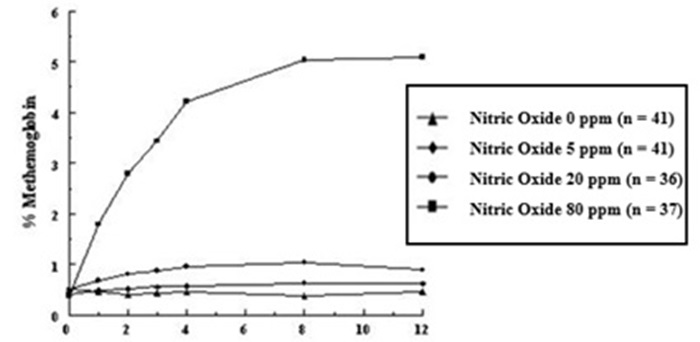
Rebound: Abrupt discontinuation of NoxiventTM may lead to worsening oxygenation and increasing pulmonary artery pressure ( 5.1 ). Methemoglobinemia: Methemoglobin increases with the dose of nitric oxide; following discontinuation or reduction of nitric oxide, methemoglobin levels return to baseline over a period of hours ( 5.2 ). Elevated NO 2 Levels: Monitor NO 2 levels ( 5.3 ). Heart Failure: In patients with pre-existing left ventricular dysfunction, NoxiventTM may increase pulmonary capillary wedge pressure leading to pulmonary edema ( 5.4 ). | 5. WARNINGS AND PRECAUTIONS | 5.1 Rebound Pulmonary Hypertension Syndrome following Abrupt Discontinuation Wean from NoxiventTM [see Dosage and Administration (2.2 )]. Abrupt discontinuation of NoxiventTM may lead to worsening oxygenation and increasing pulmonary artery pressure, i.e., Rebound Pulmonary Hypertension Syndrome. Signs and symptoms of Rebound Pulmonary Hypertension Syndrome include hypoxemia, systemic hypotension, bradycardia, and decreased cardiac output. If Rebound Pulmonary Hypertension occurs, reinstate NoxiventTM therapy immediately. | 5.2 Hypoxemia from Methemoglobinemia Nitric oxide combines with hemoglobin to form methemoglobin, which does not transport oxygen. Methemoglobin levels increase with the dose of NoxiventTM; it can take 8 hours or more before steady-state methemoglobin levels are attained. Monitor methemoglobin and adjust the dose of NoxiventTM to optimize oxygenation. If methemoglobin levels do not resolve with decrease in dose or discontinuation of NoxiventTM, additional therapy may be warranted to treat methemoglobinemia [see Overdosage (10 )]. | 5.3 Airway Injury from Nitrogen Dioxide Nitrogen dioxide (NO 2 ) forms in gas mixtures containing NO and O 2 . Nitrogen dioxide may cause airway inflammation and damage to lung tissues. If there is an unexpected change in NO 2 concentration, or if the NO 2 concentration reaches 3 ppm when measured in the breathing circuit, then the delivery system should be assessed in accordance with the Nitric Oxide Delivery System O&M Manual troubleshooting section, and the NO 2 analyzer should be recalibrated. The dose of NoxiventTM and/or FiO 2 should be adjusted as appropriate. | 5.4 Worsening Heart Failure Patients with left ventricular dysfunction treated with NoxiventTM may experience pulmonary edema, increased pulmonary capillary wedge pressure, worsening of left ventricular dysfunction, systemic hypotension, bradycardia and cardiac arrest. Discontinue NoxiventTM while providing symptomatic care.
Nitric oxide donor compounds may increase the risk of developing methemoglobinemia ( 7 ). Revised: 08/2023 | 7. DRUG INTERACTIONS 7.1 Nitric Oxide Donor Agents Nitric oxide donor agents such as prilocaine, sodium nitroprusside and nitroglycerine may increase the risk of developing methemoglobinemia.