
İHALE DÜNYASI
İHALE DÜNYASI
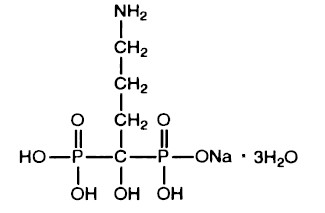
Alendronate sodium is a bisphosphonate that acts as a specific inhibitor of osteoclast-mediated bone resorption. Bisphosphonates are synthetic analogs of pyrophosphate that bind to the hydroxyapatite found in bone. Alendronate sodium is chemically described as (4-amino-1-hydroxybutylidene) bisphosphonic acid monosodium salt trihydrate. The empirical formula of alendronate sodium is C 4 H 12 NNaO 7 P 2 *3H 2 O and its formula weight is 325.12. The structural formula is: Alendronate sodium is a white, crystalline, nonhygroscopic powder. It is soluble in water, very slightly soluble in alcohol, and practically insoluble in chloroform. Each tablet, for oral administration, contains 45.68 mg, 52.21 mg or 91.37 mg of alendronate monosodium salt trihydrate, which is the molar equivalent of 35 mg, 40 mg and 70 mg, respectively, of free acid, and the following inactive ingredients: microcrystalline cellulose, lactose monohydrate, croscarmellose sodium, and magnesium stearate. fosamax_structure
Alendronate sodium tablets, USP are indicated for: Treatment and prevention of osteoporosis in postmenopausal women For the treatment of osteoporosis, alendronate sodium tablets, USP increase bone mass and reduce the incidence of fractures, including those of the hip and spine (vertebral compression fractures). Osteoporosis may be confirmed by the finding of low bone mass (for example, at least 2 standard deviations below the premenopausal mean) or by the presence or history of osteoporotic fracture. (See CLINICAL PHARMACOLOGY, Pharmacodynamics .) For the prevention of osteoporosis, alendronate sodium tablets, USP may be considered in postmenopausal women who are at risk of developing osteoporosis and for whom the desired clinical outcome is to maintain bone mass and to reduce the risk of future fracture. Bone loss is particularly rapid in postmenopausal women younger than age 60. Risk factors often associated with the development of postmenopausal osteoporosis include early menopause; moderately low bone mass (for example, at least 1 standard deviation below the mean for healthy young adult women); thin body build; Caucasian or Asian race; and family history of osteoporosis. The presence of such risk factors may be important when considering the use of alendronate sodium tablets, USP for prevention of osteoporosis. Treatment to increase bone mass in men with osteoporosis. Treatment of glucocorticoid-induced osteoporosis in men and women receiving glucocorticoids in a daily dosage equivalent to 7.5 mg or greater of prednisone and who have low bone mineral density (see PRECAUTIONS, Glucocorticoid-induced osteoporosis ). Patients treated with glucocorticoids should receive adequate amounts of calcium and vitamin D. Treatment of Paget's disease of bone in men and women Treatment is indicated in patients with Paget's disease of bone having alkaline phosphatase at least two times the upper limit of normal, or those who are symptomatic, or those at risk for future complications from their disease.
Alendronate sodium tablets, USP must be taken at least one-half hour before the first food, beverage, or medication of the day with plain water only (see PRECAUTIONS, Information for Patients ). Other beverages (including mineral water), food, and some medications are likely to reduce the absorption of alendronate sodium tablets (see PRECAUTIONS, Drug Interactions ). Waiting less than 30 minutes, or taking alendronate sodium tablets with food, beverages (other than plain water) or other medications will lessen the effect of alendronate sodium tablets by decreasing its absorption into the body. Alendronate sodium tablets should only be taken upon arising for the day. To facilitate delivery to the stomach and thus reduce the potential for esophageal irritation, an alendronate sodium tablet should be swallowed with a full glass of water (6 - 8 oz). Patients should not lie down for at least 30 minutes and until after their first food of the day. Alendronate sodium tablets should not be taken at bedtime or before arising for the day. Failure to follow these instructions may increase the risk of esophageal adverse experiences (see WARNINGS , PRECAUTIONS, Information for Patients ). Patients should receive supplemental calcium and vitamin D, if dietary intake is inadequate (see PRECAUTIONS, General ). No dosage adjustment is necessary for the elderly or for patients with mild-to-moderate renal insufficiency (creatinine clearance 35 to 60 mL/min). Alendronate sodium tablets are not recommended for patients with more severe renal insufficiency (creatinine clearance <35 mL/min) due to lack of experience. Treatment of osteoporosis in postmenopausal women (see INDICATIONS AND USAGE ) The recommended dosage is: one 70 mg tablet once weekly or one 10 mg tablet once daily Treatment to increase bone mass in men with osteoporosis The recommended dosage is: one 70 mg tablet once weekly or one 10 mg tablet once daily Prevention of osteoporosis in postmenopausal women (see INDICATIONS AND USAGE ) The recommended dosage is: one 35 mg tablet once weekly or one 5 mg tablet once daily The safety of treatment and prevention of osteoporosis with alendronate sodium tablets has been studied for up to 7 years. Treatment of glucocorticoid-induced osteoporosis in men and women The recommended dosage is one 5 mg tablet once daily, except for postmenopausal women not receiving estrogen, for whom the recommended dosage is one 10 mg tablet once daily. Paget's disease of bone in men and women The recommended treatment regimen is 40 mg once a day for six months. Retreatment of Paget's disease In clinical studies in which patients were followed every six months, relapses during the 12 months following therapy occurred in 9% (3 out of 32) of patients who responded to treatment with alendronate sodium tablets. Specific retreatment data are not available, although responses to alendronate sodium tablets were similar in patients who had received prior bisphosphonate therapy and those who had not. Retreatment with alendronate sodium tablets may be considered, following a six-month post-treatment evaluation period in patients who have relapsed, based on increases in serum alkaline phosphatase, which should be measured periodically. Retreatment may also be considered in those who failed to normalize their serum alkaline phosphatase.
Abnormalities of the esophagus which delay esophageal emptying such as stricture or achalasia Inability to stand or sit upright for at least 30 minutes Hypersensitivity to any component of this product Hypocalcemia (see PRECAUTIONS, General )
Clinical Studies In clinical studies of up to five years in duration adverse experiences associated with alendronate sodium usually were mild, and generally did not require discontinuation of therapy. Alendronate sodium has been evaluated for safety in approximately 8000 postmenopausal women in clinical studies. Treatment of osteoporosis Postmenopausal women In two identically designed, three-year, placebo-controlled, double-blind, multicenter studies (United States and Multinational; n=994), discontinuation of therapy due to any clinical adverse experience occurred in 4.1% of 196 patients treated with alendronate sodium 10 mg/day and 6.0% of 397 patients treated with placebo. In the Fracture Intervention Trial (n=6459), discontinuation of therapy due to any clinical adverse experience occurred in 9.1% of 3236 patients treated with alendronate sodium 5 mg/day for 2 years and 10 mg/day for either one or two additional years and 10.1% of 3223 patients treated with placebo. Discontinuations due to upper gastrointestinal adverse experiences were: alendronate sodium, 3.2%; placebo, 2.7%. In these study populations, 49 - 54% had a history of gastrointestinal disorders at baseline and 54 - 89% used nonsteroidal anti-inflammatory drugs or aspirin at some time during the studies. Adverse experiences from these studies considered by the investigators as possibly, probably, or definitely drug related in ?1% of patients treated with either alendronate sodium or placebo are presented in the following table. Osteoporosis Treatment Studies in Postmenopausal Women: Adverse Experiences Considered Possibly, Probably, or Definitely Drug Related by the Investigators and Reported in ?1% of Patients United States/Multinational Studies Fracture Intervention Trial Alendronate Sodium 10 mg/day for three years % (n=196) Placebo % (n=397) Alendronate Sodium 5 mg/day for 2 years and 10 mg/day for either 1 or 2 additional years % (n=3236) Placebo % (n=3223) Gastrointestinal abdominal pain nausea dyspepsia constipation diarrhea flatulence acid regurgitation esophageal ulcer vomiting dysphagia abdominal distention gastritis 6.6 3.6 3.6 3.1 3.1 2.6 2.0 1.5 1.0 1.0 1.0 0.5 4.8 4.0 3.5 1.8 1.8 0.5 4.3 0.0 1.5 0.0 0.8 1.3 1.5 1.1 1.1 0.0 0.6 0.2 1.1 0.1 0.2 0.1 0.0 0.6 1.5 1.5 1.2 0.2 0.3 0.3 0.9 0.1 0.3 0.1 0.0 0.7 Musculoskeletal musculoskeletal (bone, muscle or joint) pain muscle cramp 4.1 0.0 2.5 1.0 0.4 0.2 0.3 0.1 Nervous System/Psychiatric headache dizziness 2.6 0.0 1.5 1.0 0.2 0.0 0.2 0.1 Special Senses taste perversion 0.5 1.0 0.1 0.0 Rarely, rash and erythema have occurred. One patient treated with alendronate sodium (10 mg/day), who had a history of peptic ulcer disease and gastrectomy and who was taking concomitant aspirin developed an anastomotic ulcer with mild hemorrhage, which was considered drug related. Aspirin and alendronate sodium were discontinued and the patient recovered. The adverse experience profile was similar for the 401 patients treated with either 5 or 20 mg doses of alendronate sodium in the United States and Multinational studies. The adverse experience profile for the 296 patients who received continued treatment with either 5 or 10 mg doses of alendronate sodium in the two-year extension of these studies (treatment years 4 and 5) was similar to that observed during the three-year placebo-controlled period. During the extension period, of the 151 patients treated with alendronate sodium 10 mg/day, the proportion of patients who discontinued therapy due to any clinical adverse experience was similar to that during the first three years of the study. In a one-year, double-blind, multicenter study, the overall safety and tolerability profiles of once weekly alendronate sodium 70 mg and alendronate sodium 10 mg daily were similar. The adverse experiences considered by the investigators as possibly, probably, or definitely drug related in ?1% of patients in either treatment group are presented in the following table. Osteoporosis Treatment Studies in Postmenopausal Women: Adverse Experiences Considered Possibly, Probably, or Definitely Drug Related by the Investigators and Reported in ?1% of Patients Once Weekly Alendronate Sodium 70 mg % (n=519) Alendronate Sodium 10 mg/day % (n=370) Gastrointestinal abdominal pain dyspepsia acid regurgitation nausea abdominal distention constipation flatulence gastritis gastric ulcer 3.7 2.7 1.9 1.9 1.0 0.8 0.4 0.2 0.0 3.0 2.2 2.4 2.4 1.4 1.6 1.6 1.1 1.1 Musculoskeletal musculoskeletal (bone, muscle, joint) pain muscle cramp 2.9 0.2 3.2 1.1 Men In two placebo-controlled, double-blind, multicenter studies in men (a two-year study of alendronate sodium 10 mg/day and a one-year study of once weekly alendronate sodium 70 mg) the rates of discontinuation of therapy due to any clinical adverse experience were 2.7% for alendronate sodium 10 mg/day vs. 10.5% for placebo, and 6.4% for once weekly alendronate sodium 70 mg vs. 8.6% for placebo. The adverse experiences considered by the investigators as possibly, probably, or definitely drug related in ?2% of patients treated with either alendronate sodium or placebo are presented in the following table. Osteoporosis Studies in Men: Adverse Experiences Considered Possibly, Probably, or Definitely Drug Related by the Investigators and Reported in ?2% of Patients Two-year Study One-year Study Alendronate Sodium 10 mg/day % (n=146) Placebo % (n=95) Once Weekly Alendronate Sodium 70 mg % (n=109) Placebo % (n=58) Gastrointestinal acid regurgitation flatulence gastroesophageal reflux disease dyspepsia diarrhea abdominal pain nausea 4.1 4.1 0.7 3.4 1.4 2.1 2.1 3.2 1.1 3.2 0.0 1.1 1.1 0.0 0.0 0.0 2.8 2.8 2.8 0.9 0.0 0.0 0.0 0.0 1.7 0.0 3.4 0.0 Prevention of osteoporosis in postmenopausal women The safety of alendronate sodium 5 mg/day in postmenopausal women 40 to 60 years of age has been evaluated in three double-blind, placebo-controlled studies involving over 1,400 patients randomized to receive alendronate sodium for either two or three years. In these studies the overall safety profiles of alendronate sodium 5 mg/day and placebo were similar. Discontinuation of therapy due to any clinical adverse experience occurred in 7.5% of 642 patients treated with alendronate sodium 5 mg/day and 5.7% of 648 patients treated with placebo. In a one-year, double-blind, multicenter study, the overall safety and tolerability profiles of once weekly alendronate sodium 35 mg and alendronate sodium 5 mg daily were similar. The adverse experiences from these studies considered by the investigators as possibly, probably, or definitely drug related in ?1% of patients treated with either once weekly alendronate sodium 35 mg, alendronate sodium 5 mg/day or placebo are presented in the following table. Osteoporosis Prevention Studies in Postmenopausal Women: Adverse Experiences Considered Possibly, Probably, or Definitely Drug Related by the Investigators and Reported in ?1% of Patients Two/Three-Year Studies One-Year Study Alendronate Sodium 5 mg/day % (n=642) Placebo % (n=648) Alendronate Sodium 5 mg/day % (n=361) Once Weekly Alendronate Sodium 35 mg % (n=362) Gastrointestinal dyspepsia abdominal pain acid regurgitation nausea diarrhea constipation abdominal distention 1.9 1.7 1.4 1.4 1.1 0.9 0.2 1.4 3.4 2.5 1.4 1.7 0.5 0.3 2.2 4.2 4.2 2.5 1.1 1.7 1.4 1.7 2.2 4.7 1.4 0.6 0.3 1.1 Musculoskeletal musculoskeletal (bone, muscle or joint) pain 0.8 0.9 1.9 2.2 Concomitant use with estrogen/hormone replacement therapy In two studies (of one and two years' duration) of postmenopausal osteoporotic women (total: n=853), the safety and tolerability profile of combined treatment with alendronate sodium 10 mg once daily and estrogen ± progestin (n=354) was consistent with those of the individual treatments. Treatment of glucocorticoid-induced osteoporosis In two, one-year, placebo-controlled, double-blind, multicenter studies in patients receiving glucocorticoid treatment, the overall safety and tolerability profiles of alendronate sodium 5 and 10 mg/day were generally similar to that of placebo. The adverse experiences considered by the investigators as possibly, probably, or definitely drug related in ?1% of patients treated with either alendronate sodium 5 or 10 mg/day or placebo are presented in the following table. One-Year Studies in Glucocorticoid-Treated Patients: Adverse Experiences Considered Possibly, Probably, or Definitely Drug Related by the Investigators and Reported in ?1% of Patients Alendronate Sodium 10 mg/day % (n=157) Alendronate Sodium 5 mg/day % (n=161) Placebo % (n=159) Gastrointestinal abdominal pain acid regurgitation constipation melena nausea diarrhea Nervous System/Psychiatric headache 3.2 2.5 1.3 1.3 0.6 0.0 0.6 1.9 1.9 0.6 0.0 1.2 0.0 0.0 0.0 1.3 0.0 0.0 0.6 1.3 1.3 The overall safety and tolerability profile in the glucocorticoid-induced osteoporosis population that continued therapy for the second year of the studies (alendronate sodium: n=147) was consistent with that observed in the first year. Paget's disease of bone In clinical studies (osteoporosis and Paget's disease), adverse experiences reported in 175 patients taking alendronate sodium 40 mg/day for 3 - 12 months were similar to those in postmenopausal women treated with alendronate sodium 10 mg/day. However, there was an apparent increased incidence of upper gastrointestinal adverse experiences in patients taking alendronate sodium 40 mg/day (17.7% alendronate sodium vs. 10.2% placebo). One case of esophagitis and two cases of gastritis resulted in discontinuation of treatment. Additionally, musculoskeletal (bone, muscle or joint) pain, which has been described in patients with Paget's disease treated with other bisphosphonates, was considered by the investigators as possibly, probably, or definitely drug related in approximately 6% of patients treated with alendronate sodium 40 mg/day versus approximately 1% of patients treated with placebo, but rarely resulted in discontinuation of therapy. Discontinuation of therapy due to any clinical adverse experience occurred in 6.4% of patients with Paget's disease treated with alendronate sodium 40 mg/day and 2.4% of patients treated with placebo. Osteogenesis Imperfecta Alendronate sodium is not indicated for use in children. The overall safety profile of alendronate sodium in OI patients treated for up to 24 months was generally similar to that of adults with osteoporosis treated with alendronate sodium. However, there was an increased occurrence of vomiting in OI patients treated with alendronate sodium compared to placebo. During the 24-month treatment period, vomiting was observed in 32 of 109 (29.4%) patients treated with alendronate sodium and 3 of 30 (10%) patients treated with placebo. In a pharmacokinetic study, 6 of 24 pediatric OI patients who received a single oral dose of alendronate sodium 35 or 70 mg developed fever, flu-like symptoms, and/or mild lymphocytopenia within 24 to 48 hours after administration. These events, lasting no more than 2 to 3 days and responding to acetaminophen, are consistent with an acute-phase response that has been reported in patients receiving bisphosphonates, including alendronate sodium. See ADVERSE REACTIONS, Post-Marketing Experience, Body as a Whole . Laboratory Test Findings In double-blind, multicenter, controlled studies, asymptomatic, mild, and transient decreases in serum calcium and phosphate were observed in approximately 18% and 10%, respectively, of patients taking alendronate sodium versus approximately 12% and 3% of those taking placebo. However, the incidences of decreases in serum calcium to <8.0 mg/dL (2.0 mM) and serum phosphate to ?2.0 mg/dL (0.65 mM) were similar in both treatment groups. Post-Marketing Experience The following adverse reactions have been reported in post-marketing use: Body as a Whole: hypersensitivity reactions including urticaria and rarely angioedema. Transient symptoms of myalgia, malaise, asthenia and rarely, fever have been reported with alendronate sodium, typically in association with initiation of treatment. Rarely, symptomatic hypocalcemia has occurred, generally in association with predisposing conditions. Rarely, peripheral edema. Gastrointestinal: esophagitis, esophageal erosions, esophageal ulcers, rarely esophageal stricture or perforation, and oropharyngeal ulceration. Gastric or duodenal ulcers, some severe and with complications have also been reported (see WARNINGS , PRECAUTIONS, Information for Patients , and DOSAGE AND ADMINISTRATION ). Localized osteonecrosis of the jaw, generally associated with tooth extraction and/or local infection, often with delayed healing, has been reported rarely (see PRECAUTIONS, Dental ). Musculoskeletal: bone, joint, and/or muscle pain, occasionally severe, and rarely incapacitating (see PRECAUTIONS, Musculoskeletal Pain ); joint swelling. Nervous system: dizziness and vertigo. Skin: rash (occasionally with photosensitivity), pruritus, alopecia, rarely severe skin reactions, including Stevens-Johnson syndrome and toxic epidermal necrolysis. Special Senses: rarely uveitis, scleritis or episcleritis.
Alendronate sodium, like other bisphosphonates, may cause local irritation of the upper gastrointestinal mucosa. Esophageal adverse experiences, such as esophagitis, esophageal ulcers and esophageal erosions, occasionally with bleeding and rarely followed by esophageal stricture or perforation, have been reported in patients receiving treatment with alendronate sodium. In some cases these have been severe and required hospitalization. Physicians should therefore be alert to any signs or symptoms signaling a possible esophageal reaction and patients should be instructed to discontinue alendronate sodium and seek medical attention if they develop dysphagia, odynophagia, retrosternal pain or new or worsening heartburn. The risk of severe esophageal adverse experiences appears to be greater in patients who lie down after taking alendronate sodium and/or who fail to swallow it with the recommended amount of water, and/or who continue to take alendronate sodium after developing symptoms suggestive of esophageal irritation. Therefore, it is very important that the full dosing instructions are provided to, and understood by, the patient (see DOSAGE AND ADMINISTRATION ). In patients who cannot comply with dosing instructions due to mental disability, therapy with alendronate sodium should be used under appropriate supervision. Because of possible irritant effects of alendronate sodium on the upper gastrointestinal mucosa and a potential for worsening of the underlying disease, caution should be used when alendronate sodium is given to patients with active upper gastrointestinal problems (such as dysphagia, esophageal diseases, gastritis, duodenitis, or ulcers). There have been post-marketing reports of gastric and duodenal ulcers, some severe and with complications, although no increased risk was observed in controlled clinical trials.
(also see CLINICAL PHARMACOLOGY, Pharmacokinetics, Drug Interactions ) Estrogen/hormone replacement therapy (HRT) Concomitant use of HRT (estrogen ± progestin) and alendronate sodium was assessed in two clinical studies of one or two years' duration in postmenopausal osteoporotic women. In these studies, the safety and tolerability profile of the combination was consistent with those of the individual treatments; however, the degree of suppression of bone turnover (as assessed by mineralizing surface) was significantly greater with the combination than with either component alone. The long-term effects of combined alendronate sodium and HRT on fracture occurrence have not been studied (see CLINICAL PHARMACOLOGY, Clinical Studies, Concomitant use with estrogen/hormone replacement therapy (HRT) and ADVERSE REACTIONS, Clinical Studies, Concomitant use with estrogen/hormone replacement therapy ). Calcium Supplements/Antacids It is likely that calcium supplements, antacids, and some oral medications will interfere with absorption of alendronate sodium. Therefore, patients must wait at least one-half hour after taking alendronate sodium before taking any other oral medications. Aspirin In clinical studies, the incidence of upper gastrointestinal adverse events was increased in patients receiving concomitant therapy with daily doses of alendronate sodium greater than 10 mg and aspirin-containing products. Nonsteroidal Anti-inflammatory Drugs (NSAIDs) Alendronate sodium may be administered to patients taking NSAIDs. In a 3-year, controlled, clinical study (n=2027) during which a majority of patients received concomitant NSAIDs, the incidence of upper gastrointestinal adverse events was similar in patients taking alendronate sodium 5 or 10 mg/day compared to those taking placebo. However, since NSAID use is associated with gastrointestinal irritation, caution should be used during concomitant use with alendronate sodium.