
İHALE DÜNYASI
İHALE DÜNYASI
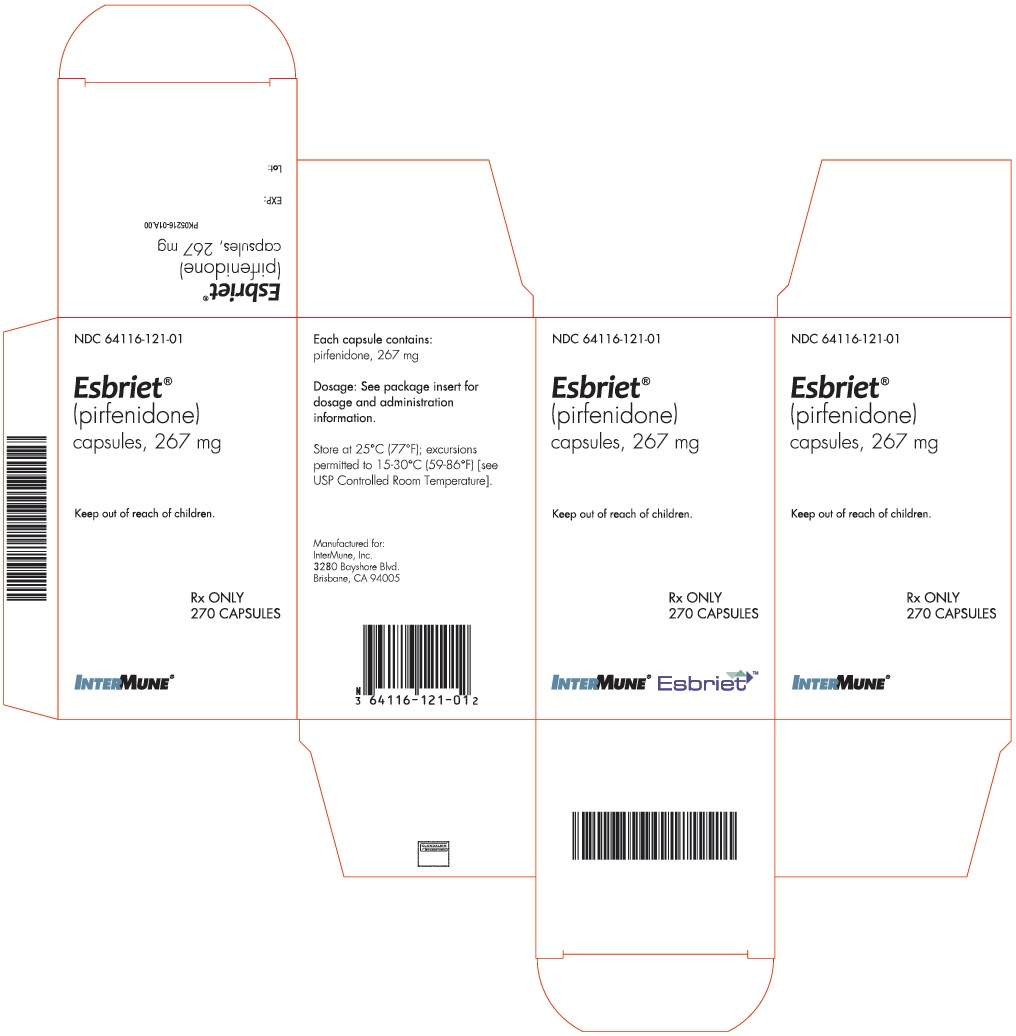
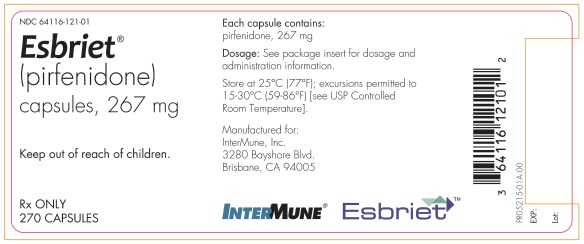
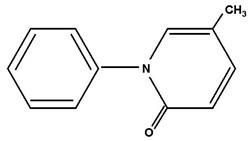
Each ESBRIET capsule contains 267 mg of pirfenidone, which belongs to the chemical class of pyridone. ESBRIET is available as a white hard gelatin capsule for oral administration. The chemical name of pirfenidone is 5-methyl-1-phenyl-2-1(H)-pyridone. It has a molecular formula of C 12 H 11 NO and a molecular weight of 185.23. The structural formula of pirfenidone is: Pirfenidone is a white to pale yellow, non-hygroscopic powder. It is more soluble in methanol, ethyl alcohol, acetone and chloroform than in water and 1.0 N HCl. The melting point is approximately 109°C. ESBRIET capsule contains pirfenidone and the following inactive ingredients: microcrystalline cellulose, croscarmellose sodium, povidone, and magnesium stearate. In addition, the capsule shell contains gelatin and titanium dioxide. The capsule brown printing ink includes shellac, iron oxide black, iron oxide red, iron oxide yellow, propylene glycol, ammonium hydroxide. Chemical Structure
ESBRIET is indicated for the treatment of idiopathic pulmonary fibrosis (IPF). ESBRIET is a pyridone indicated for the treatment of idiopathic pulmonary fibrosis (IPF).
Recommended dosage: 801 mg (three capsules) three times daily taken with food. ( 2 ) Upon initiation of treatment, the daily dosage should be titrated to the full dosage of nine capsules per day over a 14-day period as follows: Treatment days Dosage Days 1 through 7 1 capsule three times a day with meals Days 8 through 14 2 capsules three times a day with meals Days 15 onward 3 capsules three times a day with meals Consider temporary dosage reduction, treatment interruption, or discontinuation for management of adverse reactions. ( 2.3 , 5.1 , 5.2 , 5.3 ) Prior to treatment, conduct liver function tests. ( 2.1 ) 2.1 Testing Prior to ESBRIET Administration Conduct liver function tests prior to initiating treatment with ESBRIET [see Warnings and Precautions (5.1)] . 2.2 Recommended Dosage The recommended daily maintenance dosage of ESBRIET is 801 mg (three 267 mg capsules) three times a day with food for a total of 2403 mg/day. Doses should be taken at the same time each day. Upon initiation of treatment, titrate to the full dosage of nine capsules per day over a 14-day period as follows: Table 1. Dosage Titration for ESBRIET in Patients with IPF Treatment days Dosage Days 1 through 7 1 capsule three times a day with food Days 8 through 14 2 capsules three times a day with food Days 15 onward 3 capsules three times a day with food Dosages above 2403 mg/day (9 capsules per day) are not recommended for any patient. 2.3 Dosage Modifications due to Adverse Reactions Patients who miss 14 or more days of ESBRIET should re-initiate treatment by undergoing the initial 2-week titration regimen up to the full maintenance dosage [see Dosage and Administration (2.2)] . For treatment interruption of less than 14 days, the dosage prior to the interruption can be resumed. If patients experience significant adverse reactions (i.e., gastrointestinal, photosensitivity reaction or rash), consider temporary dosage reductions or interruptions of ESBRIET to allow for resolution of symptoms [see Warnings and Precautions (5.1 , 5.2 , 5.3)] . Dosage Modification due to Elevated Liver Enzymes Dosage modifications or interruptions may also be necessary when liver enzyme and bilirubin elevations are exhibited. For liver enzyme elevations, modify the dosage as follows: If a patient exhibits >3 but ?5 × the upper limit of normal (ULN) ALT and/or AST without symptoms or hyperbilirubinemia after starting ESBRIET therapy: Discontinue confounding medications, exclude other causes, and monitor the patient closely. Repeat liver chemistry tests as clinically indicated. The full daily dosage may be maintained, if clinically appropriate, or reduced or interrupted (e.g., until liver chemistry tests are within normal limits) with subsequent re-titration to the full dosage as tolerated. If a patient exhibits >3 but ?5 × ULN ALT and/or AST accompanied by symptoms or hyperbilirubinemia: Permanently discontinue ESBRIET. Do not rechallenge patient with ESBRIET. If a patient exhibits >5 × ULN ALT and/or AST: Permanently discontinue ESBRIET. Do not rechallenge patient with ESBRIET. 2.4 Dosage Modification due to Drug Interactions Strong CYP1A2 Inhibitors (e.g., fluvoxamine, enoxacin) Reduce ESBRIET to one capsule three times a day. Moderate CYP1A2 Inhibitors (e.g., ciprofloxacin) With use of ciprofloxacin at a dosage of 750 mg twice daily, reduce ESBRIET to two capsules three times a day.
None. None
The following adverse reactions are discussed in greater detail in other sections of the labeling: Liver Enzyme Elevations [see Warnings and Precautions (5.1)] Photosensitivity Reaction or Rash [see Warnings and Precautions (5.2)] Gastrointestinal Disorders [see Warnings and Precautions (5.3)] The most common adverse reactions (?10%) are nausea, rash, abdominal pain, upper respiratory tract infection, diarrhea, fatigue, headache, dyspepsia, dizziness, vomiting, anorexia, gastro-esophageal reflux disease, sinusitis, insomnia, weight decreased, and arthralgia. ( 6.1 ) To report SUSPECTED ADVERSE REACTIONS, contact InterMune at 1-888-486-6411 or FDA at 1-800-FDA-1088 or www.fda.gov/medwatch . 6.1 Clinical Trials Experience Because clinical trials are conducted under widely varying conditions, adverse reaction rates observed in the clinical trials of a drug cannot be directly compared to rates in the clinical trials of another drug and may not reflect the rates observed in practice. The safety of pirfenidone has been evaluated in more than 1400 subjects with over 170 subjects exposed to pirfenidone for more than 5 years in clinical trials. ESBRIET was studied in 3 randomized, double-blind, placebo-controlled trials (Studies 1, 2, and 3) in which a total of 623 patients received 2403 mg/day of ESBRIET and 624 patients received placebo. Subjects ages ranged from 40 to 80 years (mean age of 67 years). Most patients were male (74%) and Caucasian (95%). The mean duration of exposure to ESBRIET was 62 weeks (range: 2 to 118 weeks) in these 3 trials. At the recommended dosage of 2403 mg/day, 14.6% of patients on ESBRIET compared to 9.6% on placebo permanently discontinued treatment because of an adverse event. The most common (>1%) adverse reactions leading to discontinuation were rash and nausea. The most common (>3%) adverse reactions leading to dosage reduction or interruption were rash, nausea, diarrhea, and photosensitivity reaction. The most common adverse reactions with an incidence of ?10% and more frequent in the ESBRIET than placebo treatment group are listed in Table 2 . Table 2. Adverse Reactions Occurring in ?10% of ESBRIET-Treated Patients and More Commonly Than Placebo in Studies 1, 2, and 3 1 Includes abdominal pain, upper abdominal pain, abdominal distension, and stomach discomfort. % of Patients (0 to 118 Weeks) Adverse Reaction ESBRIET 2403 mg/day (N = 623) Placebo (N = 624) Nausea 36% 16% Rash 30% 10% Abdominal Pain 1 24% 15% Upper Respiratory Tract Infection 27% 25% Diarrhea 26% 20% Fatigue 26% 19% Headache 22% 19% Dyspepsia 19% 7% Dizziness 18% 11% Vomiting 13% 6% Anorexia 13% 5% Gastro-esophageal Reflux Disease 11% 7% Sinusitis 11% 10% Insomnia 10% 7% Weight Decreased 10% 5% Arthralgia 10% 7% Adverse reactions occurring in ?5 to <10% of ESBRIET-treated patients and more commonly than placebo are photosensitivity reaction (9% vs. 1%), decreased appetite (8% vs. 3%), pruritus (8% vs. 5%), asthenia (6% vs. 4%), dysgeusia (6% vs. 2%), and non-cardiac chest pain (5% vs. 4%). 6.2 Postmarketing Experience In addition to adverse reactions identified from clinical trials the following adverse reactions have been identified during postapproval use of pirfenidone. Because these reactions are reported voluntarily from a population of uncertain size, it is not always possible to reliably estimate their frequency. Blood and Lymphatic System Disorders Agranulocytosis Immune System Disorders Angioedema Hepatobiliary Disorders Bilirubin increased in combination with increases of ALT and AST
Elevated liver enzymes: ALT, AST, and bilirubin elevations have occurred with ESBRIET. Monitor ALT, AST, and bilirubin before and during treatment. Temporary dosage reductions or discontinuations may be required. ( 2.1 , 5.1 ) Photosensitivity and rash: Photosensitivity and rash have been noted with ESBRIET. Avoid exposure to sunlight and sunlamps. Wear sunscreen and protective clothing daily. Temporary dosage reductions or discontinuations may be required. ( 5.2 ) Gastrointestinal disorders: Nausea, vomiting, diarrhea, dyspepsia, gastro-esophageal reflux disease, and abdominal pain have occurred with ESBRIET. Temporary dosage reductions or discontinuations may be required. ( 5.3 ) 5.1 Elevated Liver Enzymes Increases in ALT and AST >3 × ULN have been reported in patients treated with ESBRIET. Rarely these have been associated with concomitant elevations in bilirubin. Patients treated with ESBRIET 2403 mg/day in the three Phase 3 trials had a higher incidence of elevations in ALT or AST ?3 × ULN than placebo patients (3.7% vs. 0.8%, respectively). Elevations ?10 × ULN in ALT or AST occurred in 0.3% of patients in the ESBRIET 2403 mg/day group and in 0.2% of patients in the placebo group. Increases in ALT and AST ?3 × ULN were reversible with dose modification or treatment discontinuation. No cases of liver transplant or death due to liver failure that were related to ESBRIET have been reported. However, the combination of transaminase elevations and elevated bilirubin without evidence of obstruction is generally recognized as an important predictor of severe liver injury, that could lead to death or the need for liver transplants in some patients. Conduct liver function tests (ALT, AST, and bilirubin) prior to the initiation of therapy with ESBRIET in all patients, then monthly for the first 6 months and every 3 months thereafter. Dosage modifications or interruption may be necessary for liver enzyme elevations [see Dosage and Administration (2.1, 2.3)]. 5.2 Photosensitivity Reaction or Rash Patients treated with ESBRIET 2403 mg/day in the three Phase 3 studies had a higher incidence of photosensitivity reactions (9%) compared with patients treated with placebo (1%). The majority of the photosensitivity reactions occurred during the initial 6 months. Instruct patients to avoid or minimize exposure to sunlight (including sunlamps), to use a sunblock (SPF 50 or higher), and to wear clothing that protects against sun exposure. Additionally, instruct patients to avoid concomitant medications known to cause photosensitivity. Dosage reduction or discontinuation may be necessary in some cases of photosensitivity reaction or rash [see Dosage and Administration (2.3)] . 5.3 Gastrointestinal Disorders In the clinical studies, gastrointestinal events of nausea, diarrhea, dyspepsia, vomiting, gastro-esophageal reflux disease, and abdominal pain were more frequently reported by patients in the ESBRIET treatment groups than in those taking placebo. Dosage reduction or interruption for gastrointestinal events was required in 18.5% of patients in the 2403 mg/day group, as compared to 5.8% of patients in the placebo group; 2.2% of patients in the ESBRIET 2403 mg/day group discontinued treatment due to a gastrointestinal event, as compared to 1.0% in the placebo group. The most common (>2%) gastrointestinal events that led to dosage reduction or interruption were nausea, diarrhea, vomiting, and dyspepsia. The incidence of gastrointestinal events was highest early in the course of treatment (with highest incidence occurring during the initial 3 months) and decreased over time. Dosage modifications may be necessary in some cases of gastrointestinal adverse reactions [see Dosage and Administration (2.3)] .
Moderate (e.g., ciprofloxacin) and strong inhibitors of CYP1A2 (e.g., fluvoxamine) increase systemic exposure of ESBRIET and may alter the adverse reaction profile of ESBRIET. Discontinue fluvoxamine prior to administration of ESBRIET or reduce to one capsule three times a day. Consider dosage reduction with use of ciprofloxacin. ( 7.1 ) 7.1 CYP1A2 Inhibitors Pirfenidone is metabolized primarily (70 to 80%) via CYP1A2 with minor contributions from other CYP isoenzymes including CYP2C9, 2C19, 2D6 and 2E1. Strong CYP1A Inhibitors The concomitant administration of ESBRIET and fluvoxamine or other strong CYP1A2 inhibitors (e.g., enoxacin) is not recommended because it significantly increases exposure to ESBRIET [see Clinical Pharmacology (12.3)] . Use of fluvoxamine or other strong CYP1A2 inhibitors should be discontinued prior to administration of ESBRIET and avoided during ESBRIET treatment. In the event that fluvoxamine or other strong CYP1A2 inhibitors are the only drug of choice, dosage reductions are recommended. Monitor for adverse reactions and consider discontinuation of ESBRIET as needed [see Dosage and Administration (2.4)] . Moderate CYP1A Inhibitors Concomitant administration of ESBRIET and ciprofloxacin (a moderate inhibitor of CYP1A2) moderately increases exposure to ESBRIET [see Clinical Pharmacology (12.3)] . If ciprofloxacin at the dosage of 750 mg twice daily cannot be avoided, dosage reductions are recommended [see Dosage and Administration (2.4) ] . Monitor patients closely when ciprofloxacin is used at a dosage of 250 mg or 500 mg once daily. Concomitant CYP1A2 and other CYP Inhibitors Agents or combinations of agents that are moderate or strong inhibitors of both CYP1A2 and one or more other CYP isoenzymes involved in the metabolism of ESBRIET (i.e., CYP2C9, 2C19, 2D6, and 2E1) should be discontinued prior to and avoided during ESBRIET treatment. 7.2 CYP1A2 Inducers The concomitant use of ESBRIET and a CYP1A2 inducer may decrease the exposure of ESBRIET and this may lead to loss of efficacy. Therefore, discontinue use of strong CYP1A2 inducers prior to ESBRIET treatment and avoid the concomitant use of ESBRIET and a strong CYP1A2 inducer [see Clinical Pharmacology (12.3)] .