
İHALE DÜNYASI
İHALE DÜNYASI
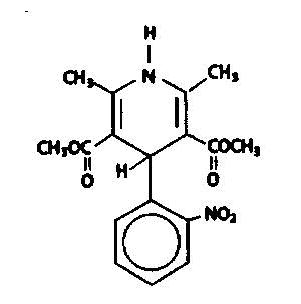
Nifediac CC (R) Extended-release Tablets USP are an extended release tablet dosage form of the calcium channel blocker nifedipine. The product is provided as a general matrix tablet with a polymer coating. Nifedipine is 3,5-pyridinedicarboxylic acid, 1,4-dihydro-2,6-dimethyl-4-(2-nitrophenyl)-, dimethyl ester. The molecular formula is C 17 H 18 N 2 O 6, and has the structural formula: Nifedipine is a yellow crystalline substance, practically insoluble in water but soluble in ethanol. It has a molecular weight of 346.3. Nifediac CC (R) Extended-release Tablets USP contain 90 mg of nifedipine for once-a-day oral administration. In addition, each tablet contains the following inactive ingredients: anhydrous lactose, colloidal silicon dioxide, ethylcellulose, hydroxyethyl cellulose, hydroxypropyl methylcellulose, hypromellose, magnesium stearate, microcrystalline cellulose, polydextrose, polyethylene glycol, sodium lauryl sulfate, titanium dioxide, and triacetin. Contains FD&C yellow #5 (tartrazine) as a color additive. Nifedipine Extended-release Tablets USP Dissolution Test is pending. Structural formula for nifedipine
Nifediac CC (R) Extended-release Tablets USP are indicated for the treatment of hypertension. It may be used alone or in combination with other antihypertensive agents.
Dosage should be adjusted according to each patient's needs. It is recommended that Nifediac CC (R) Extended-release Tablets USP be administered orally once daily on an empty stomach. Nifediac CC (R) Extended-release Tablets USP is an extended release dosage form and tablets should be swallowed whole, not bitten or divided. In general, titration should proceed over a 7 to 14 day period starting with 30 mg once daily. Upward titration should be based on therapeutic efficacy and safety. The usual maintenance dose is 30 mg to 60 mg once daily. Titration to doses above 90 mg daily is not recommended. If discontinuation of Nifediac CC (R) Extended-release Tablets USP is necessary, sound clinical practice suggests that the dosage should be decreased gradually with close physician supervision. Coadministration of nifedipine with grapefruit juice is to be avoided (see CLINICAL PHARMACOLOGY and PRECAUTIONS ). Care should be taken when dispensing Nifediac CC (R) Extended-release Tablets USP to assure that the extended-release dosage form has been prescribed.
Known hypersensitivity to nifedipine.
The incidence of adverse events during treatment with nifedipine extended-release tablets in doses up to 90 mg daily were derived from multi-center, placebo-controlled clinical trials in 370 hypertensive patients. Atenolol 50 mg once daily was used concomitantly in 187 of the 370 patients on nifedipine extended-release tablets and in 64 of the 126 patients on placebo. All adverse events reported during nifedipine extended-release tablet therapy were tabulated independently of their causal relationship to medication. The most common adverse event reported with nifedipine extended-release tablets was peripheral edema. This was dose related, and the frequency was 18% on nifedipine extended-release tablets 30 mg daily, 22% on nifedipine extended-release tablets 60 mg daily, and 29% on nifedipine extended-release tablets 90 mg daily versus 10% on placebo. Other common adverse events reported in the above placebo-controlled trials include: Adverse Event NIFEDIPINE EXTENDED-RELEASE TABLETS (%) (n=370) PLACEBO (%) (n=126) Headache 19 13 Flushing/heat sensation 4 0 Dizziness 4 2 Fatigue/asthenia 4 4 Nausea 2 1 Constipation 1 0 Where the frequency of adverse events with nifedipine extended-release tablets and placebo is similar, causal relationship cannot be established. The following adverse events were reported with an incidence of 3% or less in daily doses up to 90 mg: Body as a Whole/Systemic: chest pain, leg pain Central Nervous System: paresthesia, vertigo Dermatologic: rash Gastrointestinal: constipation Musculoskeletal: leg cramps Respiratory: epistaxis, rhinitis Urogenital: impotence, urinary frequency Other adverse events reported with an incidence of less than 1% were: Body as a Whole/Systemic: allergic reaction, asthenia, cellulitis, substernal chest pain, chills, facial edema, lab test abnormal, malaise, neck pain, pelvic pain, pain, photosensitivity reaction. Cardiovascular: atrial fibrillation, bradycardia, cardiac arrest, extrasystole, hypotension, migraine, palpitations, phlebitis, postural hypotension, tachycardia, cutaneous angiectases Central Nervous System: anxiety, confusion, decreased libido, depression, hypertonia, hypesthesia, insomnia, somnolence Dermatologic: angioedema, petechial rash, pruritus, sweating Gastrointestinal: abdominal pain, diarrhea, dry mouth, dysphagia, dyspepsia, eructation, esophagitis, flatulence, gastrointestinal disorder, gastrointestinal hemorrhage, GGT increased, gum disorder, gum hemorrhage, vomiting Hematologic: eosinophilia, lymphadenopathy Metabolic: gout, weight loss Musculoskeletal: arthralgia, arthritis, joint disorder, myalgia, myasthenia Respiratory: dyspnea, increased cough, rales, pharyngitis, stridor Special Senses: abnormal vision, amblyopia, conjunctivitis, diplopia, eye disorder, eye hemorrhage, tinnitus Urogenital/Reproductive: dysuria, kidney calculus, nocturia, breast engorgement, polyuria, urogenital disorder The following adverse events have been reported rarely in patients given nifedipine in coat core or other formulations: allergenic hepatitis, alopecia, anaphylactic reaction, anemia, arthritis with ANA (+), depression, erythromelalgia, exfoliative dermatitis, fever, gingival hyperplasia, gynecomastia, hyperglycemia, jaundice, leukopenia, mood changes, muscle cramps, nervousness, paranoid syndrome, purpura, shakiness, sleep disturbances, Stevens-Johnson syndrome, syncope, taste perversion, thrombocytopenia, toxic epidermal necrolysis, transient blindness at the peak of plasma level, tremor, and urticaria.
Excessive Hypotension Although in most patients the hypotensive effect of nifedipine is modest and well tolerated, occasional patients have had excessive and poorly tolerated hypotension. These responses have usually occurred during initial titration or at the time of subsequent upward dosage adjustment, and may be more likely in patients using concomitant beta-blockers. Severe hypotension and/or increased fluid volume requirements have been reported in patients who received immediate-release capsules together with a beta-blocking agent and who underwent coronary artery bypass surgery using high dose fentanyl anesthesia. The interaction with high dose fentanyl appears to be due to the combination of nifedipine and a beta-blocker, but the possibility that it may occur with nifedipine alone, with low doses of fentanyl, in other surgical procedures, or with other narcotic analgesics cannot be ruled out. In nifedipine-treated patients where surgery using high dose fentanyl anesthesia is contemplated, the physician should be aware of these potential problems and, if the patient's condition permits, sufficient time (at least 36 hours) should be allowed for nifedipine to be washed out of the body prior to surgery. Increased Angina and/or Myocardial Infarction Rarely, patients, particularly those who have severe obstructive coronary artery disease, have developed well-documented increased frequency, duration and/or severity of angina or acute myocardial infarction upon starting nifedipine or at the time of dosage increase. The mechanism of this effect is not established. Beta-Blocker Withdrawal When discontinuing a beta-blocker, it is important to taper its dose, if possible, rather than stopping abruptly before beginning nifedipine. Patients recently withdrawn from beta-blockers may develop a withdrawal syndrome with increased angina, probably related to increased sensitivity to catecholamines. Initiation of nifedipine treatment will not prevent this occurrence and on occasion has been reported to increase it. Congestive Heart Failure Rarely, patients (usually while receiving a beta-blocker) have developed heart failure after beginning nifedipine. Patients with tight aortic stenosis may be at greater risk for such an event, as the unloading effect of nifedipine would be expected to be of less benefit to these patients, owing to their fixed impedance to flow across the aortic valve.