
İHALE DÜNYASI
İHALE DÜNYASI
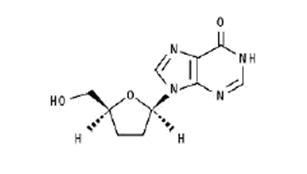
Didanosine delayed-release capsules are an enteric-coated formulation of didanosine, (ddl), a synthetic purine nucleoside analogue active against HIV-1. Didanosine delayed-release capsules, containing enteric-coated pellets, are available for oral administration in the strengths of 200, 250, and 400 mg of didanosine. The inactive ingredients include croscarmellose sodium, hydroxypropyl cellulose, hypromellose, methacrylic acid copolymer dispersion, microcrystalline cellulose, polydextrose, polyethylene glycol, silicon dioxide, sodium hydroxide, talc, titanium dioxide, triacetin and triethyl citrate.The capsule shell contains FD&C blue no.1, gelatin, and titanium dioxide.The 200 mg capsule shell also contains D&C red no. 33, and FD&C yellow no. 6. The 250 mg capsule shell also contains D&C red no. 28. The 400 mg capsule shell also contains D&C red no.33, and FD&C yellow no. 6. The edible imprinting ink contains D&C yellow no. 10 aluminum lake, FD&C blue no. 1 aluminum lake, FD&C blue no. 2 aluminum lake, FD&C red no. 40 aluminum lake, iron oxide, propylene glycol and shellac glaze. The chemical name for didanosine is 2', 3'-dideoxyinosine. The structural formula is: Didanosine is a white crystalline powder with the molecular formula C 10 H 12 N 4 O 3 and a molecular weight of 236.2. The aqueous solubility of didanosine at 25° C and pH of approximately 6 is 27.3 mg/mL. Didanosine is unstable in acidic solutions. For example, at pH less than 3 and 37° C, 10% of didanosine decomposes to hypoxanthine in less than 2 minutes. In didanosine delayed-release capsules, an enteric coating is used to protect didanosine from degradation by stomach acid. chemical structure
Didanosine delayed-release capsules, also known as ddI, in combination with other antiretroviral agents is indicated for the treatment of human immunodeficiency virus (HIV)-1 infection [ see Clinical Studies ( 14 ) ]. Didanosine delayed-release capsules are a nucleoside reverse transcriptase inhibitor for use in combination with other antiretroviral agents for the treatment of human immunodeficiency virus (HIV)-1 infection. ( 1 )
Didanosine delayed-release capsules should be administered on an empty stomach. Didanosine delayed-release capsules should be swallowed intact. Adult patients: Administered on an empty stomach. Dosing is based on body weight. ( 2.1 ) Pediatric patients: Ages 6 to 18 years, can safely swallow capsules and body weight at least 20 kg. Administered on an empty stomach, dosing is based on body weight. ( 2.1 ) Body Weight Dose 20 kg to less than 25 kg 200 mg once daily 25 kg to less than 60 kg 250 mg once daily at least 60 kg 400 mg once daily Renal impairment: Dose reduction is recommended. ( 2.2 ) Coadministration with tenofovir: Dose reduction is recommended. Patients should be monitored closely for didanosine-associated adverse reactions. ( 2.3 , 7.1 ) 2.1 Recommended Dosage (Adult and Pediatric Patients) The recommended total daily dose is based on body weight and is administered as one capsule given on a once-daily schedule as outlined in Table 1 . The recommended total daily dose to be administered once daily to pediatric patients weighing at least 20 kg who can swallow capsules is based on body weight (kg), consistent with the recommended adult dosing guidelines (see Table 1 ). Please consult the complete prescribing information for Didanosine Pediatric Powder for Oral Solution for dosage and administration of didanosine to pediatric patients weighing less than 20 kg or who can not swallow capsules. Table 1: Recommended Dosage (Adult and Pediatric Patients) Body Weight Dose 20 kg to less than 25 kg 200 mg once daily 25 kg to less than 60 kg 250 mg once daily at least 60 kg 400 mg once daily 2.2 Renal Impairment Dosing recommendations for didanosine delayed-release capsules and didanosine buffered formulations are different for patients with renal impairment. Please consult the complete prescribing information on administration of didanosine buffered formulations to patients with renal impairment. Adult Patients In adult patients with impaired renal function, the dose of didanosine should be adjusted to compensate for the slower rate of elimination. The recommended doses and dosing intervals of didanosine in adult patients with renal insufficiency are presented in Table 2 . Table 2: Recommended Dosage in Patients with Renal Impairment by Body Weight Based on studies using a buffered formulation of didanosine. Creatinine Clearance (mL/min) Dosage (mg) at least 60 kg less than 60 kg at least 60 400 once daily 250 once daily 30 to 59 200 once daily 125 once daily 10 to 29 125 once daily 125 once daily less than 10 125 once daily Not suitable for use in patients less than 60 kg with CL cr less than 10 mL/min. An alternate formulation of didanosine should be used. Pediatric Patients Urinary excretion is also a major route of elimination of didanosine in pediatric patients, therefore the clearance of didanosine may be altered in pediatric patients with renal impairment. Although there are insufficient data to recommend a specific dose adjustment of didanosine in this patient population, a reduction in the dose should be considered (see Table 2 ). Patients Requiring Continuous Ambulatory Peritoneal Dialysis (CAPD) or Hemodialysis For patients requiring CAPD or hemodialysis, follow dosing recommendations for patients with creatinine clearance of less than 10 mL/min, shown in Table 2 . It is not necessary to administer a supplemental dose of didanosine following hemodialysis. 2.3 Dose Adjustment Concomitant Therapy with Tenofovir Disoproxil Fumarate In patients who are also taking tenofovir disoproxil fumarate, a dose reduction of didanosine delayed-release capsules to 250 mg (adults weighing at least 60 kg with creatinine clearance of at least 60 mL/min) or 200 mg (adults weighing less than 60 kg with creatinine clearance of at least 60 mL/min) once daily taken together with tenofovir disoproxil fumarate and a light meal (400 kcalories or less, 20% fat or less) or in the fasted state is recommended. The appropriate dose of didanosine delayed-release capsules coadministered with tenofovir disoproxil fumarate in patients with creatinine clearance of less than 60 mL/min has not been established [ see Drug Interactions ( 7 ) and Clinical Pharmacology ( 12.3 ) ]. Hepatic Impairment No dose adjustment is required in patients with hepatic impairment [ see Warnings and Precautions ( 5.3 ) and Clinical Pharmacology ( 12.3 ) ].
These recommendations are based on either drug interaction studies or observed clinical toxicities. Coadministration with allopurinol or ribavirin is contraindicated. ( 4.1 and 4.2 ) 4.1 Allopurinol Coadministration of didanosine and allopurinol is contraindicated because systemic exposures of didanosine are increased, which may increase didanosine-associated toxicity [ see Clinical Pharmacology ( 12.3 ) ]. 4.2 Ribavirin Coadministration of didanosine and ribavirin is contraindicated because exposures of the active metabolite of didanosine (dideoxyadenosine 5'-triphosphate) are increased. Fatal hepatic failure, as well as peripheral neuropathy, pancreatitis, and symptomatic hyperlactatemia/lactic acidosis have been reported in patients receiving both didanosine and ribavirin.
The following adverse reactions are discussed in greater detail in other sections: Pancreatitis [ see Boxed Warning, Warnings and Precautions ( 5.1 ) ] Lactic acidosis/severe hepatomegaly with steatosis [ see Boxed Warning, Warnings and Precautions ( 5.2 ) ] Hepatic toxicity [ see Warnings and Precautions ( 5.3 ) ] Peripheral neuropathy [ see Warnings and Precautions ( 5.4 ) ] Retinal changes and optic neuritis [ see Warnings and Precautions ( 5.5 ) ] In adults, the most common adverse reactions (greater than 10%, all grades) are diarrhea, peripheral neurologic symptoms/neuropathy, nausea, headache, rash and vomiting. ( 6.1 ) Adverse reactions in pediatric patients were consistent with those in adults. ( 6.1 ) To report SUSPECTED ADVERSE REACTIONS, contact TEVA USA, PHARMACOVIGILANCE at 1-888-838-2872 or FDA at 1-800-FDA-1088 or www.fda.gov/medwatch 6.1 Clinical Trials Experience Because clinical trials are conducted under widely varying conditions, adverse reaction rates observed in the clinical trials of a drug cannot be directly compared to rates in the clinical trials of another drug and may not reflect the rates observed in practice. Adults Study AI454-152 was a 48-week, randomized, open-label study comparing didanosine (400 mg once daily) plus stavudine (40 mg twice daily) plus nelfinavir (750 mg three times daily) to zidovudine (300 mg) plus lamivudine (150 mg) combination tablets twice daily plus nelfinavir (750 mg three times daily) in 511 treatment-naive patients. Selected clinical adverse reactions that occurred in combination with other antiretroviral agents are provided in Table 3 . Table 3: Selected Clinical Adverse Reactions, Study AI454-152 Median duration of treatment was 62 weeks in the didanosine + stavudine + nelfinavir group and 61 weeks in the zidovudine/lamivudine + nelfinavir group Percent of Patients Percentages based on treated patients. , The incidences reported included all severity grades and all reactions regardless of causality. Adverse Reactions didanosine + stavudine + nelfinavir n=258 zidovudine/ lamivudine Zidovudine/lamivudine combination tablet. + nelfinavir n=253 Diarrhea 57 58 Peripheral Neurologic Symptoms/Neuropathy 25 11 Nausea 24 36 Headache 22 17 Rash 14 12 Vomiting 14 19 Pancreatitis (see below) less than 1 This event was not observed in this study arm. In clinical trials using a buffered formulation of didanosine, pancreatitis resulting in death was observed in one patient who received didanosine plus stavudine plus nelfinavir, one patient who received didanosine plus stavudine plus indinavir, and 2 of 68 patients who received didanosine plus stavudine plus indinavir plus hydroxyurea. In an early access program, pancreatitis resulting in death was observed in one patient who received didanosine plus stavudine plus hydroxyurea plus ritonavir plus indinavir plus efavirenz [ see Warnings and Precautions ( 5 ) ]. The frequency of pancreatitis is dose related. In phase 3 studies with buffered formulations of didanosine, incidence ranged from 1% to 10% with doses higher than are currently recommended and 1% to 7% with recommended dose. Selected laboratory abnormalities that occurred in a study of didanosine in combination with other antiretroviral agents are shown in Table 4 . Table 4: Selected Laboratory Abnormalities, Study AI454-152 Median duration of treatment was 62 weeks in the didanosine + stavudine + nelfinavir group and 61 weeks in the zidovudine/lamivudine + nelfinavir group. Percent of Patients Percentages based on treated patients. didanosine + stavudine + nelfinavir n=258 zidovudine/lamivudine Zidovudine/lamivudine combination tablet. + nelfinavir n=253 Parameter Grades 3-4 Greater than 5 x ULN for SGOT and SGPT, at least 2.1 x ULN for lipase, and at least 2.6 x ULN for bilirubin (ULN= upper limit of normal). All Grades Grades 3-4 All Grades SGOT (AST) 5 46 5 19 SGPT (ALT) 6 44 5 22 Lipase 5 23 2 13 Bilirubin less than 1 9 less than 1 3 Pediatric Patients In clinical trials, 743 pediatric patients between 2 weeks and 18 years of age have been treated with didanosine. Adverse reactions and laboratory abnormalities reported to occur in these patients were generally consistent with the safety profile of didanosine in adults. In pediatric phase 1 studies, pancreatitis occurred in 2 of 60 (3%) patients treated at entry doses below 300 mg/m 2 /day and in 5 of 38 (13%) patients treated at higher doses. In study ACTG 152, pancreatitis occurred in none of the 281 pediatric patients who received didanosine 120 mg/m 2 every 12 hours and in less than 1% of the 274 pediatric patients who received didanosine 90 mg/m 2 every 12 hours in combination with zidovudine [ see Clinical Studies ( 14 ) ] . Retinal changes and optic neuritis have been reported in pediatric patients. 6.2 Postmarketing Experience The following adverse reactions have been identified during postapproval use of didanosine. Because they are reported voluntarily from a population of unknown size, estimates of frequency cannot be made. These reactions have been chosen for inclusion due to their seriousness, frequency of reporting, causal connection to didanosine, or a combination of these factors. Blood and Lymphatic System Disorders - anemia, leukopenia, and thrombocytopenia. Body as a Whole - abdominal pain, alopecia, anaphylactoid reaction, asthenia, chills/fever, pain, and redistribution/accumulation of body fat [ see Warnings and Precautions ( 5.7 ) ]. Digestive Disorders - anorexia, dyspepsia, and flatulence. Exocrine Gland Disorders - pancreatitis (including fatal cases) [ see Warnings and Precautions ( 5.1 ) ], sialoadenitis, parotid gland enlargement, dry mouth, and dry eyes. Hepatobiliary Disorders - symptomatic hyperlactatemia/lactic acidosis and hepatic steatosis [ see Warnings and Precautions ( 5.2 ) ]; hepatitis and liver failure. Metabolic Disorders - diabetes mellitus, elevated serum alkaline phosphatase level, elevated serum amylase level, elevated serum gamma-glutamyltransferase level, elevated serum uric acid level, hypoglycemia, and hyperglycemia. Musculoskeletal Disorders - myalgia (with or without increases in creatine kinase), rhabdomyolysis including acute renal failure and hemodialysis, arthralgia, and myopathy. Ophthalmologic Disorders - retinal depigmentation and optic neuritis [ see Warnings and Precautions ( 5.5 ) ]. Use with Stavudine- and Hydroxyurea-Based Regimens When didanosine is used in combination with other agents with similar toxicities, the incidence of these toxicities may be higher than when didanosine is used alone. Thus, patients treated with didanosine in combination with stavudine, with or without hydroxyurea, may be at increased risk for pancreatitis and hepatotoxicity, which may be fatal, and severe peripheral neuropathy [ see Warnings and Precautions ( 5 ) ]. The combination of didanosine and hydroxyurea, with or without stavudine, should be avoided.
Pancreatitis: Suspension or discontinuation of didanosine may be necessary. ( 5.1 ) Lactic acidosis and severe hepatomegaly with steatosis: Suspend didanosine in patients who develop clinical symptoms or signs with or without laboratory findings. ( 5.2 ) Hepatic toxicity: Interruption or discontinuation or didanosine must be considered upon worsening of liver disease. ( 5.3 ) Patients may develop peripheral neuropathy ( 5.4 ), retinal changes and optic neuritis ( 5.5 ), immune reconstitution syndrome ( 5.6 ), and redistribution/accumulation of body fat ( 5.7 ) 5.1 Pancreatitis Fatal and nonfatal pancreatitis has occurred during therapy with didanosine used alone or in combination regimens in both treatment-naive and treatment-experienced patients, regardless of degree of immunosuppression. Didanosine should be suspended in patients with signs or symptoms of pancreatitis and discontinued in patients with confirmed pancreatitis. Patients treated with didanosine in combination with stavudine may be at increased risk for pancreatitis. When treatment with life-sustaining drugs known to cause pancreatic toxicity is required, suspension of didanosine therapy is recommended. In patients with risk factors for pancreatitis, didanosine should be used with extreme caution and only if clearly indicated. Patients with advanced HIV-1 infection, especially the elderly, are at increased risk of pancreatitis and should be followed closely. Patients with renal impairment may be at greater risk for pancreatitis if treated without dose adjustment. The frequency of pancreatitis is dose related [ see Adverse Reactions ( 6 ) ]. 5.2 Lactic Acidosis/Severe Hepatomegaly with Steatosis Lactic acidosis and severe hepatomegaly with steatosis, including fatal cases, have been reported with the use of nucleoside analogues alone or in combination, including didanosine and other antiretrovirals. A majority of these cases have been in women. Obesity and prolonged nucleoside exposure may be risk factors. Fatal lactic acidosis has been reported in pregnant women who received the combination of didanosine and stavudine with other antiretroviral agents. The combination of didanosine and stavudine should be used with caution during pregnancy and is recommended only if the potential benefit clearly outweighs the potential risk [ see Use in Specific Populations ( 8.1 ) ]. Particular caution should be exercised when administering didanosine to any patient with known risk factors for liver disease; however, cases have also been reported in patients with no known risk factors. Treatment with didanosine should be suspended in any patient who develops clinical signs or symptoms with or without laboratory findings consistent with symptomatic hyperlactatemia, lactic acidosis, or pronounced hepatotoxicity (which may include hepatomegaly and steatosis even in the absence of marked transaminase elevations). 5.3 Hepatic Toxicity The safety and efficacy of didanosine have not been established in HIV-infected patients with significant underlying liver disease. During combination antiretroviral therapy, patients with preexisting liver dysfunction, including chronic active hepatitis, have an increased frequency of liver function abnormalities, including severe and potentially fatal hepatic adverse events, and should be monitored according to standard practice. If there is evidence of worsening liver disease in such patients, interruption or discontinuation of treatment must be considered. Hepatotoxicity and hepatic failure resulting in death were reported during postmarketing surveillance in HIV-infected patients treated with hydroxyurea and other antiretroviral agents. Fatal hepatic events were reported most often in patients treated with the combination of hydroxyurea, didanosine, and stavudine. This combination should be avoided [ see Adverse Reactions ( 6 ) ]. 5.4 Peripheral Neuropathy Peripheral neuropathy, manifested by numbness, tingling, or pain in the hands or feet, has been reported in patients receiving didanosine therapy. Peripheral neuropathy has occurred more frequently in patients with advanced HIV disease, in patients with a history of neuropathy, or in patients being treated with neurotoxic drug therapy, including stavudine. Discontinuation of didanosine should be considered in patients who develop peripheral neuropathy [ see Adverse Reactions ( 6 ) ]. 5.5 Retinal Changes and Optic Neuritis Retinal changes and optic neuritis have been reported in patients taking didanosine. Periodic retinal examinations should be considered for patients receiving didanosine [ see Adverse Reactions ( 6 ) ]. 5.6 Immune Reconstitution Syndrome Immune reconstitution syndrome has been reported in patients treated with combination antiretroviral therapy, including didanosine. During the initial phase of combination antiretroviral treatment, patients whose immune system responds may develop an inflammatory response to indolent or residual opportunistic infections (such as Mycobacterium avium infection, cytomegalovirus, Pneumocystis jiroveci pneumonia [PCP], or tuberculosis), which may necessitate further evaluation and treatment. 5.7 Fat Redistribution Redistribution/accumulation of body fat including central obesity, dorsocervical fat enlargement (buffalo hump), peripheral wasting, facial wasting, breast enlargement, and "cushingoid appearance" have been observed in patients receiving antiretroviral therapy. The mechanism and long-term consequences of these events are currently unknown. A causal relationship has not been established. --- BOXED WARNING: WARNING: PANCREATITIS, LACTIC ACIDOSIS and HEPATOMEGALY with STEATOSIS Fatal and nonfatal pancreatitis has occurred during therapy with didanosine used alone or in combination regimens in both treatment-naive and treatment-experienced patients, regardless of degree of immunosuppression. Didanosine delayed-release capsules should be suspended in patients with suspected pancreatitis and discontinued in patients with confirmed pancreatitis [ see Warnings and Precautions ( 5.1 ) ] . Lactic acidosis and severe hepatomegaly with steatosis, including fatal cases, have been reported with the use of nucleoside analogues alone or in combination, including didanosine and other antiretrovirals. Fatal lactic acidosis has been reported in pregnant women who received the combination of didanosine and stavudine with other antiretroviral agents. The combination of didanosine and stavudine should be used with caution during pregnancy and is recommended only if the potential benefit clearly outweighs the potential risk [ see Warnings and Precautions ( 5.2 ) ] . WARNING: PANCREATITIS, LACTIC ACIDOSIS and HEPATOMEGALY with STEATOSIS See full prescribing information for complete boxed warning Fatal and nonfatal pancreatitis has occurred during therapy with didanosine used alone or in combination regimens in both treatment-naive and treatment-experienced patients, regardless of degree of immunosuppression. Didanosine delayed-release capsules should be suspended in patients with suspected pancreatitis and discontinued in patients with confirmed pancreatitis [ see Warnings and Precautions ( 5.1 ) ] . Lactic acidosis and severe hepatomegaly with steatosis, including fatal cases, have been reported with the use of nucleoside analogues alone or in combination, including didanosine and other antiretrovirals. Fatal lactic acidosis has been reported in pregnant women who received the combination of didanosine and stavudine with other antiretroviral agents. The combination of didanosine and stavudine should be used with caution during pregnancy and is recommended only if the potential benefit clearly outweighs the potential risk [ see Warnings and Precautions ( 5.2 ) ] .
Coadministration of didanosine delayed-release capsules can alter the concentration of other drugs and other drugs may alter the concentration of didanosine. The potential drug-drug interactions must be considered prior to and during therapy. ( 4 , 7 , 12.3 ) 7.1 Established Drug Interactions Clinical recommendations based on the results of drug interaction studies are listed in Table 5 . Pharmacokinetic results of drug interaction studies are shown in Tables 9 to12 [ see Contraindications ( 4.1 and 4.2 ), Clinical Pharmacology ( 12.3 ) ]. Table 5: Established Drug Interactions Based on Studies with Didanosine or Studies with Buffered Formulations of Didanosine and Expected to Occur with Didanosine ?Indicates increase. ?Indicates decrease. Drug Effect Clinical Comment ganciclovir ?didanosine concentration If there is no suitable alternative to ganciclovir, then use in combination with didanosine with caution. Monitor for didanosine-associated toxicity. methadone ?didanosine concentration If coadministration of methadone and didanosine is necessary, the recommended formulation of didanosine is didanosine delayed-release capsules. Patients should be closely monitored for adequate clinical response when didanosine is coadministered with methadone, including monitoring for changes in HIV RNA viral load. Do not coadminister methadone with didanosine pediatric powder due to significant decreases in didanosine concentrations. nelfinavir No interaction 1 hour after didanosine Administer nelfinavir 1 hour after didanosine. tenofovir disoproxil fumarate ?didanosine concentration A dose reduction of didanosine to the following dosage once daily taken together with tenofovir disoproxil fumarate and a light meal (400 kcalories or less and 20% fat or less ) or in the fasted state is recommended. Coadministration of didanosine with food decreases didanosine concentrations. Thus, although not studied, it is possible that coadministration with heavier meals could reduce didanosine concentrations further. 250 mg (adults weighing at least 60 kg with creatinine clearance of at least 60 mL/min) 200 mg (adults weighing less than 60 kg with creatinine clearance of at least 60 mL/min) Patients should be monitored for didanosine-associated toxicities and clinical response. Exposure to didanosine is increased when coadministered with tenofovir disoproxil fumarate [ Table 5 and see Clinical Pharmacokinetics ( 12.3 , Tables Table 9 and Table 11 ) ]. Increased exposure may cause or worsen didanosine-related clinical toxicities, including pancreatitis, symptomatic hyperlactatemia/lactic acidosis, and peripheral neuropathy. Coadministration of tenofovir disoproxil fumarate with didanosine should be undertaken with caution, and patients should be monitored closely for didanosine-related toxicities and clinical response. Didanosine should be suspended if signs or symptoms of pancreatitis, symptomatic hyperlactatemia, or lactic acidosis develop [ see Dosage and Administration ( 2.3 ), Warnings and Precautions ( 5 ) ]. Suppression of CD4 cell counts has been observed in patients receiving tenofovir disoproxil fumarate with didanosine at a dose of 400 mg daily. 7.2 Predicted Drug Interactions Predicted drug interactions with didanosine are listed in Table 6 . Table 6: Predicted Drug Interactions with Didanosine ? Indicates increase. Drug or Drug Class Effect Clinical Comment Drugs that may cause pancreatic toxicity ?risk of pancreatitis Use only with extreme caution. Only if other drugs are not available and if clearly indicated. If treatment with life-sustaining drugs that cause pancreatic toxicity is required, suspension of didanosine is recommended [ see Warnings and Precautions ( 5.1 ) ]. Neurotoxic drugs ?risk of neuropathy Use with caution. [ See Warnings and Precautions ( 5.5 ). ]