

İHALE DÜNYASI
İHALE DÜNYASI
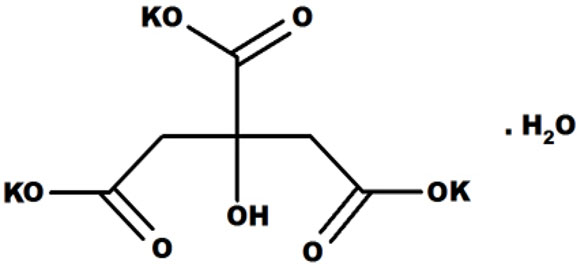
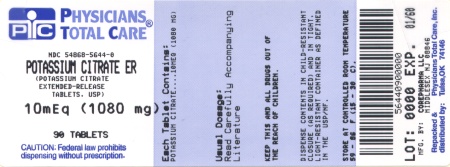
Potassium citrate USP is a citrate salt of potassium and has the chemical name 1,2,3-Propanetricarboxylic acid, 2-hydroxy-, tripotassium salt, monohydrate. Its molecular formula is K 3 C 6 H 5 O 7 .H 2 O , and its structural formula is: M.W. 324.41 Potassium citrate USP is a white granular powder that is soluble in water at 154 g/100 ml, almost insoluble in alcohol, and insoluble in organic solvents. Potassium citrate extended-release tablets USP are supplied as wax matrix tablets, containing 5 mEq (540 mg) potassium citrate or 10 mEq (1080 mg) potassium citrate, for oral administration. In addition, potassium citrate extended-release tablets USP contain the inactive ingredients carnauba wax, magnesium stearate and stearic acid. Chemical Structure for Oxycodone HCL
Potassium citrate extended-release tablets are indicated for the management of renal tubular acidosis (RTA) with calcium stones, hypocitraturic calcium oxalate nephrolithiasis of any etiology, and uric acid lithiasis with or without calcium stones.
Treatment with potassium citrate extended-release tablets should be added to a regimen that limits salt intake (avoidance of foods with high salt content and of added salt at the table) and encourages high fluid intake (urine volume should be at least two liters per day). The objective of treatment with potassium citrate extended-release tablets is to provide potassium citrate in sufficient dosage to restore normal urinary citrate (greater than 320 mg/day and as close to the normal mean of 640 mg/day as possible), and to increase urinary pH to a level of 6.0 to 7.0. In patients with severe hypocitraturia (urinary citrate of less than 150 mg/day), therapy should be initiated at a dosage of 60 mEq/day (20 mEq three times/day or 15 mEq four times/day with meals or within 30 minutes after meals or bedtime snack). In patients with mild-moderate hypocitraturia (>150 mg/day), potassium citrate extended-release tablets should be initiated at a dosage of 30 mEq/day (10 mEq three times/day with meals). Twenty-four hour urinary citrate and/or urinary pH measurements should be used to determine the adequacy of the initial dosage and to evaluate the effectiveness of any dosage change. In addition, urinary citrate and/or pH should be measured every four months. Doses of potassium citrate extended-release tablets greater than 100 mEq/day have not been studied and should be avoided. Serum electrolytes (sodium, potassium, chloride and carbon dioxide), serum creatinine, and complete blood count should be monitored every four months. Treatment should be discontinued if there is hyperkalemia, a significant rise in serum creatinine, or a significant fall in blood hematocrit or hemoglobin.
Potassium citrate extended-release tablets are contraindicated in patients with hyperkalemia (or who have conditions predisposing them to hyperkalemia), as a further rise in serum potassium concentration may produce cardiac arrest. Such conditions include: chronic renal failure, uncontrolled diabetes mellitus, acute dehydration, strenuous physical exercise in unconditioned individuals, adrenal insufficiency, extensive tissue breakdown, or the administration of a potassium-sparing agent (such as triamterene, spironolactone or amiloride). Potassium citrate extended-release tablets are contraindicated in patients in whom there is cause for arrest or delay in tablet passage through the gastrointestinal tract, such as those suffering from delayed gastric emptying, esophageal compression, intestinal obstruction or stricture or those taking anticholinergic medication. Because of its ulcerogenic potential, potassium citrate extended-release tablets should not be given to patients with peptic ulcer disease. Potassium citrate extended-release tablets are contraindicated in patients with active urinary tract infection (with either urea-splitting or other organisms, in association with either calcium or struvite stones). The ability of potassium citrate extended-release tablets to increase urinary citrate may be attenuated by bacterial enzymatic degradation of citrate. Moreover, the rise in urinary pH resulting from potassium citrate therapy might promote further bacterial growth. Potassium citrate extended-release tablets are contraindicated in patients with renal insufficiency (glomerular filtration rate of less than 0.7 ml/kg/min), because of the danger of soft tissue calcification and increased risk for the development of hyperkalemia.
Some patients may develop minor gastrointestinal complaints during potassium citrate therapy, such as abdominal discomfort, vomiting, diarrhea, loose bowel movements or nausea. These symptoms are due to the irritation of the gastrointestinal tract, and may be alleviated by taking the dose with meals or snack, or by reducing the dosage. Patients may find intact matrices in feces. (see also CONTRAINDICATIONS , WARNINGS
HYPERKALEMIA: In patients with impaired mechanisms for excreting potassium, potassium citrate administration can produce hyperkalemia and cardiac arrest. Potentially fatal hyperkalemia can develop rapidly and be asymptomatic. The use of potassium citrate in patients with chronic renal failure, or any other condition which impairs potassium excretion such as severe myocardial damage or heart failure, should be avoided. INTERACTION WITH POTASSIUM-SPARING DIURETICS Concomitant administration of potassium citrate and a potassium-sparing diuretic (such as triamterene, spironolactone or amiloride) should be avoided, since the simultaneous administration of these agents can produce severe hyperkalemia. GASTROINTESTINAL LESIONS Because of reports of upper gastrointestinal mucosal lesions following administration of potassium chloride (wax-matrix), and endoscopic examination of the upper gastrointestinal mucosa was performed in 30 normal volunteers after they had taken glycopyrrolate 2 mg. p.o. t.i.d., potassium citrate 95 mEq/day, wax-matrix potassium chloride 96 mEq/day or wax matrix placebo, in thrice daily schedule in the fasting state for one week. Potassium citrate and the wax-matrix formulation of potassium chloride were indistinguishable but both were significantly more irritating than the wax-matrix placebo. In a subsequent similar study, lesions were less severe when glycopyrrolate was omitted. Solid dosage forms of potassium chloride have produced stenotic and/or ulcerative lesions of the small bowel and deaths. These lesions are caused by a high local concentration of potassium ions in the region of the dissolving tablets, which injured the bowel. In addition, perhaps because wax-matrix preparations are not enteric-coated and release some of their potassium content in the stomach, there have been reports of upper gastrointestinal bleeding associated with these products. The frequency of gastrointestinal lesions with wax-matrix potassium chloride products is estimated at one per 100,000 patient-years. Experience with potassium citrate is limited, but a similar frequency of gastrointestinal lesions should be anticipated. If there is severe vomiting, abdominal pain or gastro-intestinal bleeding, potassium citrate should be discontinued immediately and the possibility of bowel perforation or obstruction investigated.