
İHALE DÜNYASI
İHALE DÜNYASI
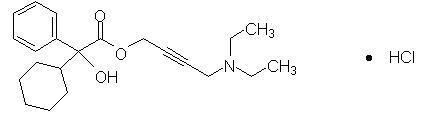
Oxybutynin is an antispasmodic, antimuscarinic agent. GELNIQUE (oxybutynin chloride) is a clear and colorless hydroalcoholic gel containing 100 mg oxybutynin chloride per gram of gel. GELNIQUE is available in a 1 gram (1.14 mL) unit dose that contains 100 mg oxybutynin chloride. Oxybutynin is delivered as a racemate of R- and S- isomers. Chemically, oxybutynin chloride is d, l (racemic) 4-(Diethylamino)-2-butynyl (±)-?-phenylcyclohexaneglycolate hydrochloride. The empirical formula of oxybutynin is C 22 H 31 NO 3 * HCl. Its structural formula is: Oxybutynin chloride is a white powder with a molecular weight of 393.95. Inactive ingredients in GELNIQUE are alcohol, USP; glycerin, USP; hydroxypropyl cellulose, NF; sodium hydroxide, NF; and purified water, USP.
GELNIQUE is indicated for the treatment of overactive bladder with symptoms of urge urinary incontinence, urgency, and frequency [ see Clinical Studies 14 ]. GELNIQUE is an antimuscarinic agent indicated for the treatment of overactive bladder with symptoms of urge urinary incontinence, urgency, and frequency. ( 1 )
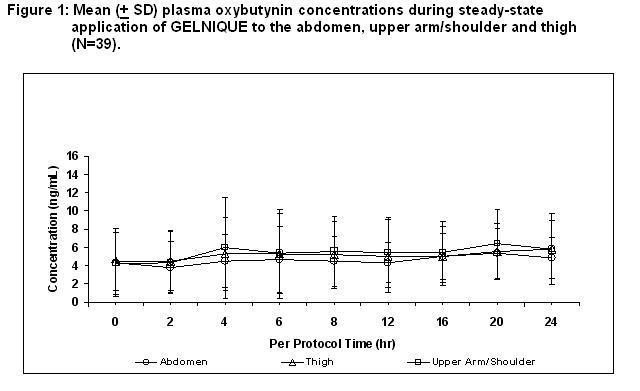
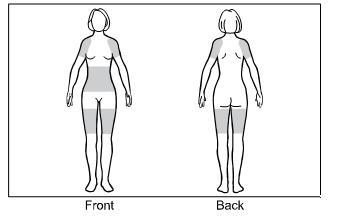
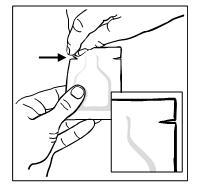
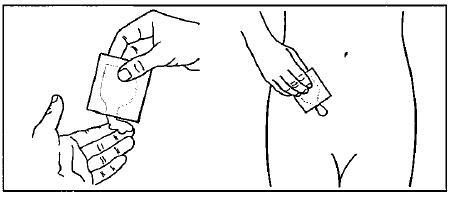
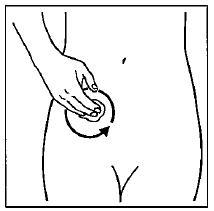
The contents of one sachet of GELNIQUE should be applied once daily to dry, intact skin on the abdomen, upper arms/shoulders, or thighs. Application sites should be rotated. Application of GELNIQUE should not be made to the same site on consecutive days [see Clinical Pharmacology (12.3) ] . GELNIQUE is for topical application only and should not be ingested. Apply contents of one sachet of GELNIQUE once daily to dry, intact skin on the abdomen, upper arms/shoulders, or thighs. ( 2 ) Rotate application sites, avoiding use of the same site on consecutive days. ( 2 ) GELNIQUE is for topical application only and should not be ingested. ( 2 )
The use of GELNIQUE is contraindicated in the following conditions: Urinary retention Gastric retention Uncontrolled narrow-angle glaucoma Known hypersensitivity to GELNIQUE, including skin hypersensitivity [see Warnings and Precautions (5.3) ] . Urinary retention ( 4 ) Gastric retention ( 4 ) Uncontrolled narrow-angle glaucoma ( 4 ) Known hypersensitivity to GELNIQUE , including skin hypersensitivity ( 4 )
Because clinical trials are conducted under widely varying conditions, adverse reaction rates observed in the clinical trials of a drug cannot be directly compared to rates in the clinical trial of another drug and may not reflect the rates observed in practice. The most common adverse reactions (incidence > 5% and > placebo) were dry mouth and application site reactions. ( 6 ) To report SUSPECTED ADVERSE REACTIONS, contact Watson Pharmaceuticals, Inc. at 1-800-272-5525 or FDA at 1-800-FDA-1088 or www.fda.gov/medwatch 6.1 Clinical Studies Experience The safety of GELNIQUE was evaluated in 789 patients (389 randomized to GELNIQUE 1 g and 400 randomized to placebo) during a randomized, placebo-controlled, double-blind, 12-week clinical efficacy and safety study. A subset of these 789 patients (N=216) participated in the 14-week open-label safety extension that followed the placebo-controlled study. Of 216 patients in the safety extension, 107 were randomized to placebo gel during the double-blind, placebo-controlled 12-week study. In the combined double-blind, placebo-controlled study and the open-label safety extension, a total of 496 patients were exposed to at least one dose of GELNIQUE. Four hundred thirty-one (431) patients received at least 12 weeks of GELNIQUE treatment and 85 patients received 26 weeks of GELNIQUE treatment. The study population primarily consisted of Caucasian women (approximately 90%) with an average age of 59 years who had overactive bladder with urge urinary incontinence. Table 1 lists adverse events, regardless of causality, that were reported in the randomized, double-blind, placebo-controlled 12-week study at an incidence greater than placebo and in greater than 2% of patients treated with GELNIQUE. Table 1: Common Adverse Events in the Randomized, Double-blind, Placebo-controlled 12-Week Study (>2% and > placebo) Adverse Event GELNIQUE 1 gram N=389 n (%) Placebo N=400 n (%) * Includes application site pruritus, dermatitis, papules, anesthesia, erythema, irritation, pain and papules Dry mouth 29 (7.5) 11 (2.8) Urinary tract infection 27 (6.9) 17 (4.3) Application site reactions* 21 (5.4) 4 (1.0) Upper respiratory tract infection 21 (5.4) 20 (5.0) Dizziness 11 (2.8) 4 (1.0) Nasopharyngitis 11 (2.8) 9 (2.3) Fatigue 8 (2.1) 4 (1.0) Gastroenteritis viral 8 (2.1) 7 (1.8) The most common adverse reactions, defined as adverse events judged by the investigator to be reasonably associated with the use of study drug, that were reported in ? 1% of GELNIQUE-treated patients were dry mouth (6.9%), application site reactions (5.4%), dizziness (1.5%), headache (1.5%), constipation (1.3%), and pruritus (1.3%). Application site pruritus (2.1%) and application site dermatitis (1.8%) were the most commonly reported application site reactions. A majority of treatment-related adverse events were described as mild or moderate in intensity, except for two patients reporting severe headache. No serious adverse events were judged by the investigator to be treatment-related during the randomized, double-blind, placebo-controlled 12-week study. The most common adverse reaction leading to drug discontinuation was application site reaction (0.8% with GELNIQUE versus 0.3% with placebo). The most common adverse reactions reported during the 14-week open-label extension study were application site reactions (6.0%) and dry mouth (1.9%). The most common reason for premature discontinuation was application site reactions (9 patients or 4.2%). Two of these 9 patients experienced application site reactions of severe intensity (dermatitis, urticaria, and erythema).
Urinary Retention: Use caution in patients with clinically significant bladder outflow obstruction because of the risk of urinary retention. ( 5.1 ) Gastrointestinal Disorders: Use caution in patients with gastrointestinal obstructive disorders or decreased intestinal motility because of the risk of gastric retention. Use caution in patients with gastroesophageal reflux and/or those taking drugs that can cause or exacerbate esophagitis ( 5.2 ) Skin Hypersensitivity: Discontinue GELNIQUE in patients with skin hypersensitivity. ( 5.3 ) Skin transference: Advise patients to cover the application site with clothing if skin-to-skin contact at the application site is anticipated. Wash hands immediately after product application. ( 5.4 ) Flammable Gel: Contains alcohol-based gel. Avoid open fire or smoking until the gel has dried. ( 5.5 ) 5.1 Urinary Retention Administer GELNIQUE with caution in patients with clinically significant bladder outflow obstruction because of the risk of urinary retention. 5.2 Use in Patients with Gastrointestinal Disorders Administer GELNIQUE with caution to patients with gastrointestinal obstructive disorders because of the risk of gastric retention. GELNIQUE, like other anticholinergic drugs, may decrease gastrointestinal motility and should be used with caution in patients with conditions such as ulcerative colitis or intestinal atony. GELNIQUE should be used with caution in patients who have gastroesophageal reflux and/or who are concurrently taking drugs (such as bisphosphonates) that can cause or exacerbate esophagitis. 5.3 Skin Hypersensitivity In a controlled clinical trial of skin sensitization, 1 of 200 patients (0.5%) demonstrated skin hypersensitivity to GELNIQUE. Patients who develop skin hypersensitivity to GELNIQUE should discontinue drug treatment. 5.4 Skin Transference Transfer of oxybutynin to another person can occur when vigorous skin-to-skin contact is made with the application site. To minimize the potential transfer of oxybutynin from GELNIQUE-treated skin to another person, patients should cover the application site with clothing after the gel has dried if direct skin-to-skin contact at the application site is anticipated [see Clinical Pharmacology (12.3) ] . Patients should wash their hands immediately after application of GELNIQUE. 5.5 Flammable Gel GELNIQUE is an alcohol-based gel and is therefore flammable. Avoid open fire or smoking until gel has dried. 5.6 Myasthenia Gravis Administer GELNIQUE with caution in patients with myasthenia gravis, a disease characterized by decreased cholinergic activity at the neuromuscular junction.
No specific drug-drug interaction studies have been performed with GELNIQUE. Other Anticholinergics (antimuscarinics): Concomitant use with other anticholinergic agents may increase the frequency and/or severity of dry mouth, constipation, blurred vision and other anticholinergic pharmacological effects. ( 7.1 ) 7.1 Other Anticholinergics The concomitant use of GELNIQUE with other anticholinergic (antimuscarinic) agents may increase the frequency and/or severity of dry mouth, constipation, blurred vision, somnolence and other anticholinergic pharmacological effects.