
İHALE DÜNYASI
İHALE DÜNYASI
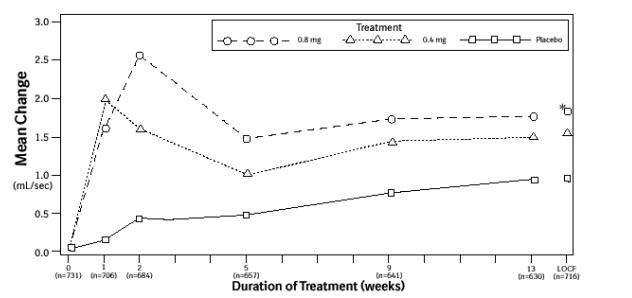
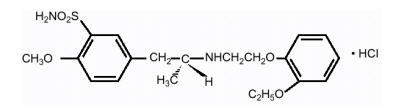
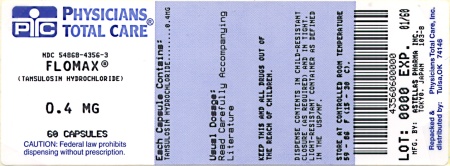
Tamsulosin hydrochloride is an antagonist of alpha 1A adrenoceptors in the prostate. Tamsulosin hydrochloride is (-)-( R )-5-[2-[[2-( o -Ethoxyphenoxy) ethyl]amino]propyl]-2-methoxybenzenesulfonamide, monohydrochloride. Tamsulosin hydrochloride is a white crystalline powder that melts with decomposition at approximately 230°C. It is sparingly soluble in water and methanol, slightly soluble in glacial acetic acid and ethanol, and practically insoluble in ether. The empirical formula of tamsulosin hydrochloride is C 20 H 28 N 2 O 5 S * HCl. The molecular weight of tamsulosin hydrochloride is 444.98. Its structural formula is: Each FLOMAX capsule for oral administration contains tamsulosin hydrochloride 0.4 mg, and the following inactive ingredients: methacrylic acid copolymer dispersion, NF; microcrystalline cellulose, NF; triacetin, USP; calcium stearate, NF; talc, USP; FD&C blue No. 2; titanium dioxide; ferric oxide; gelatin, and trace amounts of black edible ink. Flomax Structure
Flomax (R) (tamsulosin hydrochloride) capsules are indicated for the treatment of the signs and symptoms of benign prostatic hyperplasia (BPH) [ see Clinical Studies (14) ]. FLOMAX capsules are not indicated for the treatment of hypertension. FLOMAX is an alpha 1 adrenoceptor antagonist indicated for treatment of the signs and symptoms of benign prostatic hyperplasia (1) FLOMAX capsules are not indicated for the treatment of hypertension (1)
FLOMAX capsules 0.4 mg once daily is recommended as the dose for the treatment of the signs and symptoms of BPH. It should be administered approximately one-half hour following the same meal each day. For those patients who fail to respond to the 0.4 mg dose after 2 to 4 weeks of dosing, the dose of FLOMAX capsules can be increased to 0.8 mg once daily. FLOMAX capsules 0.4 mg should not be used in combination with strong inhibitors of CYP3A4 (e.g., ketoconazole) [ see Warnings and Precautions (5.2) ]. If FLOMAX capsules administration is discontinued or interrupted for several days at either the 0.4 mg or 0.8 mg dose, therapy should be started again with the 0.4 mg once-daily dose. 0.4 mg once daily taken approximately one-half hour following the same meal each day (2) Can be increased to 0.8 mg once daily for patients who fail to respond to the 0.4 mg dose after 2 to 4 weeks of dosing (2) If discontinued or interrupted for several days, therapy should start again with the 0.4 mg once-daily dose (2)
FLOMAX capsules are contraindicated in patients known to be hypersensitive to tamsulosin hydrochloride or any component of FLOMAX capsules. Reactions have included skin rash, urticaria, pruritus, angioedema, and respiratory symptoms [ see Adverse Reactions (6.2) ]. Contraindicated in patients known to be hypersensitive to tamsulosin hydrochloride or any component of FLOMAX capsules (4 , 6.2)
The most common adverse events (?2% of patients and at a higher incidence than placebo) with the 0.4 mg dose or 0.8 mg dose were headache, dizziness, rhinitis, infection, abnormal ejaculation, asthenia, back pain, diarrhea, pharyngitis, chest pain, cough increased, somnolence, nausea, sinusitis, insomnia, libido decreased, tooth disorder, and blurred vision (6.1) To report SUSPECTED ADVERSE REACTIONS, contact Boehringer Ingelheim Pharmaceuticals, Inc. at (800) 542-6257 or (800) 459-9906 TTY, or FDA at 1-800-FDA-1088 or www.fda.gov/medwatch. 6.1 Clinical Trials Experience Because clinical studies are conducted under widely varying conditions, adverse reactions rates observed in the clinical studies of a drug cannot be directly compared to rates in the clinical studies of another drug and may not reflect the rates observed in practice. The incidence of treatment-emergent adverse events has been ascertained from six short-term U.S. and European placebo-controlled clinical trials in which daily doses of 0.1 to 0.8 mg FLOMAX capsules were used. These studies evaluated safety in 1783 patients treated with FLOMAX capsules and 798 patients administered placebo. Table 1 summarizes the treatment-emergent adverse events that occurred in ?2% of patients receiving either FLOMAX capsules 0.4 mg or 0.8 mg and at an incidence numerically higher than that in the placebo group during two 13-week U.S. trials (US92-03A and US93-01) conducted in 1487 men. Table 1 Treatment-Emergent 1 Adverse Events Occurring in ?2% of FLOMAX Capsules or Placebo Patients in Two U.S. Short-Term Placebo-Controlled Clinical Studies BODY SYSTEM/ ADVERSE EVENT FLOMAX CAPSULES GROUPS PLACEBO 0.4 mg n=502 0.8 mg n=492 n=493 1 A treatment-emergent adverse event was defined as any event satisfying one of the following criteria: The adverse event occurred for the first time after initial dosing with double-blind study medication. The adverse event was present prior to or at the time of initial dosing with double-blind study medication and subsequently increased in severity during double-blind treatment; or The adverse event was present prior to or at the time of initial dosing with double-blind study medication, disappeared completely, and then reappeared during double-blind treatment. 2 Coding preferred terms also include cold, common cold, head cold, flu, and flu-like symptoms. 3 Coding preferred terms also include nasal congestion, stuffy nose, runny nose, sinus congestion, and hay fever. BODY AS WHOLE Headache 97 (19.3%) 104 (21.1%) 99 (20.1%) Infection 2 45 (9.0%) 53 (10.8%) 37 (7.5%) Asthenia 39 (7.8%) 42 (8.5%) 27 (5.5%) Back pain 35 (7.0%) 41 (8.3%) 27 (5.5%) Chest pain 20 (4.0%) 20 (4.1%) 18 (3.7%) NERVOUS SYSTEM Dizziness 75 (14.9%) 84 (17.1%) 50 (10.1%) Somnolence 15 (3.0%) 21 (4.3%) 8 (1.6%) Insomnia 12 (2.4%) 7 (1.4%) 3 (0.6%) Libido decreased 5 (1.0%) 10 (2.0%) 6 (1.2%) RESPIRATORY SYSTEM Rhinitis 3 66 (13.1%) 88 (17.9%) 41 (8.3%) Pharyngitis 29 (5.8%) 25 (5.1%) 23 (4.7%) Cough increased 17 (3.4%) 22 (4.5%) 12 (2.4%) Sinusitis 11 (2.2%) 18 (3.7%) 8 (1.6%) DIGESTIVE SYSTEM Diarrhea 31 (6.2%) 21 (4.3%) 22 (4.5%) Nausea 13 (2.6%) 19 (3.9%) 16 (3.2%) Tooth disorder 6 (1.2%) 10 (2.0%) 7 (1.4%) UROGENITAL SYSTEM Abnormal ejaculation 42 (8.4%) 89 (18.1%) 1 (0.2%) SPECIAL SENSES Blurred vision 1 (0.2%) 10 (2.0%) 2 (0.4%) Signs and Symptoms of Orthostasis In the two U.S. studies, symptomatic postural hypotension was reported by 0.2% of patients (1 of 502) in the 0.4 mg group, 0.4% of patients (2 of 492) in the 0.8 mg group, and by no patients in the placebo group. Syncope was reported by 0.2% of patients (1 of 502) in the 0.4 mg group, 0.4% of patients (2 of 492) in the 0.8 mg group, and 0.6% of patients (3 of 493) in the placebo group. Dizziness was reported by 15% of patients (75 of 502) in the 0.4 mg group, 17% of patients (84 of 492) in the 0.8 mg group, and 10% of patients (50 of 493) in the placebo group. Vertigo was reported by 0.6% of patients (3 of 502) in the 0.4 mg group, 1% of patients (5 of 492) in the 0.8 mg group, and by 0.6% of patients (3 of 493) in the placebo group. Multiple testing for orthostatic hypotension was conducted in a number of studies. Such a test was considered positive if it met one or more of the following criteria: (1) a decrease in systolic blood pressure of ?20 mmHg upon standing from the supine position during the orthostatic tests; (2) a decrease in diastolic blood pressure ?10 mmHg upon standing, with the standing diastolic blood pressure <65 mmHg during the orthostatic test; (3) an increase in pulse rate of ?20 bpm upon standing with a standing pulse rate ?100 bpm during the orthostatic test; and (4) the presence of clinical symptoms (faintness, lightheadedness/lightheaded, dizziness, spinning sensation, vertigo, or postural hypotension) upon standing during the orthostatic test. Following the first dose of double-blind medication in Study 1, a positive orthostatic test result at 4 hours post-dose was observed in 7% of patients (37 of 498) who received FLOMAX capsules 0.4 mg once daily and in 3% of the patients (8 of 253) who received placebo. At 8 hours post-dose, a positive orthostatic test result was observed for 6% of the patients (31 of 498) who received FLOMAX capsules 0.4 mg once daily and 4% (9 of 250) who received placebo (Note: patients in the 0.8 mg group received 0.4 mg once daily for the first week of Study 1). In Studies 1 and 2, at least one positive orthostatic test result was observed during the course of these studies for 81 of the 502 patients (16%) in the FLOMAX capsules 0.4 mg once-daily group, 92 of the 491 patients (19%) in the FLOMAX capsules 0.8 mg once-daily group, and 54 of the 493 patients (11%) in the placebo group. Because orthostasis was detected more frequently in FLOMAX capsule-treated patients than in placebo recipients, there is a potential risk of syncope [ see Warnings and Precautions (5.1) ]. Abnormal Ejaculation Abnormal ejaculation includes ejaculation failure, ejaculation disorder, retrograde ejaculation, and ejaculation decrease. As shown in Table 1, abnormal ejaculation was associated with FLOMAX capsules administration and was dose-related in the U.S. studies. Withdrawal from these clinical studies of FLOMAX capsules because of abnormal ejaculation was also dose-dependent, with 8 of 492 patients (1.6%) in the 0.8 mg group and no patients in the 0.4 mg or placebo groups discontinuing treatment due to abnormal ejaculation. Laboratory Tests No laboratory test interactions with FLOMAX capsules are known. Treatment with FLOMAX capsules for up to 12 months had no significant effect on prostate-specific antigen (PSA). 6.2 Postmarketing Experience The following adverse reactions have been identified during post-approval use of FLOMAX capsules. Because these reactions are reported voluntarily from a population of uncertain size, it is not always possible to reliably estimate their frequency or establish a causal relationship to drug exposure. Decisions to include these reactions in labeling are typically based on one or more of the following factors: (1) seriousness of the reaction, (2) frequency of reporting, or (3) strength of causal connection to FLOMAX capsules. Allergic-type reactions such as skin rash, urticaria, pruritus, angioedema, and respiratory symptoms have been reported with positive rechallenge in some cases. Priapism has been reported rarely. Infrequent reports of palpitations, hypotension, skin desquamation, constipation, and vomiting have been received during the postmarketing period. During cataract surgery, a variant of small pupil syndrome known as Intraoperative Floppy Iris Syndrome (IFIS) has been reported in association with alpha 1 blocker therapy [ see Warnings and Precautions (5.5) ].
Advise patients about the possibility of symptoms related to postural hypotension and to avoid situations where injury could result should syncope occur (5.1) Should not be used in combination with strong inhibitors of CYP3A4. Use with caution in combination with moderate inhibitors of CYP3A4, with strong or moderate inhibitors of CYP2D6, in patients known to be CYP2D6 poor metabolizers, or in combination with other cytochrome P450 inhibitors. (5.2 , 7.1 , 12.3) Should not be used in combination with other alpha adrenergic blocking agents (5.2 , 7.2 , 12.3) Exercise caution with concomitant administration of warfarin (5.2 , 7.4 , 12.3) Advise patients about the possibility and seriousness of priapism (5.3) Intraoperative Floppy Iris Syndrome has been observed during cataract surgery in some patients. Advise patients considering cataract surgery to tell their ophthalmologist that they have taken FLOMAX capsules. (5.5) Advise patients to be screened for the presence of prostate cancer prior to treatment and at regular intervals afterwards (5.4) 5.1 Orthostasis The signs and symptoms of orthostasis (postural hypotension, dizziness, and vertigo) were detected more frequently in FLOMAX capsule-treated patients than in placebo recipients. As with other alpha adrenergic blocking agents there is a potential risk of syncope [ see Adverse Reactions (6.1) ]. Patients beginning treatment with FLOMAX capsules should be cautioned to avoid situations in which injury could result should syncope occur [ see Patient Counseling Information (17.1) ]. 5.2 Drug Interactions Tamsulosin is extensively metabolized, mainly by CYP3A4 and CYP2D6. FLOMAX capsules 0.4 mg should not be used in combination with strong inhibitors of CYP3A4 (e.g., ketoconazole) [ see Drug Interactions (7.1) and Clinical Pharmacology (12.3) ]. FLOMAX capsules should be used with caution in combination with moderate inhibitors of CYP3A4 (e.g., erythromycin), in combination with strong (e.g., paroxetine) or moderate (e.g., terbinafine) inhibitors of CYP2D6, in patients known to be CYP2D6 poor metabolizers particularly at a dose higher than 0.4 mg (e.g., 0.8 mg) [ see Drug Interactions (7.1) and Clinical Pharmacology (12.3) ]. FLOMAX capsules should be used with caution in combination with cimetidine, particularly at a dose higher than 0.4 mg (e.g., 0.8 mg) [ see Drug Interactions (7.1) and Clinical Pharmacology (12.3) ]. FLOMAX capsules should not be used in combination with other alpha adrenergic blocking agents [ see Drug Interactions (7.2) and Clinical Pharmacology (12.3) ]. Caution is advised when alpha adrenergic blocking agents including FLOMAX are co-administered with PDE5 inhibitors. Alpha-adrenergic blockers and PDE5 inhibitors are both vasodilators that can lower blood pressure. Concomitant use of these two drug classes can potentially cause symptomatic hypotension [ see Drug Interactions (7.3) and Clinical Pharmacology (12.3) ]. Caution should be exercised with concomitant administration of warfarin and FLOMAX capsules [ see Drug Interactions (7.4) and Clinical Pharmacology (12.3) ]. 5.3 Priapism Rarely (probably less than 1 in 50,000 patients), tamsulosin, like other alpha 1 antagonists, has been associated with priapism (persistent painful penile erection unrelated to sexual activity). Because this condition can lead to permanent impotence if not properly treated, patients must be advised about the seriousness of the condition [ see Patient Counseling Information (17.2) ]. 5.4 Screening for Prostate Cancer Prostate cancer and BPH frequently co-exist; therefore, patients should be screened for the presence of prostate cancer prior to treatment with FLOMAX capsules and at regular intervals afterwards [ see Patient Counseling Information (17.3) ]. 5.5 Intraoperative Floppy Iris Syndrome Intraoperative Floppy Iris Syndrome (IFIS) has been observed during cataract surgery in some patients treated with alpha 1 blockers, including FLOMAX capsules [ see Adverse Reactions (6.2) ]. Most reports were in patients taking the alpha 1 blocker when IFIS occurred, but in some cases, the alpha 1 blocker had been stopped prior to surgery. In most of these cases, the alpha 1 blocker had been stopped recently prior to surgery (2 to 14 days), but in a few cases, IFIS was reported after the patient had been off the alpha 1 blocker for a longer period (5 weeks to 9 months). IFIS is a variant of small pupil syndrome and is characterized by the combination of a flaccid iris that billows in response to intraoperative irrigation currents, progressive intraoperative miosis despite preoperative dilation with standard mydriatic drugs and potential prolapse of the iris toward the phacoemulsification incisions. The patient's ophthalmologist should be prepared for possible modifications to their surgical technique, such as the utilization of iris hooks, iris dilator rings, or viscoelastic substances. The benefit of stopping alpha 1 blocker therapy prior to cataract surgery has not been established. 5.6 Sulfa Allergy In patients with sulfa allergy, allergic reaction to FLOMAX capsules has been rarely reported. If a patient reports a serious or life-threatening sulfa allergy, caution is warranted when administering FLOMAX capsules.
FLOMAX capsules 0.4 mg should not be used with strong inhibitors of CYP3A4 (e.g., ketoconazole). FLOMAX capsules should be used with caution in combination with moderate inhibitors of CYP3A4 (e.g., erythromycin), in combination with strong (e.g., paroxetine) or moderate (e.g., terbinafine) inhibitors of CYP2D6, or in patients known to be CYP2D6 poor metabolizers, particularly at a dose higher than 0.4 mg (e.g., 0.8 mg). (5.2 , 7.1 , 12.3) Concomitant use of PDE5 inhibitors with tamsulosin can potentially cause symptomatic hypotension (5.2 , 7.3 , 12.3) 7.1 Cytochrome P450 Inhibition Strong and Moderate Inhibitors of CYP3A4 or CYP2D6 Tamsulosin is extensively metabolized, mainly by CYP3A4 and CYP2D6. Concomitant treatment with ketoconazole (a strong inhibitor of CYP3A4) resulted in an increase in the C max and AUC of tamsulosin by a factor of 2.2 and 2.8, respectively [ see Warnings and Precautions (5.2) and Clinical Pharmacology (12.3) ]. The effects of concomitant administration of a moderate CYP3A4 inhibitor (e.g., erythromycin) on the pharmacokinetics of FLOMAX have not been evaluated [ see Warnings and Precautions (5.2) and Clinical Pharmacology (12.3) ]. Concomitant treatment with paroxetine (a strong inhibitor of CYP2D6) resulted in an increase in the C max and AUC of tamsulosin by a factor of 1.3 and 1.6, respectively [ see Warnings and Precautions (5.2) and Clinical Pharmacology (12.3) ]. A similar increase in exposure is expected in CYP2D6 poor metabolizers (PM) as compared to extensive metabolizers (EM). Since CYP2D6 PMs cannot be readily identified and the potential for significant increase in tamsulosin exposure exists when FLOMAX 0.4 mg is co-administered with strong CYP3A4 inhibitors in CYP2D6 PMs, FLOMAX 0.4 mg capsules should not be used in combination with strong inhibitors of CYP3A4 (e.g., ketoconazole) [ see Warnings and Precautions (5.2) and Clinical Pharmacology (12.3) ]. The effects of concomitant administration of a moderate CYP2D6 inhibitor (e.g., terbinafine) on the pharmacokinetics of FLOMAX have not been evaluated [ see Warnings and Precautions (5.2) and Clinical Pharmacology (12.3) ]. The effects of co-administration of both a CYP3A4 and a CYP2D6 inhibitor with FLOMAX capsules have not been evaluated. However, there is a potential for significant increase in tamsulosin exposure when FLOMAX 0.4 mg is co-administered with a combination of both CYP3A4 and CYP2D6 inhibitors [ see Warnings and Precautions (5.2) and Clinical Pharmacology (12.3) ]. Cimetidine Treatment with cimetidine resulted in a significant decrease (26%) in the clearance of tamsulosin hydrochloride, which resulted in a moderate increase in tamsulosin hydrochloride AUC (44%) [ see Warnings and Precautions (5.2) and Clinical Pharmacology (12.3) ]. 7.2 Other Alpha Adrenergic Blocking Agents The pharmacokinetic and pharmacodynamic interactions between FLOMAX capsules and other alpha adrenergic blocking agents have not been determined; however, interactions between FLOMAX capsules and other alpha adrenergic blocking agents may be expected [ see Warnings and Precautions (5.2) and Clinical Pharmacology (12.3) ]. 7.3 PDE5 Inhibitors Caution is advised when alpha adrenergic blocking agents including FLOMAX are co-administered with PDE5 inhibitors. Alpha-adrenergic blockers and PDE5 inhibitors are both vasodilators that can lower blood pressure. Concomitant use of these two drug classes can potentially cause symptomatic hypotension [ see Warnings and Precautions (5.2) and Clinical Pharmacology (12.3) ]. 7.4 Warfarin A definitive drug-drug interaction study between tamsulosin hydrochloride and warfarin was not conducted. Results from limited in vitro and in vivo studies are inconclusive. Caution should be exercised with concomitant administration of warfarin and FLOMAX capsules [ see Warnings and Precautions (5.2) and Clinical Pharmacology (12.3) ]. 7.5 Nifedipine, Atenolol, Enalapril Dosage adjustments are not necessary when FLOMAX capsules are administered concomitantly with nifedipine, atenolol, or enalapril [ see Clinical Pharmacology (12.3) ]. 7.6 Digoxin and Theophylline Dosage adjustments are not necessary when a FLOMAX capsule is administered concomitantly with digoxin or theophylline [ see Clinical Pharmacology (12.3) ]. 7.7 Furosemide FLOMAX capsules had no effect on the pharmacodynamics (excretion of electrolytes) of furosemide. While furosemide produced an 11% to 12% reduction in tamsulosin hydrochloride C max and AUC, these changes are expected to be clinically insignificant and do not require adjustment of the FLOMAX capsules dosage [ see Clinical Pharmacology (12.3) ]. | Drug Interactions Cytochrome P450 Inhibition Strong and Moderate Inhibitors of CYP3A4 or CYP2D6 The effects of ketoconazole (a strong inhibitor of CYP3A4) at 400 mg once daily for 5 days on the pharmacokinetics of a single FLOMAX capsule 0.4 mg dose was investigated in 24 healthy volunteers (age range 23 to 47 years). Concomitant treatment with ketoconazole resulted in an increase in the C max and AUC of tamsulosin by a factor of 2.2 and 2.8, respectively [ see Warnings and Precautions (5.2) and Clinical Pharmacology (12.3) ]. The effects of concomitant administration of a moderate CYP3A4 inhibitor (e.g., erythromycin) on the pharmacokinetics of FLOMAX have not been evaluated [ see Warnings and Precautions (5.2) and Drug Interactions (7.1) ]. The effects of paroxetine (a strong inhibitor of CYP2D6) at 20 mg once daily for 9 days on the pharmacokinetics of a single FLOMAX capsule 0.4 mg dose was investigated in 24 healthy volunteers (age range 23 to 47 years). Concomitant treatment with paroxetine resulted in an increase in the C max and AUC of tamsulosin by a factor of 1.3 and 1.6, respectively [ see Warnings and Precautions (5.2) and Drug Interactions (7.1) ]. A similar increase in exposure is expected in CYP2D6 poor metabolizers (PM) as compared to extensive metabolizers (EM). A fraction of the population (about 7% of Caucasians and 2% of African Americans) are CYP2D6 PMs. Since CYP2D6 PMs cannot be readily identified and the potential for significant increase in tamsulosin exposure exists when FLOMAX 0.4 mg is co-administered with strong CYP3A4 inhibitors in CYP2D6 PMs, FLOMAX 0.4 mg capsules should not be used in combination with strong inhibitors of CYP3A4 (e.g., ketoconazole) [ see Warnings and Precautions (5.2) and Drug Interactions (7.1) ]. The effects of concomitant administration of a moderate CYP2D6 inhibitor (e.g., terbinafine) on the pharmacokinetics of FLOMAX have not been evaluated [ see Warnings and Precautions (5.2) and Drug Interactions (7.1) ]. The effects of co-administration of both a CYP3A4 and a CYP2D6 inhibitor with FLOMAX capsules have not been evaluated. However, there is a potential for significant increase in tamsulosin exposure when FLOMAX 0.4 mg is co-administered with a combination of both CYP3A4 and CYP2D6 inhibitors [ see Warnings and Precautions (5.2) and Drug Interactions (7.1) ]. Cimetidine The effects of cimetidine at the highest recommended dose (400 mg every 6 hours for 6 days) on the pharmacokinetics of a single FLOMAX capsule 0.4 mg dose was investigated in 10 healthy volunteers (age range 21 to 38 years). Treatment with cimetidine resulted in a significant decrease (26%) in the clearance of tamsulosin hydrochloride, which resulted in a moderate increase in tamsulosin hydrochloride AUC (44%) [ see Warnings and Precautions (5.2) and Drug Interactions (7.1) ]. Other Alpha Adrenergic Blocking Agents The pharmacokinetic and pharmacodynamic interactions between FLOMAX capsules and other alpha adrenergic blocking agents have not been determined; however, interactions between FLOMAX capsules and other alpha adrenergic blocking agents may be expected [ see Warnings and Precautions (5.2) and Drug Interactions (7.2) ]. PDE5 Inhibitors Caution is advised when alpha adrenergic blocking agents, including FLOMAX, are co-administered with PDE5 inhibitors. Alpha-adrenergic blockers and PDE5 inhibitors are both vasodilators that can lower blood pressure. Concomitant use of these two drug classes can potentially cause symptomatic hypotension [ see Warnings and Precautions (5.2) and Drug Interactions (7.3) ]. Warfarin A definitive drug-drug interaction study between tamsulosin hydrochloride and warfarin was not conducted. Results from limited in vitro and in vivo studies are inconclusive. Therefore, caution should be exercised with concomitant administration of warfarin and FLOMAX capsules [ see Warnings and Precautions (5.2) and Drug Interactions (7.4) ]. Nifedipine, Atenolol, Enalapril In three studies in hypertensive subjects (age range 47 to 79 years) whose blood pressure was controlled with stable doses of nifedipine, atenolol, or enalapril for at least 3 months, FLOMAX capsules 0.4 mg for 7 days followed by FLOMAX capsules 0.8 mg for another 7 days (n=8 per study) resulted in no clinically significant effects on blood pressure and pulse rate compared to placebo (n=4 per study). Therefore, dosage adjustments are not necessary when FLOMAX capsules are administered concomitantly with nifedipine, atenolol, or enalapril [ see Drug Interactions (7.5) ]. Digoxin and Theophylline In two studies in healthy volunteers (n=10 per study; age range 19 to 39 years) receiving FLOMAX capsules 0.4 mg/day for 2 days, followed by FLOMAX capsules 0.8 mg/day for 5 to 8 days, single intravenous doses of digoxin 0.5 mg or theophylline 5 mg/kg resulted in no change in the pharmacokinetics of digoxin or theophylline. Therefore, dosage adjustments are not necessary when a FLOMAX capsule is administered concomitantly with digoxin or theophylline [ see Drug Interactions (7.6) ]. Furosemide The pharmacokinetic and pharmacodynamic interaction between FLOMAX capsules 0.8 mg/day (steady-state) and furosemide 20 mg intravenously (single dose) was evaluated in 10 healthy volunteers (age range 21 to 40 years). FLOMAX capsules had no effect on the pharmacodynamics (excretion of electrolytes) of furosemide. While furosemide produced an 11% to 12% reduction in tamsulosin hydrochloride C max and AUC, these changes are expected to be clinically insignificant and do not require adjustment of the FLOMAX capsules dosage [ see Drug Interactions (7.7) ].