
İHALE DÜNYASI
İHALE DÜNYASI
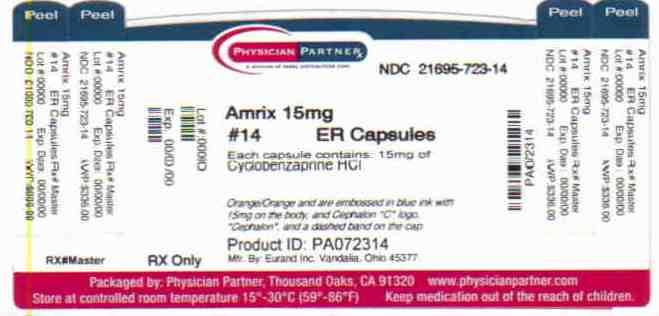
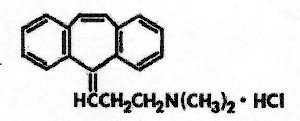
AMRIX (R) (Cyclobenzaprine Hydrochloride Extended-Release Capsules) is a skeletal muscle relaxant which relieves muscle spasm of local origin without interfering with muscle function. The active ingredient in AMRIX extended-release capsules is cyclobenzaprine hydrochloride, USP. Cyclobenzaprine hydrochloride (HCl) is a white, crystalline tricyclic amine salt with the empirical formula C 20 H 21 N*HCl and a molecular weight of 311.9. It has a melting point of 217°C, and a pK a of 8.47 at 25°C. It is freely soluble in water and alcohol, sparingly soluble in isopropanol, and insoluble in hydrocarbon solvents. If aqueous solutions are made alkaline, the free base separates. Cyclobenzaprine HCl is designated chemically as 3-( 5H -dibenzo[ a,d ] cyclohepten-5-ylidene)- N,N -dimethyl-1-propanamine hydrochloride, and has the following structural formula: AMRIX extended-release capsules for oral administration are supplied in 15 and 30 mg strengths. AMRIX capsules contain the following inactive ingredients: diethyl phthalate NF, ethylcellulose NF (Ethocel Standard 10 Premium), gelatin, Opadry (R) Clear YS-1-7006, sugar spheres NF (20-25 mesh), and titanium dioxide. AMRIX 15 mg capsules also contain D&C yellow #10, FD&C green #3, and FD&C red #40. AMRIX 30 mg capsules also contain FD&C blue #1, FD&C blue #2, FD&C red #40, and FD&C yellow #6. Structural Formula
AMRIX is indicated as an adjunct to rest and physical therapy for relief of muscle spasm associated with acute, painful musculoskeletal conditions. Improvement is manifested by relief of muscle spasm and its associated signs and symptoms, namely, pain, tenderness, and limitation of motion. AMRIX should be used only for short periods (up to two or three weeks) because adequate evidence of effectiveness for more prolonged use is not available and because muscle spasm associated with acute, painful musculoskeletal conditions is generally of short duration and specific therapy for longer periods is seldom warranted. AMRIX has not been found effective in the treatment of spasticity associated with cerebral or spinal cord disease or in children with cerebral palsy.
The recommended adult dose for most patients is one (1) AMRIX 15 mg capsule taken once daily. Some patients may require up to 30 mg/day, given as one (1) AMRIX 30 mg capsule taken once daily or as two (2) AMRIX 15 mg capsules taken once daily. It is recommended that doses be taken at approximately the same time each day. Use of AMRIX for periods longer than two or three weeks is not recommended (see INDICATIONS AND USAGE ). Dosage Considerations for Special Patient Populations: AMRIX should not be used in the elderly or in patients with impaired hepatic function. (see WARNINGS )
Hypersensitivity to any component of this product. Concomitant use of monoamine oxidase (MAO) inhibitors or within 14 days after their discontinuation. Hyperpyretic crisis seizures and deaths have occurred in patients receiving cyclobenzaprine (or structurally similar tricyclic antidepressants) concomitantly with MAO inhibitor drugs. During the acute recovery phase of myocardial infarction, and in patients with arrhythmias, heart block conduction disturbances, or congestive heart failure. Hyperthyroidism.
The most common adverse reactions in the two 14-day clinical efficacy trials and in the 7-day repeat-dose pharmacokinetic study are presented in Tables 5 and 6, respectively. Table 5: Incidence of the Most Common Adverse Reactions Occurring in ? 3% of Subjects in Any Treatment Group in the Two Phase 3, Double-Blind AMRIX Trials AMRIX 15 mg N=127 AMRIX 30 mg N=126 Placebo N=128 Dry mouth 6% 14% 2% Dizziness 3% 6% 2% Fatigue 3% 3% 2% Constipation 1% 3% 0% Somnolence 1% 2% 0% Nausea 3% 3% 1% Dyspepsia 0% 4% 1% Table 6: Incidence of the Most Common Adverse Reactions Occurring in ? 3% of Subjects in Any Treatment Group in the Seven-Day Pharmacokinetic Study of AMRIX AMRIX 30 mg N = 36 Somnolence 100% Dry mouth 58% Headache NOS 17% Dizziness 19% Vision blurred 3% Nausea 8% Dysgeusia 6% Palpitations 6% Tremor 6% Dry throat 8% Acne NOS 6% Disturbance in attention 6% Insomnia 0 In a postmarketing surveillance program (7607 patients treated with cyclobenzaprine 10 mg TID), the adverse reactions reported most frequently were drowsiness, dry mouth, and dizziness. The incidence of these common adverse reactions was lower in the surveillance program than in the controlled clinical studies: Table 7: Most Common Adverse Reactions from Postmarketing Surveillance Program Clinical Studies cyclobenzaprine 10 mg TID Surveillance Program cyclobenzaprine 10 mg TID Drowsiness 39% 16% Dry mouth 27% 7% Dizziness 11% 3% Among the less frequent adverse reactions, there was no appreciable difference in incidence in controlled clinical studies or in the surveillance program. Adverse reactions which were reported in 1% to 3% of the patients were: fatigue/tiredness, asthenia, nausea, constipation, dyspepsia, unpleasant taste, blurred vision, headache, nervousness, and confusion. The following adverse reactions have been reported in post-marketing experience or with an incidence of less than 1% of patients in clinical trials with the 10 mg TID tablet: Body as a Whole: Syncope; malaise. Cardiovascular: Tachycardia; arrhythmia; vasodilatation; palpitation; hypotension. Digestive: Vomiting; anorexia; diarrhea; gastrointestinal pain; gastritis; thirst; flatulence; edema of the tongue; abnormal liver function and rare reports of hepatitis, jaundice, and cholestasis. Hypersensitivity: Anaphylaxis; angioedema; pruritus; facial edema; urticaria; rash. Musculoskeletal: Local weakness. Nervous System and Psychiatric: Seizures, ataxia; vertigo; dysarthria; tremors; hypertonia; convulsions; muscle twitching; disorientation; insomnia; depressed mood; abnormal sensations; anxiety; agitation; psychosis, abnormal thinking and dreaming; hallucinations; excitement; paresthesia; diplopia. Skin: Sweating. Special Senses: Ageusia; tinnitus. Urogenital: Urinary frequency and/or retention. Causal Relationship Unknown Other reactions, reported rarely for cyclobenzaprine under circumstances where a causal relationship could not be established or reported for other tricyclic drugs, are listed to serve as alerting information to physicians: Body as a Whole: Chest pain; edema. Cardiovascular: Hypertension; myocardial infarction; heart block; stroke. Digestive: Paralytic ileus, tongue discoloration; stomatitis; parotid swelling. Endocrine: Inappropriate ADH syndrome. Hematic and Lymphatic: Purpura; bone marrow depression; leukopenia; eosinophilia; thrombocytopenia. Metabolic, Nutritional and Immune: Elevation and lowering of blood sugar levels; weight gain or loss. Musculoskeletal: Myalgia. Nervous System and Psychiatric: Decreased or increased libido; abnormal gait; delusions; aggressive behavior; paranoia; peripheral neuropathy; Bell's palsy; alteration in EEG patterns; extrapyramidal symptoms. Respiratory: Dyspnea. Skin: Photosensitization; alopecia. Urogenital: Impaired urination; dilatation of urinary tract; impotence; testicular swelling; gynecomastia; breast enlargement; galactorrhea.
AMRIX is closely related to the tricyclic antidepressants, e.g., amitriptyline and imipramine. In short term studies for indications other than muscle spasm associated with acute musculoskeletal conditions, and usually at doses somewhat greater than those recommended for skeletal muscle spasm, some of the more serious central nervous system reactions noted with the tricyclic antidepressants have occurred (see WARNINGS , below, and ADVERSE REACTIONS ). Tricyclic antidepressants have been reported to produce arrhythmias, sinus tachycardia, prolongation of the conduction time leading to myocardial infarction and stroke. AMRIX may enhance the effects of alcohol, barbiturates, and other CNS depressants. As a result of a two-fold higher cyclobenzaprine plasma levels in subjects with mild hepatic impairment, as compared to healthy subjects, following administration of immediate-release cyclobenzaprine and because there is limited dosing flexibility with AMRIX, use of AMRIX is not recommended in subjects with mild, moderate or severe hepatic impairment. As a result of a 40% increase in cyclobenzaprine plasma levels and a 56% increase in plasma half-life following administration of AMRIX in elderly subjects as compared to young adults, use of AMRIX is not recommended in elderly.
AMRIX may have life-threatening interactions with MAO inhibitors. (See CONTRAINDICATIONS .) AMRIX may enhance the effects of alcohol, barbiturates, and other CNS depressants. Tricyclic antidepressants may block the antihypertensive action of guanethidine and similarly acting compounds. Tricyclic antidepressants may enhance the seizure risk in patients taking tramadol (ULTRAM (R) [tramadol HCl tablets, Ortho-McNeil Pharmaceutical] or ULTRACET (R) [tramadol HCl and acetaminophen tablets, Ortho-McNeil Pharmaceutical]).