
İHALE DÜNYASI
İHALE DÜNYASI
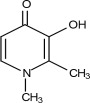
FERRIPROX Tablets (deferiprone) contain 500 mg deferiprone (3-hydroxy-1,2-dimethylpyridin-4-one), a synthetic, orally active, iron-chelating agent. The molecular formula for deferiprone is C 7 H 9 NO 2 and its molecular weight is 139.15 g/mol. Deferiprone has the following structural formula: Deferiprone is a white to pinkish-white powder. It is sparingly soluble in deionized water (14.3 mg/mL) and has a melting point range of 272 °C - 278 °C. FERRIPROX Tablets are white to off-white, capsule-shaped tablets, and imprinted with "APO" score "500" on one side and plain on the other. The tablets can be broken in half along the score line. Each tablet contains 500 mg deferiprone and the following inactive ingredients: Tablet core - microcrystalline cellulose, magnesium stearate, colloidal silicon dioxide; Coating - hypromellose, polyethylene glycol, titanium dioxide. Structural Formula
FERRIPROX Tablets are an iron chelator indicated for the treatment of transfusional iron overload in adult and pediatric patients 8 years of age and older with thalassemia syndromes. ( 1.1 ) FERRIPROX Tablets are an iron chelator indicated for the treatment of transfusional iron overload in adult and pediatric patients 8 years of age and older with sickle cell disease or other anemias. ( 1.2 ) Limitations of Use Safety and effectiveness have not been established for the treatment of transfusional iron overload in patients with myelodysplastic syndrome or in patients with Diamond Blackfan anemia. ( 1.3 ) 1.1 Transfusional Iron Overload in Patients with Thalassemia Syndromes FERRIPROX Tablets are indicated for the treatment of transfusional iron overload in adult and pediatric patients 8 years of age and older with thalassemia syndromes. 1.2 Transfusional Iron Overload in Patients with Sickle Cell Disease or Other Anemias FERRIPROX Tablets are indicated for the treatment of transfusional iron overload in adult and pediatric patients 8 years of age and older with sickle cell disease or other anemias. 1.3 Limitations of Use Safety and effectiveness have not been established for the treatment of transfusional iron overload in patients with myelodysplastic syndrome or in patients with Diamond Blackfan anemia.
25 mg/kg to 33 mg/kg actual body weight, orally, three times per day, for a total daily dose of 75 mg/kg to 99 mg/kg body weight. ( 2.1 ) 2.1 Recommended Dosage for FERRIPROX Tablets for Adult and Pediatric Patients with Transfusional Iron Overload due to Thalassemia Syndromes, Sickle Cell Disease or Other Anemias Starting Dosage The recommended starting oral dosage of FERRIPROX Tablets is 25 mg/kg (actual body weight), three times per day for a total of 75 mg/kg/day. Round dose to the nearest 250 mg (half-tablet). Table 1a: Tablet requirement to achieve a 25 mg/kg dose (rounded to the nearest half-tablet) for administration three times a day. Body Weight (kg) Dose (mg) Number of 500 mg tablets 20 500 1 30 750 1.5 40 1,000 2 50 1,250 2.5 60 1,500 3 70 1,750 3.5 80 2,000 4 90 2,250 4.5 To minimize gastrointestinal upset when first starting therapy, dosing can start at 45 mg/kg/day and increase weekly by 15 mg/kg/day increments until the full prescribed dose is achieved. Dosage Adjustments Tailor dosage adjustments to the individual patient's response and therapeutic goals (maintenance or reduction of body iron burden). The maximum oral dosagee is 33 mg/kg (actual body weight), three times per day for a total of 99 mg/kg/day. Table 1b: Tablet requirement to achieve a 33 mg/kg dose (rounded to the nearest half-tablet) for administration three times a day. Body Weight (kg) Dose (mg) Number of 500 mg tablets 20 660 1.5 30 990 2 40 1,320 2.5 50 1,650 3.5 60 1,980 4 70 2,310 4.5 80 2,640 5.5 90 2,970 6 For patients who have trouble swallowing tablets, consider the use of FERRIPROX Oral Solution (see the prescribing information for FERRIPROX Oral Solution). 2.2 Monitoring Ferritin Levels to Assess Efficacy Monitor serum ferritin concentration every two to three months to assess the effect of FERRIPROX on body iron stores. If the serum ferritin is consistently below 500 mcg/L, consider temporarily interrupting FERRIPROX therapy until serum ferritin rises above 500 mcg/L. 2.3 Dosage Modification for Drug Interactions Allow at least a 4-hour interval between administration of FERRIPROX and other drugs or supplements containing polyvalent cations such as iron, aluminum, or zinc [see Drug Interactions ( 7.2 ), Clinical Pharmacology ( 12.3 )] .
FERRIPROX is contraindicated in patients with known hypersensitivity to deferiprone or to any of the excipients in the formulation. The following reactions have been reported in association with the administration of deferiprone: Henoch-Schönlein purpura; urticaria; and periorbital edema with skin rash [see Adverse Reactions ( 6.2 )]. Hypersensitivity to deferiprone or to any of the excipients in the formulation. ( 4 )
The following clinically significant adverse reactions are described below and elsewhere in the labeling: Agranulocytosis and Neutropenia [see Warnings and Precautions ( 5.1 )] Liver Enzyme Elevations [see Warnings and Precautions ( 5.2 )] Zinc Deficiency [see Warnings and Precautions ( 5.3 )] The most common adverse reactions in patients with thalassemia (incidence ? 6%) are nausea, vomiting, abdominal pain, arthralgia, ALT increased and neutropenia. ( 5.1 , 6 ) The most common adverse reactions in patients with sickle cell disease or other anemias (incidence ?6%) are pyrexia, abdominal pain, bone pain, headache, vomiting, pain in extremity, sickle cell anemia with crisis, back pain, ALT increased, AST increased, arthralgia, oropharyngeal pain, nasopharyngitis, neutrophil count decreased, cough and nausea. ( 5.1 , 6 ) To report SUSPECTED ADVERSE REACTIONS, contact Chiesi USA, Inc. at 1-888-661-9260 or FDA at 1-800-FDA-1088 or www.fda.gov/medwatch 6.1 Clinical Trial Experience Because clinical trials are conducted under widely varying conditions, adverse reaction rates observed in the clinical trials of a drug cannot be directly compared to rates in the clinical trials of another drug and may not reflect the rates observed in practice. The following adverse reaction information represents the pooled data collected from single arm or active-controlled clinical trials with FERRIPROX Tablets (deferiprone) (three times a day) or FERRIPROX Oral Solution (deferiprone). Thalassemia Syndromes The safety of FERRIPROX was evaluated in the pooled clinical trial database [see Clinical Studies ( 14.1 )] . Patients received FERRIPROX Tablets (three times a day) or FERRIPROX Oral Solution. FERRIPROX was administered orally three times a day (total daily dose either 50, 75, or 99 mg/kg), N=642. Among 642 patients receiving FERRIPROX , 492 (76.6%) were exposed for 6 months or longer and 365 (56.9%) were exposed for greater than one year. The median age of patients who received FERRIPROX was 19 years (range 1, 77 years); 50.2% female; 71.2% White, 17.8% Asian, 9.2% Unknown, 1.2% Multi-racial and 0.6% Black. The most serious adverse reaction reported in clinical trials with FERRIPROX was agranulocytosis [see Warnings and Precautions ( 5.1 )] . The most common adverse reactions (?6%) reported during clinical trials were nausea, vomiting, abdominal pain, arthralgia, alanine aminotransferase increased and neutropenia. The table below lists the adverse drug reactions that occurred in at least 1% of patients treated with FERRIPROX in clinical trials in patients with thalassemia syndromes. Table 2: Adverse reactions occurring in ? 1% of FERRIPROX-treated patients with thalassemia syndromes Body System Adverse Reaction (N=642) % Patients BLOOD AND LYMPHATIC SYSTEM DISORDERS Neutropenia 6 Agranulocytosis 2 GASTROINTESTINAL DISORDERS Nausea 13 Abdominal pain/discomfort 10 Vomiting 10 Diarrhea 3 Dyspepsia 2 INVESTIGATIONS Alanine aminotransferase increased 7 Weight increased 2 Aspartate aminotransferase increased 1 METABOLISM AND NUTRITION DISORDERS Increased appetite 4 Decreased appetite 1 MUSCULOSKELETAL AND CONNECTIVE TISSUE DISORDERS Arthralgia 10 Back pain 2 Pain in extremity 2 Arthropathy 1 NERVOUS SYSTEM DISORDERS Headache 2 Gastrointestinal symptoms such as nausea, vomiting, and abdominal pain were the most frequent adverse reactions reported by patients participating in clinical trials and led to the discontinuation of FERRIPROX therapy in 1.6% of patients. Chromaturia (reddish/brown discoloration of the urine) is a result of the excretion of iron in the urine. Sickle Cell Disease or Other Anemias The safety of FERRIPROX compared to deferoxamine was evaluated in LA38-0411 [see Clinical Studies ( 14.2 )] . Patients received FERRIPROX Tablets or FERRIPROX Oral Solution orally three times a day (total daily dose 75-99 mg/kg/day) n=152) or the control arm, deferoxamine, 20-40 mg/kg/day (children) or 40-50 mg/kg/day (adults), by subcutaneous infusion for 5 - 7 days per week, n=76. Among 152 patients receiving FERRIPROX, 120 (78.9%) were exposed for 6 months or longer and 17 (11.2%) were exposed for greater than one year. The median age of patients who received FERRIPROX was 15 years (range 3, 59 years); 54.6% male; 78.9% White, 15.1% Black and 5.9% Multi-racial. The most common adverse reactions (?6%) reported during clinical trials in patients with SCD or other anemias were pyrexia, abdominal pain, bone pain, headache, vomiting, pain in extremity, sickle cell anemia with crisis, back pain, alanine aminotransferase (ALT) increased, aspartate aminotransferase (AST) increased, arthralgia, oropharyngeal pain, nasopharyngitis, neutrophil count decreased, cough and nausea. The table below lists the adverse reactions (irrespective of a causal assessment; adverse events) of interest that occurred in patients treated with FERRIPROX in clinical trials in subjects with sickle cell disease or other anemias. Table 3: Adverse reactions occurring in ?5% of FERRIPROX-treated patients with sickle cell disease or other anemias *Grouped term Body System Adverse Reaction FERRIPROX (N=152) % Patients DEFEROXAMINE (N=76) % Patients BLOOD AND LYMPHATIC SYSTEM DISORDERS Sickle cell anemia with crisis 17 13 GASTROINTESTINAL DISORDERS Abdominal pain* 26 13 Vomiting 19 11 Nausea 7 9 Diarrhea 5 8 GENERAL DISORDERS AND ADMINISTRATION SITE CONDITIONS Pyrexia 28 33 Pain 5 4 INFECTIONS AND INFESTATIONS Nasopharyngitis 9 12 Upper respiratory tract infection 5 3 INVESTIGATIONS Alanine aminotransferase increased 12 0 Aspartate aminotransferase increased 11 0 Neutrophil count decreased 8 4 MUSCULOSKELETAL AND CONNECTIVE TISSUE DISORDERS Bone pain 25 34 Pain in extremity 18 15 Back pain 13 18 Arthralgia 10 8 NERVOUS SYSTEM DISORDERS Headache 20 13 RESPIRATORY, THORACIC AND MEDIASTINAL DISORDERS Oropharyngeal pain 10 15 Cough 8 15 Clinically relevant adverse reactions in <5% of patients include neutropenia and agranulocytosis. Pediatric Patients FERRIPROX has been studied in 86 pediatric patients with sickle cell disease or other anemias. Pediatric patients (<17 years) had an increase in the following adverse reactions as compared to adults: abdominal pain, neutrophil count decreased, bone pain and oropharyngeal pain. 6.2 Postmarketing Experience The following additional adverse reactions have been reported in patients receiving FERRIPROX. Because these reactions are reported voluntarily from a population of uncertain size, it is not always possible to reliably estimate their frequency or to establish a causal relationship to drug exposure. Blood and lymphatic system disorders: thrombocytosis, pancytopenia. Cardiac disorders: atrial fibrillation, cardiac failure. Congenital, familial and genetic disorders: hypospadias. Eye disorders: diplopia, papilledema, retinal toxicity. Gastrointestinal disorders: enterocolitis, rectal hemorrhage, gastric ulcer, pancreatitis, parotid gland enlargement. General disorders and administration site conditions: chills, edema peripheral, multi-organ failure. Hepatobiliary disorders: jaundice, hepatomegaly. Immune system disorders: anaphylactic shock, hypersensitivity. Infections and infestations: cryptococcal cutaneous infection, enteroviral encephalitis, pharyngitis, pneumonia, sepsis, furuncle, infectious hepatitis, rash pustular, subcutaneous abscess. Investigations: blood bilirubin increased, blood creatinine phosphokinase increased. Metabolism and nutrition disorders: metabolic acidosis, dehydration. Musculoskeletal and connective tissue disorders: myositis, chondropathy, trismus. Nervous system disorders: cerebellar syndrome, cerebral hemorrhage, convulsion, gait disturbance, intracranial pressure increased, psychomotor skills impaired, pyramidal tract syndrome, somnolence. Psychiatric disorders: bruxism, depression, obsessive-compulsive disorder. Renal disorders: glycosuria, hemoglobinuria. Respiratory, thoracic and mediastinal disorders: acute respiratory distress syndrome, epistaxis, hemoptysis, pulmonary embolism. Skin, subcutaneous tissue disorders: hyperhidrosis, periorbital edema, photosensitivity reaction, pruritis, urticaria, rash, Henoch-Schönlein purpura. Vascular disorders: hypotension, hypertension.
Liver Enzyme Elevations: Monitor monthly and discontinue for persistent elevations. ( 5.2 ) Zinc Deficiency: Monitor during therapy and supplement for deficiency. ( 5.3 ) Embryo-Fetal Toxicity: Can cause fetal harm. ( 5.4 ) 5.1 Agranulocytosis and Neutropenia Fatal agranulocytosis can occur with FERRIPROX use. FERRIPROX can also cause neutropenia, which may foreshadow agranulocytosis. Measure the absolute neutrophil count (ANC) before starting FERRIPROX therapy and monitor it weekly while on therapy. Interrupt FERRIPROX therapy if neutropenia develops (ANC < 1.5 x 10 9 /L). Interrupt FERRIPROX if infection develops and monitor the ANC frequently. Advise patients taking FERRIPROX to immediately interrupt therapy and report to their physician if they experience any symptoms indicative of infection. The incidence of agranulocytosis was 1.7% of patients in pooled clinical trials of 642 patients with thalassemia syndromes and 1.5% of patients in pooled clinical trials of 196 patients with sickle cell disease or other anemias. The mechanism of FERRIPROX-associated agranulocytosis is unknown. Agranulocytosis and neutropenia usually resolve upon discontinuation of FERRIPROX, but there have been reports of agranulocytosis leading to death. Implement a plan to monitor for and to manage agranulocytosis and neutropenia prior to initiating FERRIPROX treatment. For agranulocytosis (ANC < 0.5 x 10 9 /L): Consider hospitalization and other management as clinically appropriate. Do not resume FERRIPROX in patients who have developed agranulocytosis unless potential benefits outweigh potential risks. Do not rechallenge patients who have developed neutropenia with FERRIPROX unless potential benefits outweigh potential risks. For neutropenia (ANC < 1.5 x 10 9 /L and > 0.5 x 10 9 /L): Instruct the patient to immediately discontinue FERRIPROX and all other medications with a potential to cause neutropenia. Obtain a complete blood cell (CBC) count, including a white blood cell (WBC) count corrected for the presence of nucleated red blood cells, an absolute neutrophil count (ANC), and a platelet count daily until recovery (ANC ? 1.5 x 10 9 /L). 5.2 Liver Enzyme Elevations In pooled clinical trials, 7.5% of 642 patients with thalassemia syndromes treated with FERRIPROX developed increased ALT values. Four (0.62%) FERRIPROX-treated subjects discontinued the drug due to increased serum ALT levels and 1 (0.16%) due to an increase in both ALT and AST. In pooled clinical trials, 7.7% of 196 patients with sickle cell disease or other anemias treated with FERRIPROX developed increased ALT values. Monitor serum ALT values monthly during therapy with FERRIPROX and consider interruption of therapy if there is a persistent increase in the serum transaminase levels. 5.3 Zinc Deficiency Decreased plasma zinc concentrations have been observed on FERRIPROX therapy. Monitor plasma zinc, and supplement in the event of a deficiency. 5.4 Embryo-Fetal Toxicity Based on findings from animal reproduction studies and evidence of genotoxicity, FERRIPROX can cause fetal harm when administered to a pregnant woman. The available data on the use of FERRIPROX in pregnant women are insufficient to inform risk. In animal studies, administration of deferiprone during the period of organogenesis resulted in embryo-fetal death and malformations at doses lower than equivalent human clinical doses. Advise pregnant women and females of reproductive potential of the potential risk to the fetus [see Use in Specific Populations ( 8.1 )] . Advise females of reproductive potential to use an effective method of contraception during treatment with FERRIPROX and for at least six months after the last dose. Advise males with female partners of reproductive potential to use effective contraception during treatment with FERRIPROX and for at least three months after the last dose [see Use in Specific Populations ( 8.1 , 8.3 )]. --- BOXED WARNING: WARNING: AGRANULOCYTOSIS AND NEUTROPENIA FERRIPROX can cause agranulocytosis that can lead to serious infections and death. Neutropenia may precede the development of agranulocytosis. [see Warnings and Precautions ( 5.1 )] Measure the absolute neutrophil count (ANC) before starting FERRIPROX therapy and monitor weekly while on therapy. Interrupt FERRIPROX therapy if neutropenia develops. [see Warnings and Precautions ( 5.1 )] Interrupt FERRIPROX if infection develops, and monitor the ANC more frequently. [see Warnings and Precautions ( 5.1 )] Advise patients taking FERRIPROX to report immediately any symptoms indicative of infection. [see Warnings and Precautions ( 5.1 )] WARNING: AGRANULOCYTOSIS AND NEUTROPENIA See full prescribing information for complete boxed warning. FERRIPROX can cause agranulocytosis that can lead to serious infections and death. Neutropenia may precede the development of agranulocytosis. ( 5.1 ) Measure the absolute neutrophil count (ANC) before starting FERRIPROX and monitor weekly while on therapy. ( 5.1 ) Interrupt FERRIPROX if infection develops and monitor the ANC more frequently. ( 5.1 ) Advise patients taking FERRIPROX to report immediately any symptoms indicative of infection. ( 5.1 )
Drugs Associated with Neutropenia or Agranulocytosis: Avoid co-administration. If co-administration is unavoidable, closely monitor the absolute neutrophil count. ( 7.1 ) UGT1A6 Inhibitors: Avoid co-administration. ( 7.2 ) Polyvalent Cations: Allow at least a 4-hour interval between administration of FERRIPROX and drugs or supplements containing polyvalent cations (e.g., iron, aluminum, or zinc). ( 2.2 , 7.2 ) 7.1 Drugs Associated with Neutropenia or Agranulocytosis Avoid co-administration of FERRIPROX with other drugs known to be associated with neutropenia or agranulocytosis. If co-administration is unavoidable, closely monitor the absolute neutrophil count [see Warnings and Precautions ( 5.1 )] . 7.2 Effect of Other Drugs on FERRIPROX UDP-Glucuronosyltransferases (UGT) Avoid use of UGT1A6 inhibitors (e.g., diclofenac, probenecid, or silymarin (milk thistle)) with FERRIPROX [see Dosage and Administration ( 2.2 ), Adverse Reactions ( 6.1 ), Clinical Pharmacology ( 12.3 )] . Polyvalent Cations Deferiprone has the potential to bind polyvalent cations (e.g., iron, aluminum, and zinc); allow at least a 4-hour interval between FERRIPROX and other medications (e.g., antacids), or supplements containing these polyvalent cations [see Dosage and Administration ( 2.2 )] .