
İHALE DÜNYASI
İHALE DÜNYASI
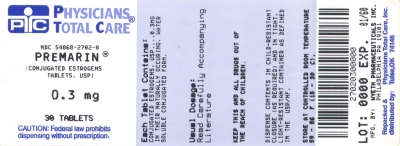
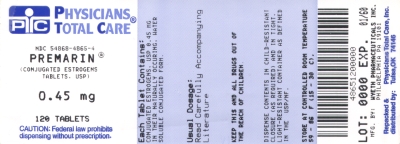
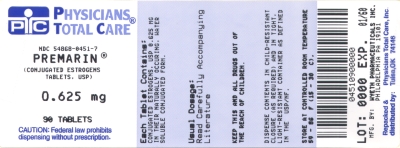
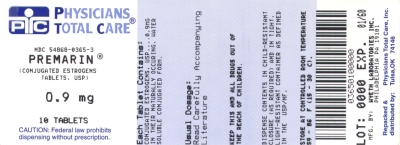
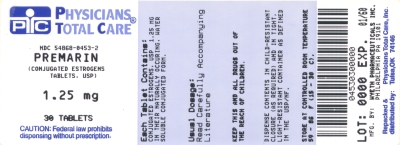
PREMARIN (R) (conjugated estrogens tablets, USP) for oral administration contains a mixture of conjugated estrogens obtained exclusively from natural sources, occurring as the sodium salts of water-soluble estrogen sulfates blended to represent the average composition of material derived from pregnant mares' urine. It is a mixture of sodium estrone sulfate and sodium equilin sulfate. It contains as concomitant components, as sodium sulfate conjugates, 17?-dihydroequilin, 17?-estradiol, and 17?-dihydroequilin. Tablets for oral administration are available in 0.3 mg, 0.45 mg, 0.625 mg, 0.9 mg, and 1.25 mg strengths of conjugated estrogens. PREMARIN 0.3 mg, 0.45 mg, 0.625 mg, 0.9 mg, and 1.25 mg tablets also contain the following inactive ingredients: calcium phosphate tribasic, hydroxypropyl cellulose, microcrystalline cellulose, powdered cellulose, hypromellose, lactose monohydrate, magnesium stearate, polyethylene glycol, sucrose, and titanium dioxide. - 0.3 mg tablets also contain: D&C Yellow No. 10 and FD&C Blue No. 2. - 0.45 mg tablets also contain: FD&C Blue No. 2. - 0.625 mg tablets also contain: FD&C Blue No. 2 and FD&C Red No. 40. - 0.9 mg tablets also contain: D&C Red No. 30 and D&C Red No. 7. - 1.25 mg tablets also contain: black iron oxide, D&C Yellow No. 10 and FD&C Yellow No. 6. PREMARIN tablets comply with USP Dissolution Test criteria as outlined below: PREMARIN 1.25 mg tablets USP Dissolution Test 4 PREMARIN 0.3 mg, 0.45 mg and 0.625 mg tablets USP Dissolution Test 5 PREMARIN 0.9 mg tablets USP Dissolution Test 6
PREMARIN therapy is indicated in the: Treatment of moderate to severe vasomotor symptoms due to menopause. Treatment of moderate to severe symptoms of vulvar and vaginal atrophy due to menopause. When prescribing solely for the treatment of symptoms of vulvar and vaginal atrophy, topical vaginal products should be considered. Treatment of hypoestrogenism due to hypogonadism, castration or primary ovarian failure. Treatment of breast cancer (for palliation only) in appropriately selected women and men with metastatic disease. Treatment of advanced androgen-dependent carcinoma of the prostate (for palliation only). Prevention of postmenopausal osteoporosis. When prescribing solely for the prevention of postmenopausal osteoporosis, therapy should only be considered for women at significant risk of osteoporosis and for whom non-estrogen medications are not considered to be appropriate. (See CLINICAL STUDIES .) The mainstays for decreasing the risk of postmenopausal osteoporosis are weight-bearing exercise, adequate calcium and vitamin D intake, and when indicated, pharmacologic therapy. Postmenopausal women require an average of 1500 mg/day of elemental calcium. Therefore, when not contraindicated, calcium supplementation may be helpful for women with suboptimal dietary intake. Vitamin D supplementation of 400-800 IU/day may also be required to ensure adequate daily intake in postmenopausal women.
When estrogen is prescribed for a postmenopausal woman with a uterus, progestin should also be initiated to reduce the risk of endometrial cancer. A woman without a uterus does not need progestin. Use of estrogen, alone or in combination with a progestin, should be with the lowest effective dose and for the shortest duration consistent with treatment goals and risks for the individual woman. Patients should be reevaluated periodically as clinically appropriate (for example at 3-month to 6-month intervals) to determine if treatment is still necessary (see BOXED WARNINGS and WARNINGS ). For women with a uterus, adequate diagnostic measures, such as endometrial sampling, when indicated, should be undertaken to rule out malignancy in cases of undiagnosed persistent or recurring abnormal vaginal bleeding. PREMARIN may be taken without regard to meals. For treatment of moderate to severe vasomotor symptoms and/or moderate to severe symptoms of vulvar and vaginal atrophy due to menopause: When prescribing solely for the treatment of moderate to severe symptoms of vulvar and vaginal atrophy, topical vaginal products should be considered. Patients should be treated with the lowest effective dose. Generally, women should be started at 0.3 mg PREMARIN daily. Subsequent dosage adjustment may be made based upon the individual patient response. This dose should be periodically reassessed by the healthcare provider. PREMARIN therapy may be given continuously, with no interruption in therapy, or in cyclical regimens (regimens such as 25 days on drug followed by five days off drug), as is medically appropriate on an individualized basis. For prevention of postmenopausal osteoporosis: When prescribing solely for the prevention of postmenopausal osteoporosis, therapy should be considered only for women at significant risk of osteoporosis and for whom non-estrogen medications are not considered to be appropriate. Patients should be treated with the lowest effective dose. Generally, women should be started at 0.3 mg PREMARIN daily. Subsequent dosage adjustment may be made based upon the individual clinical and bone mineral density responses. This dose should be periodically reassessed by the healthcare provider. PREMARIN therapy may be given continuously, with no interruption in therapy, or in cyclical regimens (regimens such as 25 days on drug followed by five days off drug), as is medically appropriate on an individualized basis. For treatment of female hypoestrogenism due to hypogonadism, castration, or primary ovarian failure: Female hypogonadism - 0.3 mg or 0.625 mg daily, administered cyclically (e.g., three weeks on and one week off). Doses are adjusted depending on the severity of symptoms and responsiveness of the endometrium. In clinical studies of delayed puberty due to female hypogonadism, breast development was induced by doses as low as 0.15 mg. The dosage may be gradually titrated upward at 6-to-12 month intervals as needed to achieve appropriate bone age advancement and eventual epiphyseal closure. Clinical studies suggest that doses of 0.15 mg, 0.3 mg, and 0.6 mg are associated with mean ratios of bone age advancement to chronological age progression (?BA/?CA) of 1.1, 1.5, and 2.1, respectively. (PREMARIN in the dose strength of 0.15 mg is not available commercially). Available data suggest that chronic dosing with 0.625 mg is sufficient to induce artificial cyclic menses with sequential progestin treatment and to maintain bone mineral density after skeletal maturity is achieved. Female castration or primary ovarian failure - 1.25 mg daily, cyclically. Adjust dosage, upward or downward, according to severity of symptoms and response of the patient. For maintenance, adjust dosage to lowest level that will provide effective control. For treatment of breast cancer, for palliation only, in appropriately selected women and men with metastatic disease: Suggested dosage is 10 mg three times daily, for a period of at least three months. For treatment of advanced androgen-dependent carcinoma of the prostate, for palliation only: 1.25 mg to 2 x 1.25 mg three times daily. The effectiveness of therapy can be judged by phosphatase determinations as well as by symptomatic improvement of the patient.
PREMARIN therapy should not be used in individuals with any of the following conditions: Undiagnosed abnormal genital bleeding. Known, suspected, or history of cancer of the breast except in appropriately selected patients being treated for metastatic disease. Known or suspected estrogen-dependent neoplasia. Active deep vein thrombosis, pulmonary embolism or a history of these conditions. Active or recent (within the past year) arterial thromboembolic disease (for example, stroke, myocardial infarction). Liver dysfunction or disease. Known hypersensitivity to any of the ingredients in PREMARIN. Known or suspected pregnancy.
See BOXED WARNINGS, WARNINGS, and PRECAUTIONS . Because clinical trials are conducted under widely varying conditions, adverse reaction rates observed in the clinical trials of a drug cannot be directly compared to rates in the clinical trials of another drug and may not reflect the rates observed in practice. During the first year of a 2-year clinical trial with 2,333 postmenopausal women between 40 and 65 years of age (88% Caucasian), 1,012 women were treated with conjugated estrogens and 332 were treated with placebo. Table 6 summarizes adverse events that occurred at a rate of ? 5%. TABLE 6. NUMBER (%) OF PATIENTS REPORTING ? 5% TREATMENT EMERGENT ADVERSE EVENTS --Conjugated Estrogens Treatment Group-- Body System 0.625 mg 0.45 mg 0.3 mg Placebo Adverse event (n = 348) (n = 338) (n = 326) (n = 332) Any adverse event 323 (93%) 305 (90%) 292 (90%) 281 (85%) Body as a Whole Abdominal pain Accidental injury Asthenia Back pain Flu syndrome Headache Infection Pain 56 (16%) 21 (6%) 25 (7%) 49 (14%) 37 (11%) 90 (26%) 61 (18%) 58 (17%) 50 (15%) 41 (12%) 23 (7%) 43 (13%) 38 (11%) 109 (32%) 75 (22%) 61 (18%) 54 (17%) 20 (6%) 25 (8%) 43 (13%) 33 (10%) 96 (29%) 74 (23%) 66 (20%) 37 (11%) 29 (9%) 16 (5%) 39 (12%) 35 (11%) 93 (28%) 74 (22%) 61 (18%) Digestive System Diarrhea Dyspepsia Flatulence Nausea 21 (6%) 33 (9%) 24 (7%) 32 (9%) 25 (7%) 32 (9%) 23 (7%) 21 (6%) 19 (6%) 36 (11%) 18 (6%) 21 (6%) 21 (6%) 46 (14%) 9 (3%) 30 (9%) Musculoskeletal System Arthralgia Leg cramps Myalgia 47 (14%) 19 (5%) 18 (5%) 42 (12%) 23 (7%) 18 (5%) 22 (7%) 11 (3%) 29 (9%) 39 (12%) 7 (2%) 25 (8%) Nervous System Depression Dizziness Insomnia Nervousness 25 (7%) 19 (5%) 21 (6%) 12 (3%) 27 (8%) 20 (6%) 25 (7%) 17 (5%) 17 (5%) 12 (4%) 24 (7%) 6 (2%) 22 (7%) 17 (5%) 33 (10%) 7 (2%) Respiratory System Cough increased Pharyngitis Rhinitis Sinusitis Upper respiratory infection 13 (4%) 35 (10%) 21 (6%) 22 (6%) 42 (12%) 22 (7%) 35 (10%) 30 (9%) 36 (11%) 34 (10%) 14 (4%) 40 (12%) 31 (10%) 24 (7%) 28 (9%) 14 (4%) 38 (11%) 42 (13%) 24 (7%) 35 (11%) Skin and Appendages Pruritus 14 (4%) 17 (5%) 16 (5%) 7 (2%) Urogenital System Breast pain Leukorrhea Vaginal hemorrhage Vaginal moniliasis Vaginitis 38 (11%) 18 (5%) 47 (14%) 20 (6%) 24 (7%) 41 (12%) 22 (7%) 14 (4%) 18 (5%) 20 (6%) 24 (7%) 13 (4%) 7 (2%) 17 (5%) 16 (5%) 29 (9%) 9 (3%) 0 6 (2%) 4 (1%) The following additional adverse reactions have been reported with estrogen and/or progestin therapy: 1. Genitourinary system Abnormal uterine bleeding/spotting Dysmenorrhea/pelvic pain Increase in size of uterine leiomyomata Vaginitis, including vaginal candidiasis Change in amount of cervical secretion Change in cervical ectropion Ovarian cancer Endometrial hyperplasia Endometrial cancer 2. Breasts Tenderness, enlargement, pain, discharge, galactorrhea Fibrocystic breast changes Breast cancer 3. Cardiovascular Deep and superficial venous thrombosis Pulmonary embolism Thrombophlebitis Myocardial infarction Stroke Increase in blood pressure 4. Gastrointestinal Nausea, vomiting Abdominal cramps, bloating Cholestatic jaundice Increased incidence of gallbladder disease Pancreatitis Enlargement of hepatic hemangiomas Ischemic colitis 5. Skin Chloasma or melasma that may persist when drug is discontinued Erythema multiforme Erythema nodosum Hemorrhagic eruption Loss of scalp hair Hirsutism Pruritus, rash 6. Eyes Retinal vascular thrombosis Intolerance to contact lenses 7. Central Nervous System Headache Migraine Dizziness Mental depression Exacerbation of chorea Nervousness Mood disturbances Irritability Exacerbation of epilepsy Dementia Possible growth potentiation of benign meningioma 8. Miscellaneous Increase or decrease in weight Glucose intolerance Aggravation of porphyria Edema Arthralgias Leg cramps Changes in libido Urticaria, angioedema, anaphylactoid/anaphylactic reactions Hypocalcemia (preexisting condition) Exacerbation of asthma Increased triglycerides
See BOXED WARNINGS . 1. Cardiovascular disorders An increased risk of stroke and deep vein thrombosis (DVT) has been reported with estrogen alone therapy. An increased risk of stroke, DVT, pulmonary embolism, and myocardial infarction has been reported with estrogen plus progestin therapy. Should any of these events occur or be suspected, estrogens with or without progestins should be discontinued immediately. Risk factors for arterial vascular disease (for example, hypertension, diabetes mellitus, tobacco use, hypercholesterolemia, and obesity) and/or venous thromboembolism (for example, personal history or family history of VTE, obesity, and systemic lupus erythematosus) should be managed appropriately. a. Stroke In the Women's Health Initiative (WHI) estrogen alone substudy, a statistically significant increased risk of stroke was reported in women receiving daily conjugated estrogens (CE 0.625 mg) compared to placebo (44 versus 32 per 10,000 women-years). The increase in risk was demonstrated in year one and persisted. (See CLINICAL STUDIES .) In the estrogen plus progestin substudy of WHI, a statistically significant increased risk of stroke was reported in women receiving daily CE 0.625 mg plus medroxyprogesterone acetate (MPA 2.5 mg) compared to placebo (31 versus 24 per 10,000 women-years). The increase in risk was demonstrated after the first year and persisted. (See CLINICAL STUDIES .) b. Coronary heart disease In the estrogen alone substudy of WHI, no overall effect on coronary heart disease (CHD) events (defined as nonfatal myocardial infarction [MI], silent MI, or CHD death) was reported in women receiving estrogen alone compared to placebo. (See CLINICAL STUDIES .) In the estrogen plus progestin substudy of WHI, no statistically significant increase of CHD events was reported in women receiving CE/MPA compared to placebo (39 versus 33 per 10,000 women years). An increase in relative risk was demonstrated in year 1, and a trend toward decreasing relative risk was reported in years 2 through 5. In postmenopausal women with documented heart disease (n = 2,763, average age 66.7 years), in a controlled clinical trial of secondary prevention of cardiovascular disease (Heart and Estrogen/progestin Replacement Study; HERS), treatment with daily CE 0.625 mg/MPA 2.5 mg demonstrated no cardiovascular benefit. During an average follow-up of 4.1 years, treatment with CE/MPA did not reduce the overall rate of CHD events in postmenopausal women with established coronary heart disease. There were more CHD events in the CE/MPA-treated group than in the placebo group in year one, but not during the subsequent years. Two thousand three hundred and twenty one (2,321) women from the original HERS trial agreed to participate in an open-label extension of HERS, HERS II. Average follow-up in HERS II was an additional 2.7 years, for a total of 6.8 years overall. Rates of CHD events were comparable among women in the CE/MPA group and the placebo group in the HERS, the HERS II, and overall. c. Venous thromboembolism (VTE) In the estrogen alone substudy of WHI, the risk of VTE (DVT and pulmonary embolism [PE]), was reported to be increased for women receiving daily CE compared to placebo (30 versus 22 per 10,000 women-years), although only the increased risk of DVT reached statistical significance (23 versus 15 per 10,000 women years). The increase in VTE risk was demonstrated during the first 2 years. (See CLINICAL STUDIES .) In the estrogen plus progestin substudy of WHI, a statistically significant 2-fold greater rate of VTE was reported in women receiving daily CE/MPA compared to placebo (35 versus 17 per 10,000 women-years). Statistically significant increases in risk for both DVT (26 versus 13 per 10,000 women-years) and PE (18 versus 8 per 10,000 women years) were also demonstrated. The increase in VTE risk was demonstrated during the first year and persisted. (See CLINICAL STUDIES .) If feasible, estrogens should be discontinued at least 4 to 6 weeks before surgery of the type associated with an increased risk of thromboembolism, or during periods of prolonged immobilization. 2. Malignant neoplasms a. Endometrial cancer An increased risk of endometrial cancer has been reported with the use of unopposed estrogen therapy in women with a uterus. The reported endometrial cancer risk among unopposed estrogen users with an intact uterus is about 2 to 12 times greater than in non-users, and appears dependent on duration of treatment and on estrogen dose. Most studies show no significant increased risk associated with the use of estrogens for less than 1 year. The greatest risk appears associated with prolonged use, with increased risks of 15- to 24-fold for 5 to 10 years or more, and this risk has been shown to persist for at least 8 to 15 years after estrogen therapy is discontinued. Clinical surveillance of all women using estrogen plus progestin therapy is important. Adequate diagnostic measures, including endometrial sampling when indicated, should be undertaken to rule out malignancy in all cases of undiagnosed persistent or recurring abnormal vaginal bleeding. There is no evidence that the use of natural estrogens results in a different endometrial risk profile than synthetic estrogens of equivalent estrogen dose. Adding a progestin to postmenopausal estrogen therapy has been shown to reduce the risk of endometrial hyperplasia, which may be a precursor to endometrial cancer. b. Breast cancer The most important randomized clinical trial providing information about this issue in estrogen alone users is the Women's Health Initiative (WHI) substudy of daily conjugated estrogens (CE 0.625 mg). In the estrogen alone substudy of WHI, after an average 7.1 years of follow-up, daily CE 0.625 mg was not associated with an increased risk of invasive breast cancer (relative risk [RR] 0.80, 95 percent nominal confidence interval [nCI] 0.62-1.04). (see CLINICAL STUDIES ). The most important randomized clinical trial providing information about this issue in estrogen plus progestin users is the Women's Health Initiative (WHI) substudy of daily CE 0.625 mg plus medroxyprogesterone acetate (MPA 2.5 mg). In the estrogen plus progestin substudy, after a mean follow-up of 5.6 years, the WHI substudy reported an increased risk of breast cancer in women who took daily CE/MPA. In this substudy, prior use of estrogen alone or estrogen plus progestin therapy was reported by 26 percent of the women. The relative risk of invasive breast cancer was 1.24 (95 percent nCI 1.01-1.54), and the absolute risk was 41 versus 33 cases per 10,000 women-years, for estrogen plus progestin compared with placebo, respectively. Among women who reported prior use of hormone therapy, the relative risk of invasive breast cancer was 1.86, and the absolute risk was 46 versus 25 cases per 10,000 women-years, for CE/MPA compared with placebo. Among women who reported no prior use of hormone therapy, the relative risk of invasive breast cancer was 1.09, and the absolute risk was 40 versus 36 cases per 10,000 women-years for estrogen plus progestin compared with placebo. In the same substudy, invasive breast cancers were larger and diagnosed at a more advanced stage in the CE/MPA group compared with the placebo group. Metastatic disease was rare, with no apparent difference between the two groups. Other prognostic factors, such as histologic subtype, grade and hormone receptor status did not differ between the groups. (See CLINICAL STUDIES .) The results from observational studies are generally consistent with those of the WHI clinical trial. Observational studies have also reported an increased risk of breast cancer for estrogen plus progestin therapy, and a smaller increased risk for estrogen alone therapy, after several years of use. The risk increased with duration of use, and appeared to return to baseline over about 5 years after stopping treatment (only the observational studies have substantial data on risk after stopping). Observational studies also suggest that the risk of breast cancer was greater, and became apparent earlier, with estrogen plus progestin therapy as compared to estrogen alone therapy. However, these studies have not found significant variation in the risk of breast cancer among different estrogen plus progestin combinations, doses, or routes of administration. The use of estrogen alone and estrogen plus progestin has been reported to result in an increase in abnormal mammograms requiring further evaluation. All women should receive yearly breast examinations by a healthcare provider and perform monthly breast self-examinations. In addition, mammography examinations should be scheduled based on patient age, risk factors, and prior mammogram results. 3. Dementia In the estrogen alone Women's Health Initiative Memory Study (WHIMS), a substudy of WHI, a population of 2,947 hysterectomized women 65 to 79 years of age was randomized to daily conjugated estrogens (CE 0.625 mg) or placebo. In the estrogen plus progestin WHIMS substudy, a population of 4,532 postmenopausal women 65 to 79 years of age was randomized to daily CE 0.625 mg plus medroxyprogesterone acetate (MPA 2.5 mg) or placebo. In the estrogen alone substudy, after an average follow-up of 5.2 years, 28 women in the estrogen alone group and 19 women in the placebo group were diagnosed with probable dementia. The relative risk of probable dementia for CE alone versus placebo was 1.49 (95 percent CI 0.83-2.66). The absolute risk of probable dementia for CE alone versus placebo was 37 versus 25 cases per 10,000 women-years. (See CLINICAL STUDIES and PRECAUTIONS, Geriatric Use .) In the estrogen plus progestin substudy, after an average follow-up of 4 years, 40 women in the CE/MPA group and 21 women in the placebo group were diagnosed with probable dementia. The relative risk of probable dementia for CE/MPA versus placebo was 2.05 (95 percent CI 1.21-3.48). The absolute risk of probable dementia for CE/MPA versus placebo was 45 versus 22 cases per 10,000 women-years. (See CLINICAL STUDIES and PRECAUTIONS, Geriatric Use .) When data from the two populations were pooled as planned in the WHIMS protocol, the reported overall relative risk for probable dementia was 1.76 (95 percent CI 1.19-2.60). Since both substudies were conducted in women 65 to 79 years of age, it is unknown whether these findings apply to younger postmenopausal women. (See BOXED WARNINGS and PRECAUTIONS, Geriatric Use .) 4. Gallbladder Disease A 2- to 4-fold increase in the risk of gallbladder disease requiring surgery in postmenopausal women receiving estrogens has been reported. 5. Hypercalcemia Estrogen administration may lead to severe hypercalcemia in patients with breast cancer and bone metastases. If hypercalcemia occurs, use of the drug should be stopped and appropriate measures taken to reduce the serum calcium level. 6. Visual abnormalities Retinal vascular thrombosis has been reported in patients receiving estrogens. Discontinue medication pending examination if there is sudden partial or complete loss of vision, or a sudden onset of proptosis, diplopia, or migraine. If examination reveals papilledema or retinal vascular lesions, estrogens should be permanently discontinued. 7. Angioedema Exogenous estrogens may induce or exacerbate symptoms of angioedema, particularly in women with hereditary angioedema. --- BOXED WARNING: ENDOMETRIAL CANCER Adequate diagnostic measures, including endometrial sampling when indicated, should be undertaken to rule out malignancy in all cases of undiagnosed persistent or recurring abnormal vaginal bleeding. (See WARNINGS, Malignant neoplasms, Endometrial cancer .) CARDIOVASCULAR AND OTHER RISKS Estrogens with or without progestins should not be used for the prevention of cardiovascular disease or dementia. (See CLINICAL STUDIES and WARNINGS, Cardiovascular disorders and Dementia .) The estrogen alone substudy of the Women's Health Initiative (WHI) reported increased risks of stroke and deep vein thrombosis (DVT) in postmenopausal women (50 to 79 years of age) during 6.8 years and 7.1 years, respectively, of treatment with daily oral conjugated estrogens (CE 0.625 mg), relative to placebo. (See CLINICAL STUDIES and WARNINGS, Cardiovascular disorders .) The estrogen plus progestin substudy of WHI reported increased risks of myocardial infarction, stroke, invasive breast cancer, pulmonary emboli, and DVT in postmenopausal women (50 to 79 years of age) during 5.6 years of treatment with daily CE 0.625 mg combined with medroxyprogesterone acetate (MPA 2.5 mg), relative to placebo. (See CLINICAL STUDIES and WARNINGS, Cardiovascular disorders and Malignant neoplasms, Breast cancer .) The Women's Health Initiative Memory Study (WHIMS), a substudy of WHI, reported an increased risk of developing probable dementia in postmenopausal women 65 years of age or older during 5.2 years of treatment with daily CE 0.625 mg alone and during 4 years of treatment with daily CE 0.625 mg combined with MPA 2.5 mg, relative to placebo. It is unknown whether this finding applies to younger postmenopausal women. (See CLINICAL STUDIES and WARNINGS, Dementia and PRECAUTIONS, Geriatric Use .) In the absence of comparable data, these risks should be assumed to be similar for other doses of CE and MPA and other combinations and dosage forms of estrogens and progestins. Because of these risks, estrogens with or without progestins should be prescribed at the lowest effective doses and for the shortest duration consistent with treatment goals and risks for the individual woman.