
İHALE DÜNYASI
İHALE DÜNYASI
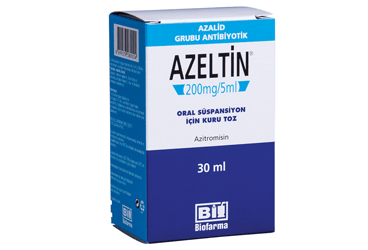
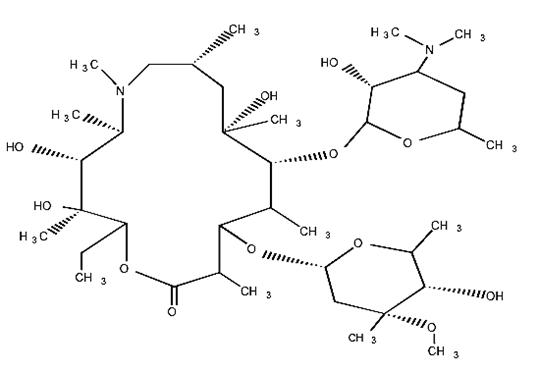
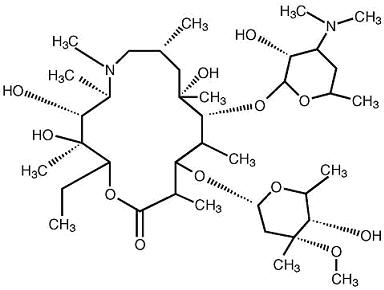
Azithromycin for oral suspension, USP contains the active ingredient azithromycin, an azalide, a subclass of macrolide antibiotics, for oral administration. Azithromycin has the chemical name ( 2R,3S,4R,5R,8R,10R,11R,12S,13S,14R )-13-[(2,6-dideoxy-3- C -methyl-3- O -methyl-?- L-ribo -hexopyranosyl)oxy]-2-ethyl-3,4,10 trihydroxy-3,5,6,8,10,12,14-heptamethyl-11-[[3,4,6-trideoxy-3-(dimethylamino)-?- D - xylo -hexopyranosyl]oxy]-1-oxa-6-azacyclopentadecan-15-one. Azithromycin is derived from erythromycin; however, it differs chemically from erythromycin in that a methyl-substituted nitrogen atom is incorporated into the lactone ring. Azithromycin has the following structural formula: C 38 H 72 N 2 O 12 M. W. 749.00 Azithromycin, as the monohydrate, is a white to off-white crystalline powder with a molecular formula of C 38 H 72 N 2 O 12 *H 2 O and a molecular weight of 767.02. 5 mL of constituted suspension of azithromycin for oral suspension, 100 mg/5 mL and 200 mg/5 mL, contains 6 mg of sodium. Azithromycin for oral suspension, USP is supplied in bottles containing azithromycin monohydrate powder equivalent to 300 mg, 600 mg, 900 mg, or 1200 mg azithromycin per bottle and the following inactive ingredients: arabic gum, artificial aromatic substances, ethyl vanillin, FD&C Red #40, hydroxypropyl cellulose, maltodextrin, nature aromatic substances, nature identical aromatic substances, sucrose, tribasic sodium phosphate dodecahydrate, vanillin, and xanthan gum. After constitution, each 5 mL of suspension contains 100 mg or 200 mg of azithromycin. The dry powder before constitution is off-white to pinkish in color. The suspension after constitution is pink to red in color. Chemical Structure
Azithromycin for oral suspension is indicated for the treatment of patients with mild to moderate infections (pneumonia: see WARNINGS ) caused by susceptible strains of the designated microorganisms in the specific conditions listed below. As recommended dosages, durations of therapy and applicable patient populations vary among these infections, please see DOSAGE AND ADMINISTRATION for specific dosing recommendations. Adults Acute bacterial exacerbations of chronic obstructive pulmonary disease due to Haemophilus influenzae, Moraxella catarrhalis, or Streptococcus pneumoniae . Acute bacterial sinusitis due to Haemophilus influenzae , Moraxella catarrhalis, or Streptococcus pneumoniae . Community-acquired pneumonia due to Chlamydia pneumoniae , Haemophilus influenzae , Mycoplasma pneumoniae, or Streptococcus pneumoniae in patients appropriate for oral therapy. NOTE: Azithromycin should not be used in patients with pneumonia who are judged to be inappropriate for oral therapy because of moderate to severe illness or risk factors such as any of the following: patients with cystic fibrosis, patients with nosocomially acquired infections, patients with known or suspected bacteremia, patients requiring hospitalization, elderly or debilitated patients, or patients with significant underlying health problems that may compromise their ability to respond to their illness (including immunodeficiency or functional asplenia). Pharyngitis/tonsillitis caused by Streptococcus pyogenes as an alternative to first-line therapy in individuals who cannot use first-line therapy. NOTE: Penicillin by the intramuscular route is the usual drug of choice in the treatment of Streptococcus pyogenes infection and the prophylaxis of rheumatic fever. Azithromycin is often effective in the eradication of susceptible strains of Streptococcus pyogenes from the nasopharynx. Because some strains are resistant to azithromycin, susceptibility tests should be performed when patients are treated with azithromycin. Data establishing efficacy of azithromycin in subsequent prevention of rheumatic fever are not available. Uncomplicated skin and skin structure infections due to Staphylococcus aureus , Streptococcus pyogenes , or Streptococcus agalactiae . Abscesses usually require surgical drainage. Urethritis and cervicitis due to Chlamydia trachomatis or Neisseria gonorrhoeae . Genital ulcer disease in men due to Haemophilus ducreyi (chancroid). Due to the small number of women included in clinical trials, the efficacy of azithromycin in the treatment of chancroid in women has not been established. Azithromycin, at the recommended dose, should not be relied upon to treat syphilis. Antimicrobial agents used in high doses for short periods of time to treat non-gonococcal urethritis may mask or delay the symptoms of incubating syphilis. All patients with sexually-transmitted urethritis or cervicitis should have a serologic test for syphilis and appropriate cultures for gonorrhea performed at the time of diagnosis. Appropriate antimicrobial therapy and follow-up tests for these diseases should be initiated if infection is confirmed. Appropriate culture and susceptibility tests should be performed before treatment to determine the causative organism and its susceptibility to azithromycin. Therapy with azithromycin may be initiated before results of these tests are known; once the results become available, antimicrobial therapy should be adjusted accordingly. To reduce the development of drug-resistant bacteria and maintain the effectiveness of azithromycin for oral suspension and other antibacterial drugs, azithromycin for oral suspension should be used only to treat or prevent infections that are proven or strongly suspected to be caused by susceptible bacteria. When culture and susceptibility information are available, they should be considered in selecting or modifying antibacterial therapy. In the absence of such data, local epidemiology and susceptibility patterns may contribute to the empiric selection of therapy. Pediatric Patients (See PRECAUTIONS , Pediatric Use and CLINICAL STUDIES , Pediatric Patients .) Acute otitis media caused by Haemophilus influenzae , Moraxella catarrhalis, or Streptococcus pneumoniae . (For specific dosage recommendation, see DOSAGE AND ADMINISTRATION .) Community-acquired pneumonia due to Chlamydia pneumoniae, Haemophilus influenzae, Mycoplasma pneumoniae, or Streptococcus pneumoniae in patients appropriate for oral therapy. (For specific dosage recommendation, see DOSAGE AND ADMINISTRATION .) NOTE: Azithromycin should not be used in pediatric patients with pneumonia who are judged to be inappropriate for oral therapy because of moderate to severe illness or risk factors such as any of the following: patients with cystic fibrosis, patients with nosocomially acquired infections, patients with known or suspected bacteremia, patients requiring hospitalization, or patients with significant underlying health problems that may compromise their ability to respond to their illness (including immunodeficiency or functional asplenia). Pharyngitis/tonsillitis caused by Streptococcus pyogenes as an alternative to first-line therapy in individuals who cannot use first-line therapy. (For specific dosage recommendation, see DOSAGE AND ADMINISTRATION .) NOTE: Penicillin by the intramuscular route is the usual drug of choice in the treatment of Streptococcus pyogenes infection and the prophylaxis of rheumatic fever. Azithromycin is often effective in the eradication of susceptible strains of Streptococcus pyogenes from the nasopharynx. Because some strains are resistant to azithromycin, susceptibility tests should be performed when patients are treated with azithromycin. Data establishing efficacy of azithromycin in subsequent prevention of rheumatic fever are not available. Appropriate culture and susceptibility tests should be performed before treatment to determine the causative organism and its susceptibility to azithromycin. Therapy with azithromycin may be initiated before results of these tests are known; once the results become available, antimicrobial therapy should be adjusted accordingly.
(See INDICATIONS AND USAGE and CLINICAL PHARMACOLOGY .) Adults * DUE TO THE INDICATED ORGANISMS (see INDICATIONS AND USAGE ). Infection * Recommended Dose/Duration of Therapy Community-acquired pneumonia (mild severity) Pharyngitis/tonsillitis (second line therapy) Skin/skin structure (uncomplicated) 500 mg as a single dose on Day 1, followed by 250 mg once daily on Days 2 through 5. Acute bacterial exacerbations of chronic obstructive pulmonary disease (mild to moderate) 500 mg QD × 3 day OR 500 mg as a single dose on Day 1, followed by 250 mg once daily on Days 2 through 5. Acute bacterial sinusitis 500 mg QD × 3 days Genital ulcer disease (chancroid) One single 1 gram dose Non-gonococcal urethritis and cervicitis One single 1 gram dose Gonococcal urethritis and cervicitis One single 2 gram dose Azithromycin tablets can be taken with or without food. Renal Insufficiency No dosage adjustment is recommended for subjects with renal impairment (GFR ? 80 mL/min). The mean AUC 0-120 was similar in subjects with GFR 10 to 80 mL/min compared to subjects with normal renal function, whereas it increased 35% in subjects with GFR < 10 mL/min compared to subjects with normal renal function. Caution should be exercised when azithromycin is administered to subjects with severe renal impairment (see CLINICAL PHARMACOLOGY , Special Populations , Renal insufficiency ). Hepatic Insufficiency The pharmacokinetics of azithromycin in subjects with hepatic impairment have not been established. No dose adjustment recommendations can be made in patients with impaired hepatic function (see CLINICAL PHARMACOLOGY , Special Populations , Hepatic insufficiency ). No dosage adjustment is recommended based on age or gender (see CLINICAL PHARMACOLOGY , Special Populations ). Pediatric Patients Azithromycin for oral suspension can be taken with or without food. Acute Otitis Media The recommended dose of azithromycin for oral suspension for the treatment of pediatric patients with acute otitis media is 30 mg/kg given as a single dose or 10 mg/kg once daily for 3 days or 10 mg/kg as a single dose on the first day followed by 5 mg/kg/day on Days 2 through 5 (see chart below). Acute Bacterial Sinusitis The recommended dose of azithromycin for oral suspension for the treatment of pediatric patients with acute bacterial sinusitis is 10 mg/kg once daily for 3 days (see chart below). Community-Acquired Pneumonia The recommended dose of azithromycin for oral suspension for the treatment of pediatric patients with community-acquired pneumonia is 10 mg/kg as a single dose on the first day followed by 5 mg/kg on Days 2 through 5 (see chart below). PEDIATRIC DOSAGE GUIDELINES FOR OTITIS MEDIA, ACUTE BACTERIAL SINUSITIS AND COMMUNITY-ACQUIRED PNEUMONIA (Age 6 months and above, see PRECAUTIONS, Pediatric Use.) Based on Body Weight * Effectiveness of the 3 day or 1 day regimen in pediatric patients with community-acquired pneumonia has not been established. OTITIS MEDIA AND COMMUNITY-ACQUIRED PNEUMONIA: (5 Day Regimen) * Dosing Calculated on 10 mg/kg/day Day 1 and 5 mg/kg/day Days 2 to 5. Weight 100 mg/5 mL 200 mg/5 mL Total mL per Treatment Course Total mg per Treatment Course kg Lbs. Day 1 Days 2 to 5 Day 1 Days 2 to 5 5 11 2.5 mL (½ tsp) 1.25 mL (¼ tsp) 7.5 mL 150 mg 10 22 5 mL (1 tsp) 2.5 mL (½ tsp) 15 mL 300 mg 20 44 5 mL (1 tsp) 2.5 mL (½ tsp) 15 mL 600 mg 30 66 7.5 mL (1½ tsp) 3.75 mL (¾ tsp) 22.5 mL 900 mg 40 88 10 mL (2 tsp) 5 mL (1 tsp) 30 mL 1200 mg 50 and above 110 and above 12.5 mL (2½ tsp) 6.25 mL (1¼ tsp) 37.5 mL 1500 mg * Effectiveness of the 5 day or 1 day regimen in pediatric patients with acute bacterial sinusitis has not been established. OTITIS MEDIA AND ACUTE BACTERIAL SINUSITIS: (3 Day Regimen) * Dosing Calculated on 10 mg/kg/day Weight 100 mg/5 mL 200 mg/5 mL Total mL per Treatment Course Total mg per Treatment Course kg Lbs. Day 1 to 3 Day 1 to 3 5 11 2.5 mL (½ tsp) 7.5 mL 150 mg 10 22 5 mL (1 tsp) 15 mL 300 mg 20 44 5 mL (1 tsp) 15 mL 600 mg 30 66 7.5 mL (1½ tsp) 22.5 mL 900 mg 40 88 10 mL (2 tsp) 30 mL 1200 mg 50 and above 110 and above 12.5 mL (2½ tsp) 37.5 mL 1500 mg OTITIS MEDIA: (1 Day Regimen) Dosing Calculated on 30 mg/kg as a single dose Weight 200 mg/5 mL Total mL per Treatment Course Total mg per Treatment Course kg Lbs. Day 1 5 11 3.75 mL (¾ tsp) 3.75 mL 150 mg 10 22 7.5 mL (1½ tsp) 7.5 mL 300 mg 20 44 15 mL (3 tsp) 15 mL 600 mg 30 66 22.5 mL (4½ tsp) 22.5 mL 900 mg 40 88 30 mL (6 tsp) 30 mL 1200 mg 50 and above 110 and above 37.5 mL (7½ tsp) 37.5 mL 1500 mg The safety of re-dosing azithromycin in pediatric patients who vomit after receiving 30 mg/kg as a single dose has not been established. In clinical studies involving 487 patients with acute otitis media given a single 30 mg/kg dose of azithromycin, eight patients who vomited within 30 minutes of dosing were re-dosed at the same total dose. Pharyngitis/Tonsillitis The recommended dose of azithromycin for pediatric patients with pharyngitis/tonsillitis is 12 mg/kg once daily for 5 days (see chart below). PEDIATRIC DOSAGE GUIDELINES FOR PHARYNGITIS/TONSILLITIS (Age 2 years and above, see PRECAUTIONS, Pediatric Use.) Based on Body Weight PHARYNGITIS/TONSILLITIS: (5 Day Regimen) Dosing Calculated on 12 mg/kg/day for 5 days. Weight 200 mg/5 mL Total mL per Treatment Course Total mg per Treatment Course kg Lbs. Day 1 to 5 8 18 2.5 mL (½ tsp) 12.5 mL 500 mg 17 37 5 mL (1 tsp) 25 mL 1000 mg 25 55 7.5 mL (1½ tsp) 37.5 mL 1500 mg 33 73 10 mL (2 tsp) 50 mL 2000 mg 40 88 12.5 mL (2½ tsp) 62.5 mL 2500 mg Constituting instructions for azithromycin for oral suspension USP, 300, 600, 900, 1200 mg bottles. The table below indicates the volume of water to be used for constitution: Amount of water to be added Total volume after constitution (azithromycin content) Azithromycin concentration after constitution 9 mL (300 mg) 15 mL (300 mg) 100 mg/5 mL 9 mL (600 mg) 15 mL (600 mg) 200 mg/5 mL 12 mL (900 mg) 22.5 mL (900 mg) 200 mg/5 mL 15 mL (1200 mg) 30 mL (1200 mg) 200 mg/5 mL Shake well before each use. Oversized bottle provides shake space. Keep tightly closed. After mixing, store suspension at 5° to 30°C (41° to 86°F) and use within 10 days. Discard after full dosing is completed.
Azithromycin for oral suspension is contraindicated in patients with known hypersensitivity to azithromycin, erythromycin, any macrolide or ketolide antibiotic.
In clinical trials, most of the reported side effects were mild to moderate in severity and were reversible upon discontinuation of the drug. Potentially serious side effects of angioedema and cholestatic jaundice were reported rarely. Approximately 0.7% of the patients (adults and pediatric patients) from the 5 day multiple-dose clinical trials discontinued azithromycin therapy because of treatment-related side effects. In adults given 500 mg/day for 3 days, the discontinuation rate due to treatment-related side effects was 0.6%. In clinical trials in pediatric patients given 30 mg/kg, either as a single dose or over 3 days, discontinuation from the trials due to treatment-related side effects was approximately 1% (see DOSAGE AND ADMINISTRATION ). Most of the side effects leading to discontinuation were related to the gastrointestinal tract, e.g., nausea, vomiting, diarrhea, or abdominal pain (see CLINICAL STUDIES , Pediatric Patients ). Clinical Adults Multiple-dose regimens Overall, the most common treatment-related side effects in adult patients receiving multiple-dose regimens of azithromycin were related to the gastrointestinal system with diarrhea/loose stools (4 to 5%), nausea (3%), and abdominal pain (2 to 3%) being the most frequently reported. No other treatment-related side effects occurred in patients on the multiple-dose regimens of azithromycin with a frequency greater than 1%. Side effects that occurred with a frequency of 1% or less included the following: Cardiovascular: Palpitations, chest pain. Gastrointestinal: Dyspepsia, flatulence, vomiting, melena and cholestatic jaundice. Genitourinary: Monilia, vaginitis and nephritis. Nervous System: Dizziness, headache, vertigo and somnolence. General: Fatigue. Allergic: Rash, pruritus, photosensitivity and angioedema. Single 1 gram dose regimen Overall, the most common side effects in patients receiving a single-dose regimen of 1 gram of azithromycin were related to the gastrointestinal system and were more frequently reported than in patients receiving the multiple-dose regimen. Side effects that occurred in patients on the single one-gram dosing regimen of azithromycin with a frequency of 1% or greater included diarrhea/loose stools (7%), nausea (5%), abdominal pain (5%), vomiting (2%), dyspepsia (1%) and vaginitis (1%). Single 2 gram dose regimen Overall, the most common side effects in patients receiving a single 2 gram dose of azithromycin were related to the gastrointestinal system. Side effects that occurred in patients in this study with a frequency of 1% or greater included nausea (18%), diarrhea/loose stools (14%), vomiting (7%), abdominal pain (7%), vaginitis (2%), dyspepsia (1%) and dizziness (1%). The majority of these complaints were mild in nature. Pediatric Patients Single and multiple-dose regimens The types of side effects in pediatric patients were comparable to those seen in adults, with different incidence rates for the dosage regimens recommended in pediatric patients. Acute otitis media For the recommended total dosage regimen of 30 mg/kg, the most frequent side effects (? 1%) attributed to treatment were diarrhea, abdominal pain, vomiting, nausea and rash (see DOSAGE AND ADMINISTRATION and CLINICAL STUDIES , Pediatric Patients ). The incidence, based on dosing regimen, is described in the table below: Dosage Regimen Diarrhea, % Abdominal Pain, % Vomiting, % Nausea, % Rash, % 1 day 4.3% 1.4% 4.9% 1.0% 1.0% 3 day 2.6% 1.7% 2.3% 0.4% 0.6% 5 day 1.8% 1.2% 1.1% 0.5% 0.4% Community-acquired pneumonia For the recommended dosage regimen of 10 mg/kg on Day 1 followed by 5 mg/kg on Days 2 to 5, the most frequent side effects attributed to treatment were diarrhea/loose stools, abdominal pain, vomiting, nausea and rash. The incidence is described in the table below: Dosage Regimen Diarrhea/Loose Stools, % Abdominal Pain, % Vomiting, % Nausea, % Rash, % 5 day 5.8% 1.9% 1.9% 1.9% 1.6% Pharyngitis/tonsillitis For the recommended dosage regimen of 12 mg/kg on Days 1 to 5, the most frequent side effects attributed to treatment were diarrhea, vomiting, abdominal pain, nausea and headache. The incidence is described in the table below: Dosage Regimen Diarrhea, % Abdominal Pain, % Vomiting, % Nausea, % Rash, % Headache, % 5 day 5.4% 3.4% 5.6% 1.8% 0.7% 1.1% With any of the treatment regimens, no other treatment-related side effects occurred in pediatric patients treated with azithromycin with a frequency greater than 1%. Side effects that occurred with a frequency of 1% or less included the following: Cardiovascular: Chest pain. Gastrointestinal: Dyspepsia, constipation, anorexia, enteritis, flatulence, gastritis, jaundice, loose stools and oral moniliasis. Hematologic and Lymphatic: Anemia and leukopenia. Nervous System: Headache (otitis media dosage), hyperkinesia, dizziness, agitation, nervousness and insomnia. General: Fever, face edema, fatigue, fungal infection, malaise and pain. Allergic: Rash and allergic reaction. Respiratory: Cough increased, pharyngitis, pleural effusion and rhinitis. Skin and Appendages: Eczema, fungal dermatitis, pruritus, sweating, urticaria and vesiculobullous rash. Special Senses: Conjunctivitis. Postmarketing Experience Adverse events reported with azithromycin during the postmarketing period in adult and/or pediatric patients for which a causal relationship may not be established include: Allergic: Arthralgia, edema, urticaria and angioedema. Cardiovascular: Arrhythmias including ventricular tachycardia and hypotension. There have been rare reports of QT prolongation and torsade de pointes . Gastrointestinal: Anorexia, constipation, dyspepsia, flatulence, vomiting/diarrhea rarely resulting in dehydration, pseudomembranous colitis, pancreatitis, oral candidiasis and rare reports of tongue discoloration. General: Asthenia, paresthesia, fatigue, malaise and anaphylaxis (rarely fatal). Genitourinary: Interstitial nephritis and acute renal failure and vaginitis. Hematopoietic: Thrombocytopenia. Liver/Biliary: Abnormal liver function including hepatitis and cholestatic jaundice, as well as rare cases of hepatic necrosis and hepatic failure, some of which have resulted in death. Nervous System: Convulsions, dizziness/vertigo, headache, somnolence, hyperactivity, nervousness, agitation and syncope. Psychiatric: Aggressive reaction and anxiety. Skin/Appendages: Pruritus, rarely serious skin reactions including erythema multiforme, Stevens Johnson syndrome and toxic epidermal necrolysis. Special Senses: Hearing disturbances including hearing loss, deafness and/or tinnitus and reports of taste/smell perversion and/or loss. Laboratory Abnormalities Adults Clinically significant abnormalities (irrespective of drug relationship) occurring during the clinical trials were reported as follows: with an incidence of greater than 1%: decreased hemoglobin, hematocrit, lymphocytes, neutrophils and blood glucose; elevated serum creatine phosphokinase, potassium, ALT, GGT, AST, BUN, creatinine, blood glucose, platelet count, lymphocytes, neutrophils and eosinophils; with an incidence of less than 1%: leukopenia, neutropenia, decreased sodium, potassium, platelet count, elevated monocytes, basophils, bicarbonate, serum alkaline phosphatase, bilirubin, LDH and phosphate. The majority of subjects with elevated serum creatinine also had abnormal values at baseline. When follow-up was provided, changes in laboratory tests appeared to be reversible. In multiple-dose clinical trials involving more than 5000 patients, four patients discontinued therapy because of treatment-related liver enzyme abnormalities and one because of a renal function abnormality. Pediatric Patients One, three and five day regimens Laboratory data collected from comparative clinical trials employing two 3 day regimens (30 mg/kg or 60 mg/kg in divided doses over 3 days), or two 5 day regimens (30 mg/kg or 60 mg/kg in divided doses over 5 days) were similar for regimens of azithromycin and all comparators combined, with most clinically significant laboratory abnormalities occurring at incidences of 1 to 5%. Laboratory data for patients receiving 30 mg/kg as a single dose were collected in one single center trial. In that trial, an absolute neutrophil count between 500 and 1500 cells/mm 3 was observed in 10/64 patients receiving 30 mg/kg as a single dose, 9/62 patients receiving 30 mg/kg given over 3 days, and 8/63 comparator patients. No patient had an absolute neutrophil count < 500 cells/mm 3 (see DOSAGE AND ADMINISTRATION ). In multiple-dose clinical trials involving approximately 4700 pediatric patients, no patients discontinued therapy because of treatment-related laboratory abnormalities.
Serious allergic reactions, including angioedema, anaphylaxis, and dermatologic reactions including Stevens Johnson syndrome and toxic epidermal necrolysis have been reported rarely in patients on azithromycin therapy. Although rare, fatalities have been reported (see CONTRAINDICATIONS ). Despite initially successful symptomatic treatment of the allergic symptoms, when symptomatic therapy was discontinued, the allergic symptoms recurred soon thereafter in some patients without further azithromycin exposure . These patients required prolonged periods of observation and symptomatic treatment. The relationship of these episodes to the long tissue half-life of azithromycin and subsequent prolonged exposure to antigen is unknown at present. If an allergic reaction occurs, the drug should be discontinued and appropriate therapy should be instituted. Physicians should be aware that reappearance of the allergic symptoms may occur when symptomatic therapy is discontinued. In the treatment of pneumonia, azithromycin has only been shown to be safe and effective in the treatment of community-acquired pneumonia due to Chlamydia pneumoniae, Haemophilus influenzae, Mycoplasma pneumoniae, or Streptococcus pneumoniae in patients appropriate for oral therapy. Azithromycin should not be used in patients with pneumonia who are judged to be inappropriate for oral therapy because of moderate to severe illness or risk factors such as any of the following: patients with cystic fibrosis, patients with nosocomially acquired infections, patients with known or suspected bacteremia, patients requiring hospitalization, elderly or debilitated patients, or patients with significant underlying health problems that may compromise their ability to respond to their illness (including immunodeficiency or functional asplenia). Clostridium difficile associated diarrhea (CDAD) has been reported with use of nearly all antibacterial agents, including azithromycin, and may range in severity from mild diarrhea to fatal colitis. Treatment with antibacterial agents alters the normal flora of the colon leading to overgrowth of C. difficile . C. difficile produces toxins A and B which contribute to the development of CDAD. Hypertoxin producing strains of C. difficile cause increased morbidity and mortality, as these infections can be refractory to antimicrobial therapy and may require colectomy. CDAD must be considered in all patients who present with diarrhea following antibiotic use. Careful medical history is necessary since CDAD has been reported to occur over two months after the administration of antibacterial agents. If CDAD is suspected or confirmed, ongoing antibiotic use not directed against C. difficile may need to be discontinued. Appropriate fluid and electrolyte management, protein supplementation, antibiotic treatment of C. difficile , and surgical evaluation should be instituted as clinically indicated.
Drug-Drug Interactions Drug interaction studies were performed with azithromycin and other drugs likely to be coadministered. The effects of coadministration of azithromycin on the pharmacokinetics of other drugs are shown in Table 1 and the effect of other drugs on the pharmacokinetics of azithromycin are shown in Table 2 . Coadministration of azithromycin at therapeutic doses had a modest effect on the pharmacokinetics of the drugs listed in Table 1 . No dosage adjustment of drugs listed in Table 1 is recommended when coadministered with azithromycin. Coadministration of azithromycin with efavirenz or fluconazole had a modest effect on the pharmacokinetics of azithromycin. Nelfinavir significantly increased the C max and AUC of azithromycin. No dosage adjustment of azithromycin is recommended when administered with drugs listed in Table 2 (see PRECAUTIONS , Drug Interactions ). Table 1. Drug Interactions: Pharmacokinetic Parameters for Coadministered Drugs in the Presence of Azithromycin NA - Not Available * - 90% Confidence interval not reported Mean rifabutin concentrations one-half day after the last dose of rifabutin were 60 ng/mL when coadministered with azithromycin and 71 ng/mL when coadministered with placebo. Coadministered Drug Dose of Coadministered Drug Dose of Azithromycin n Ratio (with/without azithromycin) of Coadministered Drug Pharmacokinetic Parameters (90% CI); No Effect = 1.00 Mean C max Mean AUC Atorvastatin 10 mg/day x 8 days 500 mg/day PO on days 6 to 8 12 0.83 (0.63 to 1.08) 1.01 (0.81 to 1.25) Carbamazepine 200 mg/day x 2 days, then 200 mg BID x 18 days 500 mg/day PO for days 16 to 18 7 0.97 (0.88 to 1.06) 0.96 (0.88 to 1.06) Cetirizine 20 mg/day x 11 days 500 mg PO on day 7, then 250 mg/day on days 8 to 11 14 1.03 (0.93 to 1.14) 1.02 (0.92 to 1.13) Didanosine 200 mg PO BID x 21 days 1,200 mg/day PO on days 8 to 21 6 1.44 (0.85 to 2.43) 1.14 (0.83 to 1.57) Efavirenz 400 mg/day x 7 days 600 mg PO on day 7 14 1.04 * 0.95 * Fluconazole 200 mg PO single dose 1,200 mg PO single dose 18 1.04 (0.98 to 1.11) 1.01 (0.97 to 1.05) Indinavir 800 mg TID x 5 days 1,200 mg PO on day 5 18 0.96 (0.86 to 1.08) 0.90 (0.81 to 1.00) Midazolam 15 mg PO on day 3 500 mg/day PO x 3 days 12 1.27 (0.89 to 1.81) 1.26 (1.01 to 1.56) Nelfinavir 750 mg TID x 11 days 1,200 mg PO on day 9 14 0.90 (0.81 to 1.01) 0.85 (0.78 to 0.93) Rifabutin 300 mg/day x 10 days 500 mg PO on day 1, then 250 mg/day on days 2 to 10 6 See footnote below NA Sildenafil 100 mg on days 1 and 4 500 mg/day PO x 3 days 12 1.16 (0.86 to 1.57) 0.92 (0.75 to 1.12) Theophylline 4 mg/kg IV on days 1, 11, 25 500 mg PO on day 7, 250 mg/day on days 8 to 11 10 1.19 (1.02 to 1.40) 1.02 (0.86 to 1.22) Theophylline 300 mg PO BID x 15 days 500 mg PO on day 6, then 250 mg/day on days 7 to 10 8 1.09 (0.92 to 1.29) 1.08 (0.89 to 1.31) Triazolam 0.125 mg on day 2 500 mg PO on day 1, then 250 mg/day on day 2 12 1.06 * 1.02 * Trimethoprim/ Sulfamethoxazole 160 mg/800 mg/day PO x 7 days 1,200 mg PO on day 7 12 0.85 (0.75 to 0.97)/0.90 (0.78 to 1.03) 0.87 (0.80 to 0.95)/0.96 (0.88 to 1.03) Zidovudine 500 mg/day PO x 21 days 600 mg/day PO x 14 days 5 1.12 (0.42 to 3.02) 0.94 (0.52 to 1.70) Zidovudine 500 mg/day PO x 21 days 1,200 mg/day PO x 14 days 4 1.31 (0.43 to 3.97) 1.30 (0.69 to 2.43) Table 2. Drug Interactions: Pharmacokinetic Parameters for Azithromycin in the Presence of Coadministered Drugs (see PRECAUTIONS, Drug Interactions). NA - Not available * - 90% Confidence interval not reported Mean azithromycin concentrations one day after the last dose were 53 ng/mL when coadministered with 300 mg daily rifabutin and 49 ng/mL when coadministered with placebo. Coadministered Drug Dose of Coadministered Drug Dose of Azithromycin n Ratio (with/without coadministered drug) of Azithromycin Pharmacokinetic Parameters (90% CI); No Effect = 1.00 Mean C max Mean AUC Efavirenz 400 mg/day x 7 days 600 mg PO on day 7 14 1.22 (1.04 to 1.42) 0.92 * Fluconazole 200 mg PO single dose 1,200 mg PO single dose 18 0.82 (0.66 to 1.02) 1.07 (0.94 to 1.22) Nelfinavir 750 mg TID x 11 days 1,200 mg PO on day 9 14 2.36 (1.77 to 3.15) 2.12 (1.80 to 2.50) Rifabutin 300 mg/day x 10 days 500 mg PO on day 1, then 250 mg/day on days 2 to 10 6 See footnote below NA | Drug Interactions Coadministration of nelfinavir at steady state with a single oral dose of azithromycin resulted in increased azithromycin serum concentrations. Although a dose adjustment of azithromycin is not recommended when administered in combination with nelfinavir, close monitoring for known side effects of azithromycin, such as liver enzyme abnormalities and hearing impairment, is warranted (see ADVERSE REACTIONS ). Azithromycin did not affect the prothrombin time response to a single dose of warfarin. However, prudent medical practice dictates careful monitoring of prothrombin time in all patients treated with azithromycin and warfarin concomitantly. Concurrent use of macrolides and warfarin in clinical practice has been associated with increased anticoagulant effects. Drug interaction studies were performed with azithromycin and other drugs likely to be coadministered (see CLINICAL PHARMACOLOGY , Drug-Drug Interactions ). When used in therapeutic doses, azithromycin had a modest effect on the pharmacokinetics of atorvastatin, carbamazepine, cetirizine, didanosine, efavirenz, fluconazole, indinavir, midazolam, rifabutin, sildenafil, theophylline (intravenous and oral), triazolam, trimethoprim/sulfamethoxazole or zidovudine. Coadministration with efavirenz or fluconazole had a modest effect on the pharmacokinetics of azithromycin. No dosage adjustment of either drug is recommended when azithromycin is coadministered with any of the above agents. Interactions with the drugs listed below have not been reported in clinical trials with azithromycin; however, no specific drug interaction studies have been performed to evaluate potential drug-drug interaction. Nonetheless, they have been observed with macrolide products. Until further data are developed regarding drug interactions when azithromycin and these drugs are used concomitantly, careful monitoring of patients is advised: Digoxin-elevated digoxin concentrations. Ergotamine or dihydroergotamine-acute ergot toxicity characterized by severe peripheral vasospasm and dysesthesia. Terfenadine, cyclosporine, hexobarbital and phenytoin concentrations.