
İHALE DÜNYASI
İHALE DÜNYASI
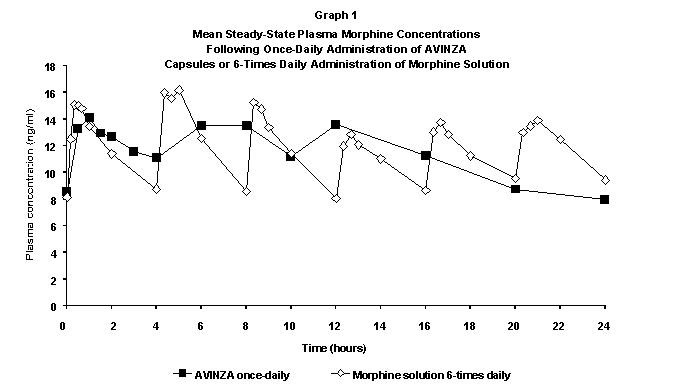
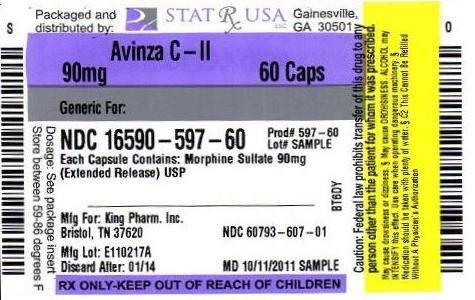
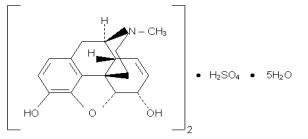
AVINZA (morphine sulfate extended-release capsules) 30, 45, 60, 75, 90, and 120 mg contain both immediate release and extended release beads of morphine sulfate for once daily oral administration. Chemically, morphine sulfate is 7,8-didehydro-4,5 alpha-epoxy-17-methylmorphinan-3,6 alpha-diol sulfate (2:1) (salt) pentahydrate with a molecular weight of 758. Morphine sulfate occurs as white, feathery, silky crystals; cubical masses of crystal; or white crystalline powder. It is soluble in water and slightly soluble in alcohol, but is practically insoluble in chloroform or ether. The octanol:water partition coefficient of morphine is 1.42 at physiologic pH and the pK a is 7.9 for the tertiary nitrogen (the majority is ionized at pH 7.4). Each AVINZA Capsule contains either 30, 45, 60, 75, 90, or 120 mg of morphine sulfate, USP and the following inactive ingredients: ammoniomethacrylate copolymers, NF, fumaric acid, NF, povidone, USP, sodium lauryl sulfate, NF, sugar starch spheres, NF, and talc, USP. The capsule shell contains black ink, gelatin, titanium dioxide, D&C yellow No. 10 (30 mg), FD&C blue No. 2 (45 mg), FD&C green No. 3 (60 mg), FDA iron oxide and FDA yellow iron oxide (75 mg), FD&C red No. 40 (90 mg), FD&C red No. 3 (120 mg), and FD&C blue No. 1 (120 mg). Structure: AVINZA uses the proprietary SODAS (R) (Spheroidal Oral Drug Absorption System) technology to produce the extended release component of AVINZA, which combined with an immediate release component achieves the desired release profile characteristics of AVINZA capsules. Within the gastrointestinal tract, due to the permeability of the ammoniomethacrylate copolymers of the beads, fluid enters the beads and solubilizes the drug. This is mediated by fumaric acid, which acts as an osmotic agent and a local pH modifier. The resultant solution then diffuses out in a predetermined manner which prolongs the in vivo dissolution and absorption phases. (see Pharmacokinetics ) ChemStructure1
AVINZA capsules are a modified-release formulation of morphine sulfate intended for once daily administration indicated for the relief of moderate to severe pain requiring continuous, around-the-clock opioid therapy for an extended period of time. AVINZA is NOT intended for use as a prn analgesic. The safety and efficacy of using AVINZA in the postoperative setting has not been evaluated. AVINZA is not indicated for postoperative use. If the patient has been receiving the drug prior to surgery, resumption of the pre-surgical dose may be appropriate once the patient is able to take the drug by mouth. Physicians should individualize treatment, moving from parenteral to oral analgesics as appropriate. (see American Pain Society guidelines)
AVINZA MUST BE SWALLOWED WHOLE (NOT CHEWED, CRUSHED, OR DISSOLVED) OR AVINZA MAY BE OPENED AND THE ENTIRE BEAD CONTENTS SPRINKLED ON A SMALL AMOUNT OF APPLESAUCE IMMEDIATELY PRIOR TO INGESTION. THE BEADS MUST NOT BE CHEWED, CRUSHED, OR DISSOLVED DUE TO RISK OF ACUTE OVERDOSE. INGESTING CHEWED OR CRUSHED AVINZA BEADS WILL LEAD TO THE RAPID RELEASE AND ABSORPTION OF A POTENTIALLY TOXIC DOSE OF MORPHINE . Patients must not consume alcoholic beverages while on AVINZA therapy. Additionally, patients must not use prescription or non-prescription medicine containing alcohol while on AVINZA therapy. Consumption of alcohol while taking AVINZA may result in the rapid release and absorption of a potentially fatal dose of morphine. The daily dose of AVINZA must be limited to a maximum of 1600 mg/day. AVINZA doses of over 1600 mg/day contain a quantity of fumaric acid that has not been demonstrated to be safe, and which may result in serious renal toxicity. (see WARNINGS ) The 45, 60, 75, 90, and 120 mg capsules are for use only in opioid-tolerant patients. All doses are intended to be administered once daily. As with any opioid drug product, it is necessary to adjust the dosing regimen for each patient individually, taking into account the patient's prior analgesic treatment experience. In the selection of the initial dose of AVINZA, attention should be given to the following: the total daily dose, potency and specific characteristics of the opioid the patient has been taking previously; the reliability of the relative potency estimate used to calculate the equivalent morphine dose needed; the patient's degree of opioid tolerance; the general condition and medical status of the patient; concurrent medications; the type and severity of the patient's pain. The following dosing recommendations, therefore, can only be considered suggested approaches to what is actually a series of clinical decisions over time in the management of the pain of each individual patient. Conversion from Other Oral Morphine Formulations to AVINZA Patients receiving other oral morphine formulations may be converted to AVINZA by administering the patient's total daily oral morphine dose as AVINZA once-daily. AVINZA should not be given more frequently than every 24 hours. As with conversion from any oral morphine formulation to another, supplemental pain medication may be required until the response to the patient's daily AVINZA dosage has stabilized (up to 4 days). Conversion from Parenteral Morphine or Other Non-Morphine Opioids (Parenteral or Oral) to AVINZA There is inter-patient variability in the potency of opioid drugs and opioid formulations. Therefore, a conservative approach is advised when determining the total daily dose of AVINZA. It is better to underestimate a patient's 24-hour oral morphine dose and make available rescue medication than to overestimate the 24-hour oral morphine dose and manage an adverse experience or overdose. The following general points should be considered regarding opioid conversions. Parenteral to oral morphine ratio: Anywhere from 3 to 6 mg of oral morphine may be required to provide pain relief equivalent to 1 mg of parenteral morphine. Based on this rationale, a reasonable starting dose of AVINZA would be approximately three times the previous daily parenteral morphine requirement. Other parenteral or oral non-morphine opioids to oral morphine sulfate: Physicians and other healthcare professionals are advised to refer to published relative potency information, keeping in mind that conversion ratios are only approximate. In general, it is safest to administer half of the estimated daily morphine requirement as the initial AVINZA dose once per day and then manage insufficient pain relief by supplementation with immediate-release morphine or other short-acting analgesics. (see Individualization of Dosage ) Individualization of Dosage Physicians should individualize treatment using a progressive plan of pain management such as outlined by the World Health Organization, the American Pain Society and the Federation of State Medical Boards Model Guidelines. Healthcare professionals should follow appropriate pain management principles of careful assessment and ongoing monitoring. AVINZA (morphine sulfate) is on the third step of the WHO three step analgesic ladder and is of most benefit when a constant level of opioid analgesia is used as a platform from which break-through pain is managed. Once acceptable pain relief is no longer achieved from combinations of non-opioid medications (NSAIDs and acetaminophen) and intermittent usage of moderate or strong opioids, conversion to a 24-hour oral morphine equivalent is warranted. The dose may be titrated as frequently as every other day to control analgesia. In the event that break-through pain occurs, AVINZA may be supplemented with a small dose (5-15% of the total daily dose of morphine) of a short-acting analgesic. When AVINZA is chosen as the initial opioid for patients who do not have a proven tolerance to opioids, patients should be treated initially at a dose of 30 mg once-daily (at 24-hour intervals). For opioid-naive patients, the dose should be increased conservatively. For such patients, it is recommended that the dose of AVINZA be adjusted in increments not greater than 30 mg every 4 days. Some degree of tolerance may occur, requiring dosage adjustment until the achievement of a balance between analgesia and opioid side effects. When necessary, the total dose of AVINZA should be increased until pain relief is reached or clinically significant opioid-related adverse reactions occur. Alternative Methods of Administration AVINZA beads sprinkled over applesauce were found to be bioequivalent to AVINZA capsules swallowed whole under fasting conditions in a study of healthy volunteers. Absorption of the beads sprinkled on other foods has not been tested. This method of administration may be beneficial for patients who have difficulty swallowing whole capsules or tablets. Sprinkle the entire contents of the capsule(s) onto a small amount of applesauce. The applesauce should be at room temperature or cooler. Use immediately. (see also CLINICAL PHARMACOLOGY, Food Effects ) Swallow mixture without chewing or crushing beads. Rinse mouth and swallow to ensure all beads have been ingested. Patients should consume the entire portion and should not divide applesauce into separate doses. Conversion from AVINZA to Other Pain Control Therapies It is important to remember that the persistence of AVINZA-derived plasma morphine concentrations may be in excess of 36 hours when making a conversion to other pain control therapies. Conversion from AVINZA to Other Controlled-Release Oral Morphine Formulations For a given dose, the same total amount of morphine is available from AVINZA as from oral morphine solution or controlled-release morphine tablets. The extended duration of release of morphine from AVINZA results in reduced maximum and increased minimum plasma morphine concentrations than with shorter acting morphine products. Conversion from AVINZA to the same total daily dose of another controlled-release morphine formulation could lead to either excessive sedation at peak serum levels or inadequate analgesia at trough serum levels. Dosage adjustment with close observation is recommended. Conversion from AVINZA to Parenteral Opioids When converting from AVINZA to parenteral opioids, it is best to calculate an equivalent parenteral dose and then initiate treatment at half of this calculated value. As an example, an estimated total 24-hour parenteral morphine requirement of a patient receiving AVINZA is one-third of the dose of AVINZA. This is because the oral bioavailability of morphine is one-third that of parenteral morphine. This estimated dose should then be divided in half, and this last calculated dose is the total daily dose. This value should be further divided by six if the desire is to dose with parenteral morphine every four hours. Consider a patient taking 360 mg of AVINZA daily. First, divide by 3, to account for differences in bioavailability between oral and parenteral morphine. This new figure, 120 mg, is the estimated total 24-hour requirement of parenteral morphine. Dividing by 2, the result gives the total daily dose of 60 mg. If it is decided to administer the drug at four-hour intervals, then administer 10 mg (60 divided by 6) every four hours. Although this approach may require a dosage increase in the first 24 hours for many patients, this method is recommended, as it is less likely to result in overdose. Overdose is more likely to occur when administering an equivalent dose of parenteral morphine without titration. Provision for break-through pain should be made. Cessation of Therapy When the patient no longer requires therapy with AVINZA capsules, doses should be tapered gradually to prevent signs and symptoms of withdrawal in the physically dependent patient.
AVINZA is contraindicated in patients with known hypersensitivity to morphine, morphine salts, or any components of the product. AVINZA, like all opioids, is contraindicated in patients with respiratory depression in the absence of resuscitative equipment and in patients with acute or severe bronchial asthma. AVINZA, like all opioids, is contraindicated in any patient who has or is suspected of having paralytic ileus.
In controlled and open label clinical studies, 560 patients with chronic malignant or non-malignant pain were treated with AVINZA. The most common serious adverse events reported with administration of AVINZA were vomiting, nausea, death, dehydration, dyspnea, and sepsis. (Deaths occurred in patients treated for pain due to underlying malignancy.) Serious adverse events caused by morphine include respiratory depression, apnea, and to a lesser degree, circulatory depression, respiratory arrest, shock and cardiac arrest. Adverse Events The common adverse events seen on initiation of therapy with morphine are dose-dependent and are typical opioid-related side effects. The most frequent of these include constipation, nausea and somnolence. The frequency of these events depends upon several factors including the clinical setting, the patient's level of opioid tolerance, and host factors specific to the individual. These events should be anticipated and managed as part of opioid analgesia therapy. The most common adverse events (seen in greater than 10%) reported by patients treated with AVINZA during the clinical trials at least once during therapy were constipation, nausea, somnolence, vomiting, and headache. Adverse events occurring in 5-10% of study patients were peripheral edema, diarrhea, abdominal pain, infection, urinary tract infection, accidental injury, flu syndrome, back pain, rash, sweating, fever, insomnia, depression, paresthesia, anorexia, dry mouth, asthenia and dyspnea. Other less common side effects expected from opioid analgesics, including morphine, or seen in fewer than 5% of patients taking AVINZA in the clinical trials were: Body as a Whole: malaise, withdrawal syndrome. Cardiovascular System: bradycardia, hypertension, hypotension, palpitations, syncope, tachycardia. Digestive System: biliary pain, dyspepsia, dysphagia, gastroenteritis, abnormal liver function tests, rectal disorder, thirst. Hemic and Lymphatic System: anemia, thrombocytopenia. Metabolic and Nutritional Disorders: edema, weight loss. Musculoskeletal: skeletal muscle rigidity. Nervous System: abnormal dreams, abnormal gait, agitation, amnesia, anxiety, ataxia, confusion, convulsions, coma, delirium, euphoria, hallucinations, lethargy, nervousness, abnormal thinking, tremor, vasodilation, vertigo . Respiratory System: hiccup, hypoventilation, voice alteration. Skin and Appendages: dry skin, urticaria. Special Senses: amblyopia, eye pain, taste perversion. Urogenital System: abnormal ejaculation, dysuria, impotence, decreased libido, oliguria, urinary retention.
AVINZA must be swallowed whole (not chewed, crushed, or dissolved) or AVINZA may be opened and the entire bead contents sprinkled on a small amount of applesauce immediately prior to ingestion. THE CAPSULES MUST NOT BE CHEWED, CRUSHED, OR DISSOLVED DUE TO THE RISK OF RAPID RELEASE AND ABSORPTION OF A POTENTIALLY FATAL DOSE OF MORPHINE. (see BOX WARNING , CLINICAL PHARMACOLOGY ) Patients must not consume alcoholic beverages while on AVINZA therapy. Additionally, patients must not use prescription or non-prescription medications containing alcohol while on AVINZA therapy. Consumption of alcohol while taking AVINZA may result in the rapid release and absorption of a potentially fatal dose of morphine. THE DAILY DOSE OF AVINZA MUST BE LIMITED TO A MAXIMUM OF 1600 MG/DAY. AVINZA DOSES OF OVER 1600 MG/DAY CONTAIN A QUANTITY OF FUMARIC ACID THAT HAS NOT BEEN DEMONSTRATED TO BE SAFE, AND WHICH MAY RESULT IN SERIOUS RENAL TOXICITY. Misuse, Abuse and Diversion of Opioids Morphine is an opioid agonist and a Schedule II controlled substance. Such drugs are sought by drug abusers and people with addiction disorders. Diversion of Schedule II products is an act subject to criminal penalty. Morphine can be abused in a manner similar to other opioid agonists, legal or illicit. This should be considered when prescribing or dispensing AVINZA in situations where the physician or pharmacist is concerned about an increased risk of misuse, abuse, or diversion. Abuse of AVINZA by crushing, chewing, snorting, or injecting the dissolved product will result in the immediate release of the entire daily dose of the opioid and pose a significant risk to the abuser that could result in overdose and death. Intravenous abuse of a water extract of AVINZA may lead to serious pulmonary complications due to the extraction of talc along with morphine sulfate. (see DRUG ABUSE AND ADDICTION ) Concerns about abuse, addiction, and diversion should not prevent the proper management of pain. Healthcare professionals should contact their State Professional Licensing Board, or State Controlled Substances Authority for information on how to prevent and detect abuse or diversion of this product. Interactions with Alcohol and Drugs of Abuse Morphine may be expected to have additive effects when used in conjunction with alcohol, other opioids, or illicit drugs that cause central nervous system depression. In vitro studies performed by the FDA demonstrated that when AVINZA 30 mg was mixed with 900 mL of buffer solutions containing ethanol (20% and 40%), the dose of morphine that was released was alcohol concentration-dependent, leading to a more rapid release of morphine. While the relevance of in vitro lab tests regarding AVINZA to the clinical setting remains to be determined, this acceleration of release may correlate with in vivo rapid release of the total morphine dose, which could result in the absorption of a potentially fatal dose of morphine. Impaired Respiration Respiratory depression is the chief hazard of all morphine preparations. Respiratory depression occurs more frequently in elderly or debilitated patients and in those suffering from conditions accompanied by hypoxia, hypercapnia, or upper airway obstruction, in whom even moderate therapeutic doses may significantly decrease pulmonary ventilation. Morphine should be used with extreme caution in patients with chronic obstructive pulmonary disease or cor pulmonale and in patients having a substantially decreased respiratory reserve (e.g., severe kyphoscoliosis), hypoxia, hypercapnia, or pre-existing respiratory depression. In such patients, even usual therapeutic doses of morphine may increase airway resistance and decrease respiratory drive to the point of apnea. Head Injury and Increased Intracranial Pressure The respiratory depressant effects of morphine with carbon dioxide retention and secondary elevation of cerebrospinal fluid pressure may be markedly exaggerated in the presence of head injury, other intracranial lesions, or a pre-existing increase in intracranial pressure. Morphine produces effects which may obscure neurologic signs of further increases in intracranial pressure in patients with head injuries. Morphine should only be administered under such circumstances when considered essential and then with extreme care. Hypotensive Effect AVINZA, like all morphine products, may cause severe hypotension in an individual whose ability to maintain blood pressure has already been compromised by a depleted blood volume or concurrent administration of drugs such as phenothiazines or general anesthetics. (see also PRECAUTIONS, Drug Interactions ) AVINZA may produce orthostatic hypotension and syncope in ambulatory patients. AVINZA is an opioid analgesic which should be administered with caution to patients in circulatory shock, as vasodilation produced by the drug may further reduce cardiac output and blood pressure. Gastrointestinal Obstruction AVINZA should not be administered to patients with gastrointestinal obstruction, especially paralytic ileus because AVINZA, like all morphine preparations, diminishes propulsive peristaltic waves in the gastrointestinal tract and may prolong the obstruction. --- BOXED WARNING: WARNING: AVINZA capsules are a modified-release formulation of morphine sulfate indicated for once daily administration for the relief of moderate to severe pain requiring continuous, around-the-clock opioid therapy for an extended period of time. AVINZA CAPSULES ARE TO BE SWALLOWED WHOLE OR THE CONTENTS OF THE CAPSULES SPRINKLED ON APPLESAUCE. THE CAPSULE BEADS ARE NOT TO BE CHEWED, CRUSHED, OR DISSOLVED DUE TO THE RISK OF RAPID RELEASE AND ABSORPTION OF A POTENTIALLY FATAL DOSE OF MORPHINE . PATIENTS MUST NOT CONSUME ALCOHOLIC BEVERAGES WHILE ON AVINZA THERAPY. ADDITIONALLY, PATIENTS MUST NOT USE PRESCRIPTION OR NON-PRESCRIPTION MEDICATIONS CONTAINING ALCOHOL WHILE ON AVINZA THERAPY. CONSUMPTION OF ALCOHOL WHILE TAKING AVINZA MAY RESULT IN THE RAPID RELEASE AND ABSORPTION OF A POTENTIALLY FATAL DOSE OF MORPHINE.
CNS Depressants: The concurrent use of other central nervous system (CNS) depressants including sedatives, hypnotics, general anesthetics, antiemetics, phenothiazines, or other tranquilizers or alcohol increases the risk of respiratory depression, hypotension, profound sedation, or coma. Use with caution and in reduced dosages in patients taking these agents. Muscle Relaxants: Morphine may enhance the neuromuscular blocking action of skeletal muscle relaxants and produce an increased degree of respiratory depression. Mixed Agonist/Antagonist Opioid Analgesics: Mixed agonist/antagonist analgesics (i.e., pentazocine, nalbuphine and butorphanol) should NOT be administered to patients who have received or are receiving a course of therapy with a pure opioid agonist analgesic. In these patients, mixed agonist/antagonist analgesics may reduce the analgesic effect and/or may precipitate withdrawal symptoms. Monoamine Oxidase Inhibitors (MAOIs): MAOIs markedly potentiate the action of morphine. AVINZA should not be used in patients taking MAOIs or within 14 days of stopping such treatment. Cimetidine: Concomitant administration of morphine and cimetidine has been reported to precipitate apnea, confusion and muscle twitching in an isolated report. Patients should be monitored for increased respiratory and CNS depression when receiving cimetidine concomitantly with AVINZA. Food: AVINZA can be administered without regard to food. (see CLINICAL PHARMACOLOGY, Food Effects ).