
İHALE DÜNYASI
İHALE DÜNYASI
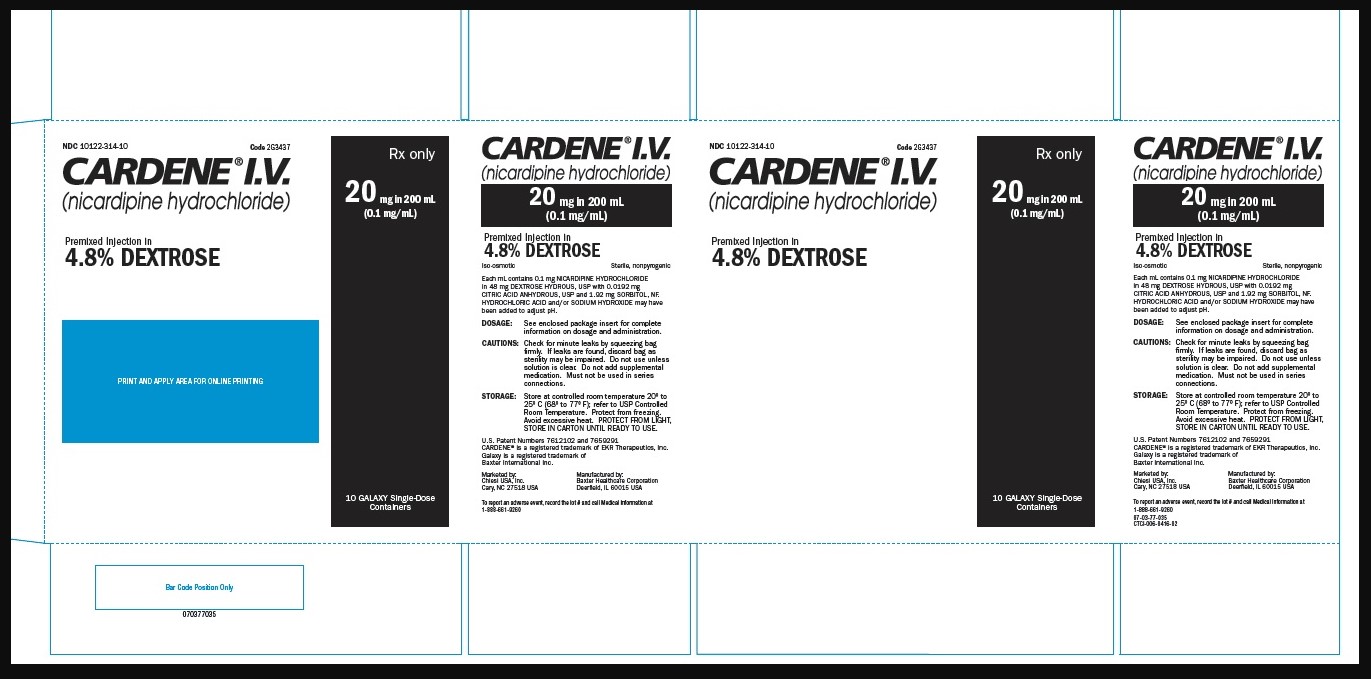
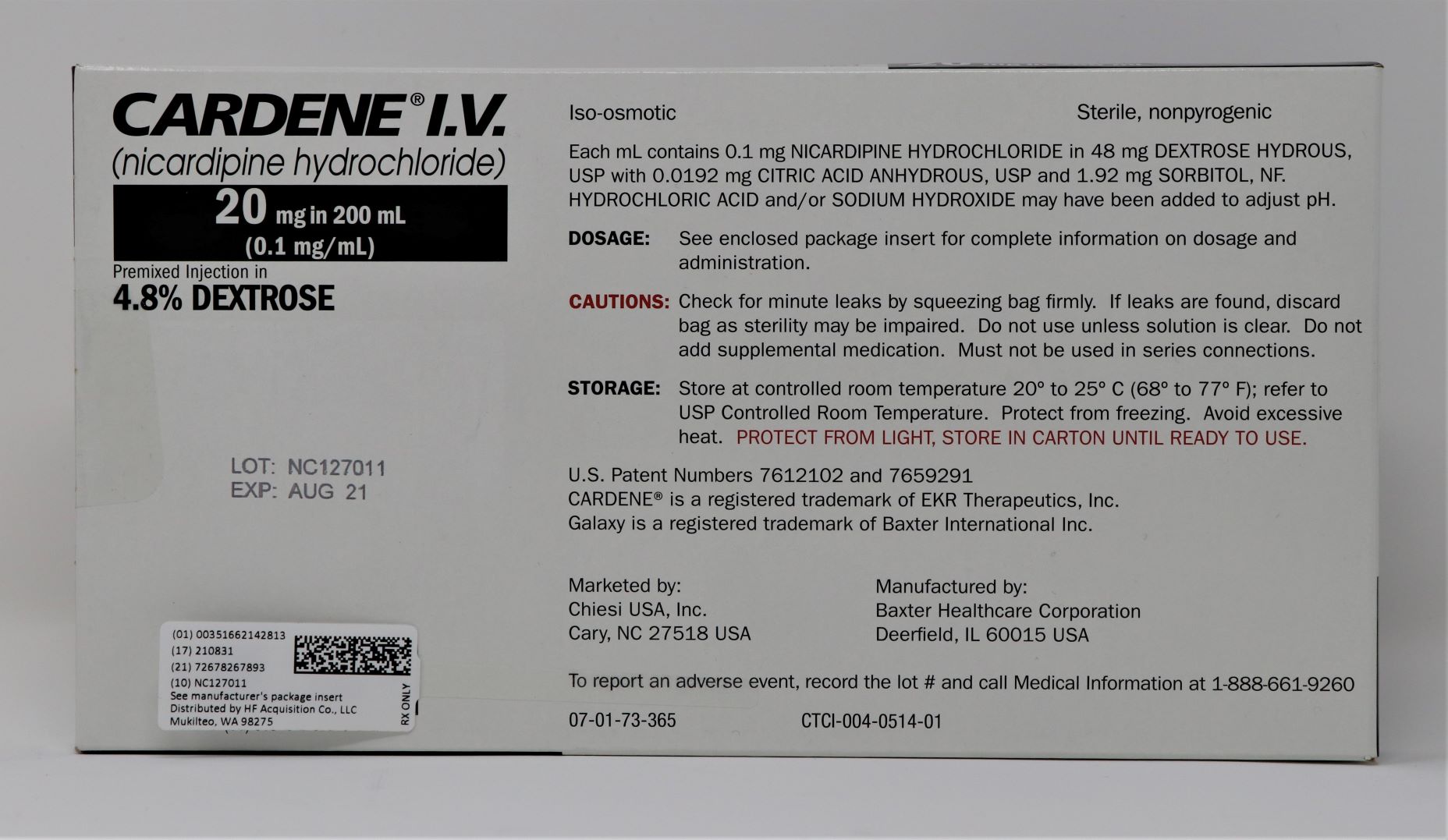
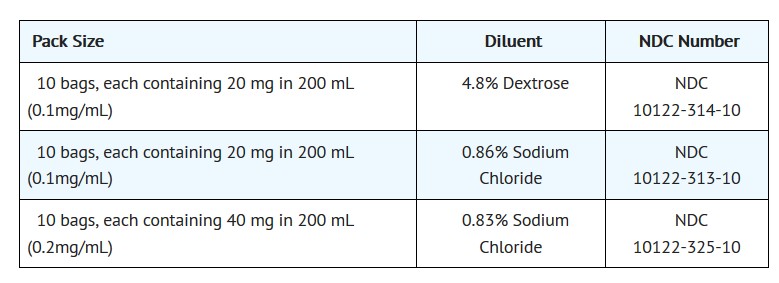

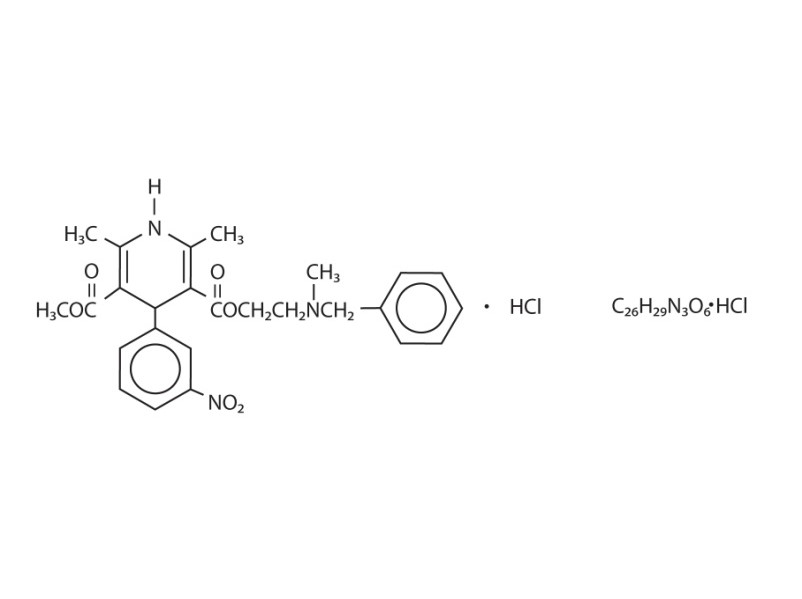
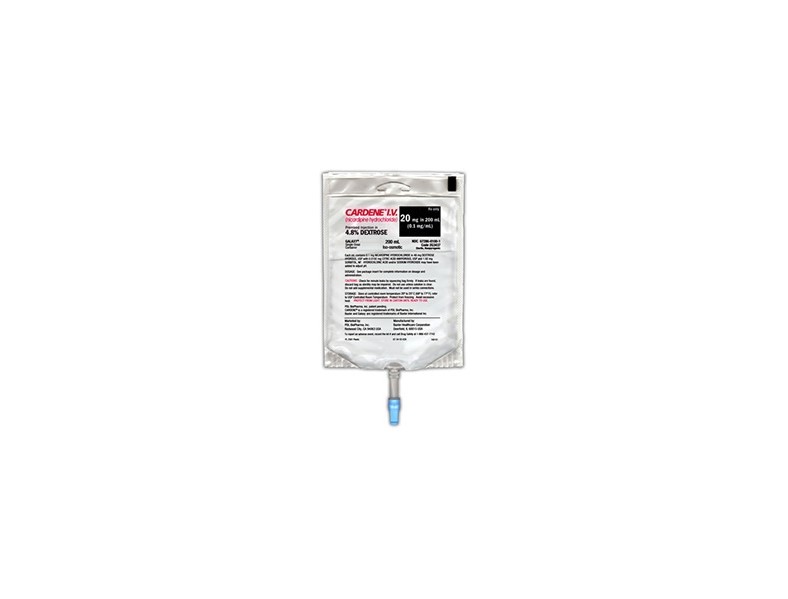
Cardene (nicardipine hydrochloride) is a calcium ion influx inhibitor (slow channel blocker or calcium channel blocker). Cardene I.V. Premixed Injection for intravenous administration contains 20 mg (0.1 mg/mL) of nicardipine hydrochloride per 200 mL in either dextrose or sodium chloride or 40 mg (0.2 mg/mL) of nicardipine hydrochloride per 200 mL in sodium chloride. Nicardipine hydrochloride is a dihydropyridine derivative with IUPAC (International Union of Pure and Applied Chemistry) chemical name (±)-2-(benzyl-methyl amino) ethyl methyl 1,4-dihydro-2,6-dimethyl-4-(m-nitrophenyl)-3,5-pyridinedicarboxylate monohydrochloride and has the following structure: Nicardipine hydrochloride is a greenish-yellow, odorless, crystalline powder that melts at about 169ºC. It is freely soluble in chloroform, methanol, and glacial acetic acid, sparingly soluble in anhydrous ethanol, slightly soluble in n-butanol, water, 0.01 M potassium dihydrogen phosphate, acetone, and dioxane, very slightly soluble in ethyl acetate, and practically insoluble in benzene, ether, and hexane. It has a molecular weight of 515.99. Cardene I.V. Premixed Injection is available as a ready-to-use sterile, non-pyrogenic, clear, colorless to yellow, iso-osmotic solution for intravenous administration in a 200 mL GALAXY container with 20 mg (0.1 mg/mL) nicardipine hydrochloride in either dextrose or sodium chloride or 40 mg (0.2 mg/mL) nicardipine hydrochloride in sodium chloride. Cardene I.V. Premixed Injection in 4.8% Dextrose 20 mg in 200 mL (0.1 mg/mL) Each mL contains 0.1 mg nicardipine hydrochloride, 48 mg dextrose hydrous, USP, 0.0192 mg citric acid, anhydrous, USP, and 1.92 mg sorbitol, NF. Hydrochloric acid and/or sodium hydroxide may have been added to adjust pH to 3.7 to 4.7. Cardene I.V. Premixed Injection in 0.86% Sodium Chloride 20 mg in 200 mL (0.1 mg/mL) Each mL contains 0.1 mg nicardipine hydrochloride, 8.6 mg sodium chloride, USP, 0.0192 mg citric acid, anhydrous, USP, and 1.92 mg sorbitol, NF. Hydrochloric acid and/or sodium hydroxide may have been added to adjust pH to 3.7 to 4.7. Cardene I.V. Premixed Injection in 0.83% Sodium Chloride 40 mg in 200 mL (0.2 mg/mL) Each mL contains 0.2 mg nicardipine hydrochloride, 8.3 mg sodium chloride, USP, 0.0384 mg citric acid, anhydrous, USP, and 3.84 mg sorbitol, NF. Hydrochloric acid and/or sodium hydroxide may have been added to adjust pH to 3.7 to 4.7. The GALAXY container is fabricated from multilayered plastic (PL 2501). Solutions are in contact with the polyethylene layer of the container and can leach out certain chemical components of the plastic in very small amounts within the expiration period. The suitability and safety of the plastic have been confirmed in tests in animals according to the USP biological tests for plastic containers, as well as by tissue culture toxicity studies. STRUCTURE
1 INDICATIONS & USAGE 1.1 Hypertension Cardene(R) I.V. (nicardipine hydrochloride) Premixed Injection is indicated for the short-term treatment of hypertension when oral therapy is not feasible or not desirable. For prolonged control of blood pressure, transfer patients to oral medication as soon as their clinical condition permits [see Dosage and Administration ( 2- 2.1)].
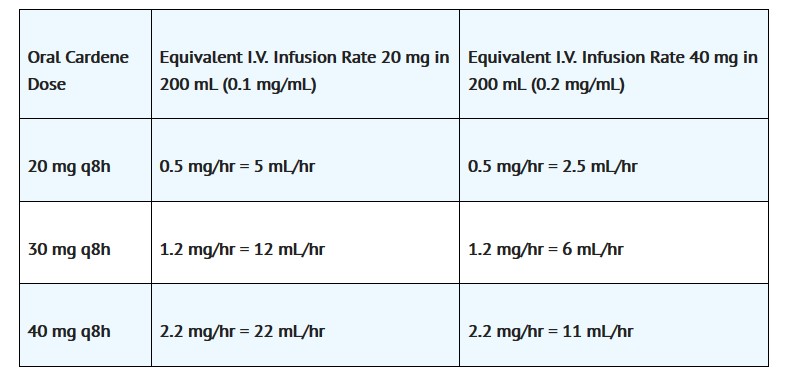
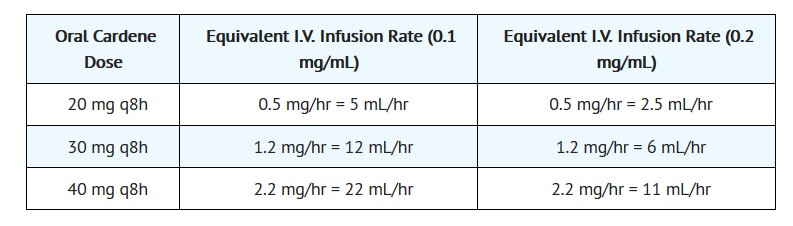
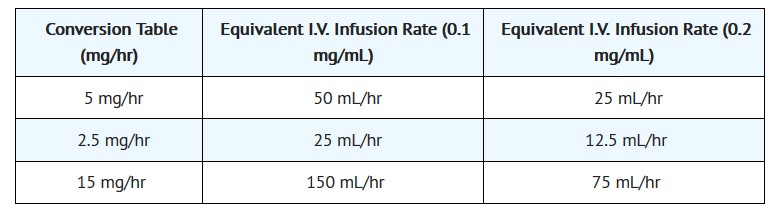
2 DOSAGE & ADMINISTRATION 2.1 Recommended Dosing Cardene I.V. is intended for intravenous use. Titrate dose to achieve the desired blood pressure reduction. Individualize dosage depending on the blood pressure to be obtained and the response of the patient. Dosage as a Substitute for Oral Nicardipine Therapy The intravenous infusion rate required to produce an average plasma concentration equivalent to a given oral dose at steady state is shown in the following table: Dosage for Initiation of Therapy in a Patient Not Receiving Oral Nicardipine Cardene I.V. 20 mg in 200 mL (0.1 mg/mL): Initiate therapy at 50 mL/hr (5 mg/hr). If desired blood pressure reduction is not achieved at this dose, the infusion rate may be increased by 25 mL/hr (2.5 mg/hr) every 5 minutes (for rapid titration) to 15 minutes (for gradual titration) up to a maximum of 150 mL/hr (15 mg/hr), until desired blood pressure reduction is achieved. Following achievement of the blood pressure goal utilizing rapid titration, decrease the infusion rate to 30 mL/hr (3 mg/hr). Cardene I.V. 40 mg in 200 mL (0.2 mg/mL): Initiate therapy at 25 mL/hr (5 mg/hr). If desired blood pressure reduction is not achieved at this dose, the infusion rate may be increased by 12.5 mL/hr (2.5 mg/hr) every 5 minutes (for rapid titration) to 15 minutes (for gradual titration) up to a maximum of 75 mL/hr (15 mg/hr), until desired blood pressure reduction is achieved. Following achievement of the blood pressure goal utilizing rapid titration, decrease the infusion rate to 15 mL/hr (3 mg/hr). Drug Discontinuation and Transition to an Oral Antihypertensive Agent Discontinuation of infusion is followed by a 50% offset of action in about 30 minutes. If treatment includes transfer to an oral antihypertensive agent other than oral nicardipine, initiate therapy upon discontinuation of Cardene I.V. Premixed Injection. If oral nicardipine is to be used, administer the first dose 1 hour prior to discontinuation of the infusion. Special Populations Titrate Cardene I.V. Premixed Injection slowly in patients with heart failure or impaired hepatic or renal function [see Warnings and Precautions ( 5- 5.2, 5- 5.3 and 5- 5.4)] 2.2 Monitoring The time course of blood pressure decrease is dependent on the initial rate of infusion and the frequency of dosage adjustment. With constant infusion, blood pressure begins to fall within minutes. It reaches about 50% of its ultimate decrease in about 45 minutes. Monitor blood pressure and heart rate continually during infusion and avoid too rapid or excessive blood pressure drop during treatment. If there is concern of impending hypotension or tachycardia, the infusion should be discontinued. Then, when blood pressure has stabilized, infusion of Cardene I.V. Premixed Injection may be restarted at low doses such as 30?50 mL/hr (3 - 5 mg/hr) for 20 mg in 200 mL or 15-25 mL/hr (3 - 5 mg/hr) for 40 mg in 200 mL and adjusted to maintain desired blood pressure. 2.3 Instructions for Administration Administer Cardene I.V. by a central line or through a large peripheral vein. Change the infusion site every 12 hours if administered via peripheral vein [see Warnings and Precautions ( 5- 5.5)]. Cardene I.V. Premixed Injection is available as a single-use, ready-to-use, iso-osmotic solution for intravenous administration. No further dilution is required. Inspect Cardene I.V. Premixed Injection visually for particulate matter and discoloration prior to administration, whenever solution and container permit. Check the container for minute leaks prior to use by squeezing the bag firmly; ensure that the seal is intact. If leaks are found, discard solution as sterility may be impaired. Cardene I.V. Premixed Injection is normally a clear, colorless to yellow solution. Do not combine Cardene I.V. Premixed Injection with any product in the same intravenous line or premixed container. Do not add supplementary medication to the bag. Protect from light until ready to use. Do not use plastic containers in series connections. Such use could result in air embolism due to residual air being drawn from the primary container before the administration of the fluid from the secondary container is complete. Preparation for administration 1. Suspend container from eyelet support. 2. Remove protector from outlet port at bottom of container. 3. Attach administration set. Refer to complete directions accompanying set. DOSAGE
4.1 Advanced Aortic Stenosis Cardene I.V. Premixed Injection is contraindicated in patients with advanced aortic stenosis because part of the effect of Cardene I.V. Premixed Injection is secondary to reduced afterload. Reduction of diastolic pressure in these patients may worsen rather than improve myocardial oxygen balance.
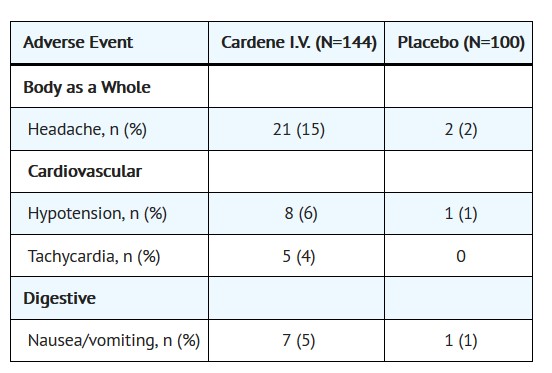
6.1 Clinical Trials Experience Because clinical trials are conducted under widely varying conditions, adverse reaction rates observed in the clinical trials of a drug cannot be directly compared to rates in the clinical trials of another drug and may not reflect the rates observed in practice. The adverse reaction information from clinical trials does, however, provide a basis for identifying the adverse events that appear to be related to drug use and for approximating rates. Two hundred forty-four patients participated in two multicenter, double-blind, placebo-controlled trials of Cardene I.V. Adverse experiences were generally not serious and most were expected consequences of vasodilation. Adverse experiences occasionally required dosage adjustment. Therapy was discontinued in approximately 12% of patients, mainly due to hypotension, headache, and tachycardia. The table below shows percentage of patients with adverse events where the rate is >3% more common on Cardene I.V. than placebo. Other adverse events have been reported in clinical trials or in the literature in association with the use of intravenously administered nicardipine: Body as a Whole: fever, neck pain Cardiovascular: angina pectoris, atrioventricular block, ST segment depression, inverted T wave, deep-vein thrombophlebitis Digestive: dyspepsia Hemic and Lymphatic: thrombocytopenia Metabolic and Nutritional: hypophosphatemia, peripheral edema Nervous: confusion, hypertonia Respiratory: respiratory disorder Special Senses: conjunctivitis, ear disorder, tinnitus Urogenital: urinary frequency Sinus node dysfunction and myocardial infarction, which may be due to disease progression, have been seen in patients on chronic therapy with orally administered nicardipine. 6.2 Postmarketing Experience Because adverse reactions are reported voluntarily from a population of uncertain size, it is not always possible to estimate reliably their frequency or to establish a causal relationship to drug exposure. The following adverse reaction has been identified during post-approval use of Cardene I.V.: decreased oxygen saturation (possible pulmonary shunting). ADVERSE
5.1 Exacerbation of Angina Increases in frequency, duration, or severity of angina have been seen in chronic therapy with oral nicardipine. Induction or exacerbation of angina has been seen in less than 1% of coronary artery disease patients treated with Cardene I.V. The mechanism of this effect has not been established. 5.2 Exacerbation of Heart Failure Titrate slowly when using Cardene I.V. Premixed Injection, particularly in combination with a beta-blocker, in patients with heart failure or significant left ventricular dysfunction because of possible negative inotropic effects. 5.3 Increased effect with Impaired Hepatic Function Since nicardipine is metabolized in the liver, consider lower dosages and closely monitor responses in patients with impaired liver function or reduced hepatic blood flow. 5.4. Prolonged effect with Impaired Renal Function When Cardene I.V. was given to mild to moderate hypertensive patients with moderate renal impairment, a significantly lower systemic clearance and higher area under the curve (AUC) was observed. These results are consistent with those seen after oral administration of nicardipine. Titrate gradually in patients with renal impairment. 5.5 Local Irritation To reduce the possibility of venous thrombosis, phlebitis, local irritation, swelling, extravasation, and the occurrence of vascular impairment, administer drug through large peripheral veins or central veins rather than arteries or small peripheral veins, such as those on the dorsum of the hand or wrist. To minimize the risk of peripheral venous irritation, change the site of the drug infusion every 12 hours.
7.1 Beta-Blockers In most patients, Cardene I.V. Premixed Injection can safely be used concomitantly with beta blockers. However, titrate slowly when using Cardene I.V. Premixed Injection in combination with a beta-blocker in heart failure patients [see Warnings and Precautions ( 5- 5.2)]. 7.2 Cimetidine Cimetidine has been shown to increase nicardipine plasma concentrations with oral nicardipine administration. Frequently monitor response in patients receiving both drugs. Data with other histamine-2 antagonists are not available. 7.3 Cyclosporine Concomitant administration of oral or intravenous nicardipine and cyclosporine results in elevated plasma cyclosporine levels through nicardipine inhibition of hepatic microsomal enzymes, including CYP3A4. Closely monitor plasma concentrations of cyclosporine during Cardene I.V. Premixed Injection administration, and reduce the dose of cyclosporine accordingly. 7.4 Tacrolimus Concomitant administration of intravenous nicardipine and tacrolimus may result in elevated plasma tacrolimus levels through nicardipine inhibition of hepatic microsomal enzymes, including CYP3A4. Closely monitor plasma concentrations of tacrolimus during Cardene I.V. Premixed Injection administration, and adjust the dose of tacrolimus accordingly. 7.5 In Vitro Interaction The plasma protein binding of nicardipine was not altered when therapeutic concentrations of furosemide, propranolol, dipyridamole, warfarin, quinidine, or naproxen were added to human plasma in vitro.