
İHALE DÜNYASI
İHALE DÜNYASI
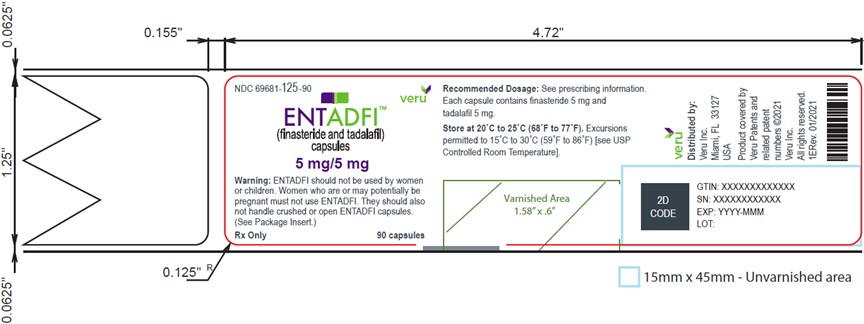
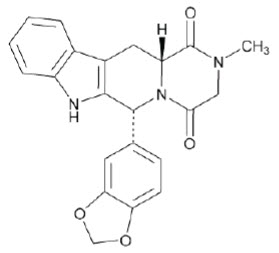
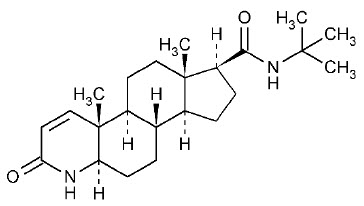
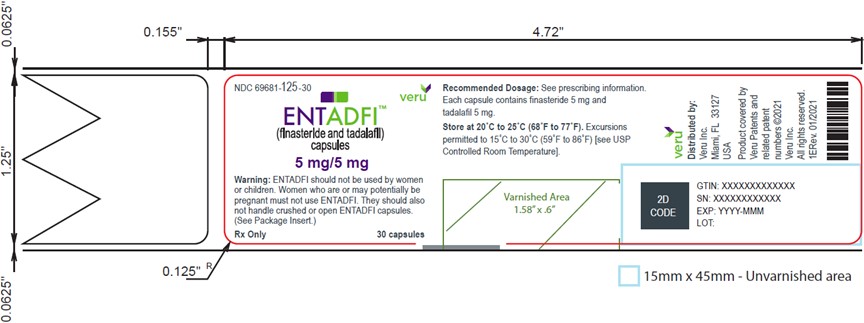
ENTADFI (finasteride and tadalafil) capsules are a combination of finasteride and tadalafil for oral administration. Finasteride: Finasteride, a synthetic 4-azasteroid compound, is a specific inhibitor of steroid Type II 5?-reductase, an intracellular enzyme that converts the androgen testosterone into 5?-dihydrotestosterone (DHT). The chemical designation of finasteride is 4-azaandrost-1-ene-17-carboxamide, N-(1,1-dimethylethyl)-3-oxo-,(5?,17?)-. The empirical formula of finasteride is C 23 H 36 N 2 O 2 and its molecular weight is 372.55. Its structural formula is: Finasteride is a white crystalline powder with a melting point near 250°C. It is freely soluble in chloroform and in lower alcohol solvents but is practically insoluble in water. Tadalafil: Tadalafil is a selective inhibitor of cyclic guanosine monophosphate (cGMP)-specific phosphodiesterase type 5 (PDE5). Tadalafil has the empirical formula C 22 H 19 N 3 O 4 representing a molecular weight of 389.41. The structural formula is: The chemical designation of tadalafil is pyrazino[1?,2?:1,6]pyrido[3,4-b]indole-1,4-dione, 6-(1,3-benzodioxol-5-yl)2,3,6,7,12,12a-hexahydro-2-methyl-, (6R,12aR)-. It is a crystalline solid that is practically insoluble in water and very slightly soluble in ethanol. ENTADFI is available as size 3, white opaque capsules for oral administration. Each ENTADFI capsule contains finasteride 5 mg and tadalafil 5 mg and the following inactive ingredients: colloidal silicon dioxide, lactose monohydrate, magnesium stearate, silicified microcrystalline cellulose, sodium lauryl sulfate, and sodium starch glycolate. The capsule shell is composed of carrageenan, hypromellose, potassium chloride, titanium dioxide, and is printed with an edible black printing ink.
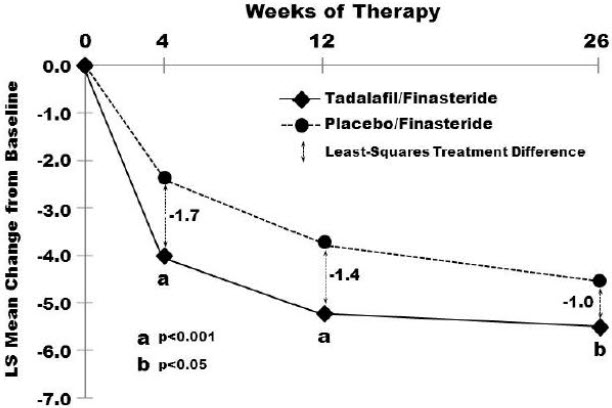
ENTADFI is indicated to initiate treatment of the signs and symptoms of benign prostatic hyperplasia (BPH) in men with an enlarged prostate for up to 26 weeks. Limitations of Use ENTADFI is not recommended for more than 26 weeks because the incremental benefit of tadalafil decreases from 4 weeks until 26 weeks, and the incremental benefit beyond 26 weeks is unknown [see Clinical Studies ( 14 )] . ENTADFI is a combination of finasteride, a 5?-reductase inhibitor, and tadalafil, a phosphodiesterase 5 (PDE5) inhibitor, and, indicated to initiate treatment of the signs and symptoms of benign prostatic hyperplasia (BPH) in men with an enlarged prostate for up to 26 weeks. ( 1 )
The recommended dosage of ENTADFI is one capsule (containing finasteride 5 mg and tadalafil 5 mg) orally once daily at approximately the same time every day for up to 26 weeks. Take ENTADFI on an empty stomach [see Clinical Pharmacology ( 12.3 )] . One capsule orally once daily at approximately the same time every day for up to 26 weeks. Take without food. ( 2 )
ENTADFI is contraindicated in the following situations: Concomitant use of any form of organic nitrate, either regularly and/or intermittently. ENTADFI can potentiate the hypotensive effect of nitrates [see Warning and Precautions ( 5.1 , 5.2 ) and Drug Interactions ( 7.1 )] . Patients with known hypersensitivity to finasteride, tadalafil, or to any of the components of ENTADFI. Hypersensitivity reactions have included Stevens-Johnson syndrome, exfoliative dermatitis, pruritis, urticaria, and angioedema [see Warnings and Precautions ( 5.8 ) and Adverse Reactions ( 6.2 )] . Pregnancy [see Warnings and Precautions ( 5.7 ) and Use in Specific Populations ( 8.1 )] . Concomitant use with a guanylate cyclase (GC) stimulator. ENTADFI may potentiate the hypotensive effects of GC stimulators [see Drug Interactions ( 7.1 )] . Concomitant use with any form of organic nitrate, either regularly and/or intermittently. ENTADFI can potentiate the hypotensive effect of nitrates. ( 4 ) Known hypersensitivity to ENTADFI or any of its components. ( 4 ) Pregnancy. ( 4 ) Concomitant use with guanylate cyclase (GC) stimulators. ENTADFI may potentiate the hypotensive effects of GC stimulators. ( 4 )
Most common adverse reactions associated with finasteride monotherapy (?1%) in a 4-year study were impotence, decreased libido, decreased volume of ejaculate, breast enlargement, breast tenderness, and rash ( 6.1 ). Most common adverse reactions (?2%) associated with tadalafil were headache, dyspepsia, back pain, myalgia, nasal congestion, flushing, and pain in limb ( 6.1 ). To report SUSPECTED ADVERSE REACTIONS, contact Veru Inc. at 1-866-936-8233 or www.verupharma.com or FDA at 1-800-FDA-1088 or www.fda.gov/medwatch . 6.1 Clinical Trials Experience Because clinical trials are conducted under widely varying conditions, adverse reaction rates observed in the clinical trials of a drug cannot be directly compared to rates in the clinical trials of another drug and may not reflect the rates observed in practice. The safety of ENTADFI is based on the following: Placebo controlled trials in which tadalafil was administered as monotherapy for the treatment of either BPH alone or BPH and a condition for which ENTADFI is not approved Placebo controlled trials in which finasteride was administered as monotherapy for the treatment of BPH Finasteride: 4-Year Placebo-Controlled Study (PLESS) In PLESS, 1524 patients treated with finasteride 5 mg once daily and 1516 patients treated with placebo were evaluated for safety over a period of 4 years. The most frequently reported adverse reactions were related to sexual function. 3.7% (57 patients) treated with finasteride and 2.1% (32 patients) treated with placebo discontinued therapy as a result of adverse reactions related to sexual function, which are the most frequently reported adverse reactions. Table 1 presents the only clinical adverse reactions considered possibly, probably or definitely drug related by the investigator, for which the incidence on finasteride was ?1% and greater than placebo over the 4 years of the study. In years 2-4 of the study, there was no significant difference between treatment groups in the incidences of impotence, decreased libido and ejaculation disorder. Table 1: Drug-Related Adverse Reactions Year 1 (%) Years 2, 3 and 4 Combined Years 2-4 (%) Finasteride Placebo Finasteride Placebo Impotence 8.1 3.7 5.1 5.1 Decreased Libido 6.4 3.4 2.6 2.6 Decreased Volume of Ejaculate 3.7 0.8 1.5 0.5 Ejaculation Disorder 0.8 0.1 0.2 0.1 Breast Enlargement 0.5 0.1 1.8 1.1 Breast Tenderness 0.4 0.1 0.7 0.3 Rash 0.5 0.2 0.5 0.1 N = 1524 and 1516, finasteride vs placebo, respectively Phase III Studies and 5-Year Open Extensions The adverse experience profile in the 1-year, placebo-controlled, Phase III studies, the 5-year open extensions, and PLESS were similar. Medical Therapy of Prostatic Symptoms (MTOPS) Study In the MTOPS study, 3047 men with symptomatic BPH were randomized to receive finasteride 5 mg once daily (n=768), doxazosin 4 or 8 mg once daily (n=756), the combination of finasteride 5 mg once daily and doxazosin 4 or 8 mg once daily (n=786), or placebo (n=737) for 4 to 6 years. The incidence rates of drug-related adverse reactions reported by ? 2% of patients in any treatment group in the MTOPS Study are listed in Table 2 . The individual adverse reactions which occurred more frequently in the combination group compared to either drug alone were: asthenia, postural hypotension, peripheral edema, dizziness, decreased libido, rhinitis, abnormal ejaculation, impotence and abnormal sexual function (see Table 1 ). Of these, the incidence of abnormal ejaculation in patients receiving combination therapy was comparable to the sum of the incidences of this adverse experience reported for the two monotherapies. Combination therapy with finasteride and doxazosin was associated with no new clinical adverse reactions. Four patients in MTOPS reported the adverse reaction of breast cancer. Three of these patients were on finasteride only and one was on combination therapy. See Long-Term Data. The MTOPS Study was not specifically designed to make statistical comparisons between groups for reported adverse reactions. In addition, direct comparisons of safety data between the MTOPS study and previous studies of the single agents may not be appropriate based upon differences in patient population, dosage or dose regimen, and other procedural and study design elements. Table 2: Incidence ?2% in One or More Treatment Groups Drug-Related Clinical Adverse Reactions in MTOPS Adverse Reaction Placebo (N=737) (%) Doxazosin 4 mg or 8 mg Doxazosin dose was achieved by weekly titration (1 to 2 to 4 to 8 mg). The final tolerated dose (4 mg or 8 mg) was administered at end-Week 4. Only those patients tolerating at least 4 mg were kept on doxazosin. The majority of patients received the 8-mg dose over the duration of the study. (N=756) (%) Finasteride (N=768) (%) Combination (N=786) (%) Body as a whole Asthenia 7.1 15.7 5.3 16.8 Headache 2.3 4.1 2.0 2.3 Cardiovascular Hypotension 0.7 3.4 1.2 1.5 Postural Hypotension 8.0 16.7 9.1 17.8 Metabolic and Nutritional Peripheral Edema 0.9 2.6 1.3 3.3 Nervous Dizziness 8.1 17.7 7.4 23.2 Libido Decreased 5.7 7.0 10.0 11.6 Somnolence 1.5 3.7 1.7 3.1 Respiratory Dyspnea 0.7 2.1 0.7 1.9 Rhinitis 0.5 1.3 1.0 2.4 Urogenital Abnormal Ejaculation 2.3 4.5 7.2 14.1 Gynecomastia 0.7 1.1 2.2 1.5 Impotence 12.2 14.4 18.5 22.6 Sexual Function Abnormal 0.9 2.0 2.5 3.1 Long-Term Data High-Grade Prostate Cancer The PCPT trial was a 7-year randomized, double-blind, placebo-controlled trial that enrolled 18,882 men ?55 years of age with a normal digital rectal examination and a PSA ?3.0 ng/mL. Men received either finasteride 5 mg or placebo daily. Patients were evaluated annually with PSA and digital rectal exams. Biopsies were performed for elevated PSA, an abnormal digital rectal exam, or the end of study. The incidence of Gleason score 8-10 prostate cancer was higher in men treated with finasteride (1.8%) than in those treated with placebo (1.1%) [see and Precautions ( 5.2 )] . In a 4-year placebo-controlled clinical trial with another 5?-reductase inhibitor, similar results for Gleason score 8-10 prostate cancer were observed (1% vs 0.5% placebo). No clinical benefit has been demonstrated in patients with prostate cancer treated with finasteride 5 mg. Breast Cancer During the 4- to 6-year placebo- and comparator-controlled MTOPS study that enrolled 3047 men, there were 4 cases of breast cancer in men treated with finasteride but no cases in men not treated with finasteride. During the 4-year, placebo-controlled PLESS study that enrolled 3040 men, there were 2 cases of breast cancer in placebo-treated men but no cases in men treated with finasteride. During the 7-year placebo-controlled Prostate Cancer Prevention Trial (PCPT) that enrolled 18,882 men, there was 1 case of breast cancer in men treated with finasteride, and 1 case of breast cancer in men treated with placebo. The relationship between long-term use of finasteride and male breast neoplasia is currently unknown. Sexual Function There is no evidence of increased sexual adverse reactions with increased duration of treatment with finasteride 5 mg. New reports of drug-related sexual adverse reactions decreased with duration of therapy. Tadalafil: The safety of tadalafil was evaluated in three placebo-controlled clinical trials of 12 weeks duration, in which tadalafil was administered as monotherapy at a dose of 5 mg orally once daily for the treatment of either BPH alone or BPH and a condition for which ENTADFI is not approved. The mean age of the patients was 63 years (range 44 to 93) and the discontinuation rate due to adverse reactions in patients treated with tadalafil was 3.6% compared to 1.6% in placebo-treated patients. Adverse reactions leading to discontinuation reported by at least 2 patients treated with tadalafil included headache, upper abdominal pain, and myalgia. The following adverse reactions were reported (see Table 3 ). Table 3: Adverse Reactions Reported by ?1% of Patients Treated with Tadalafil for Once Daily Use (5 mg) and More Frequent on Drug than Placebo in Three Placebo-Controlled Clinical Studies of 12 Weeks Treatment Duration Adverse Reaction Tadalafil 5 mg (N=581) Placebo (N=576) Headache 4.1% 2.3% Dyspepsia 2.4% 0.2% Back pain 2.4% 1.4% Nasopharyngitis 2.1% 1.6% Diarrhea 1.4% 1.0% Pain in extremity 1.4% 0.0% Myalgia 1.2% 0.3% Dizziness 1.0% 0.5% Additional, less frequent adverse reactions (<1%) reported in the controlled clinical trials of tadalafil for BPH or a different indication and BPH included: gastroesophageal reflux disease, upper abdominal pain, nausea, vomiting, arthralgia, and muscle spasm. Back Pain Back pain or myalgia was reported at incidence rates described in Table 3 . In tadalafil clinical pharmacology trials, back pain or myalgia generally occurred 12 to 24 hours after dosing and typically resolved within 48 hours. The back pain/myalgia associated with tadalafil treatment was characterized by diffuse bilateral lower lumbar, gluteal, thigh, or thoracolumbar muscular discomfort and was exacerbated by recumbency. In general, pain was reported as mild or moderate in severity and resolved without medical treatment, but severe back pain was reported with a low frequency (<5% of all reports). When medical treatment was necessary, acetaminophen or non-steroidal anti-inflammatory drugs were generally effective; however, in a small percentage of subjects who required treatment, a mild narcotic (e.g., codeine) was used. In the 1-year open label extension study, back pain and myalgia were reported in 5.5% and 1.3% of patients, respectively. Diagnostic testing, including measures for inflammation, muscle injury, or renal damage revealed no evidence of medically significant underlying pathology. In studies of tadalafil for once daily use, adverse reactions of back pain and myalgia were generally mild or moderate with a discontinuation rate of <1% across all indications. Across all studies with any tadalafil dose, changes in color vision were reported in <0.1% of patients. The following section identifies additional events (<2%) reported in controlled clinical trials of tadalafil (a component of ENTADFI) including trials for an unapproved use of ENTADFI. A causal relationship of these events to tadalafil is uncertain. Excluded from this list are those events that were minor, those with no plausible relation to drug use, and reports too imprecise to be meaningful: Body as a Whole - asthenia, face edema, fatigue, pain, peripheral edema Cardiovascular - angina pectoris, chest pain, hypotension, myocardial infarction, postural hypotension, palpitations, syncope, tachycardia Digestive - abnormal liver function tests, dry mouth, dysphagia, esophagitis, gastritis, GGTP increased, loose stools, nausea, upper abdominal pain, vomiting, gastroesophageal reflux disease, hemorrhoidal hemorrhage, rectal hemorrhage Musculoskeletal - arthralgia, neck pain Nervous - dizziness, hypesthesia, insomnia, paresthesia, somnolence, vertigo Renal and Urinary - renal impairment Respiratory - dyspnea, epistaxis, pharyngitis Skin and Appendages - pruritus, rash, sweating Ophthalmologic - blurred vision, changes in color vision, conjunctivitis (including conjunctival hyperemia), eye pain, lacrimation increase, swelling of eyelids Otologic - sudden decrease or loss of hearing, tinnitus Urogenital - erection increased, spontaneous penile erection 6.2 Postmarketing Experience The following adverse reactions have been identified during post approval use of finasteride monotherapy and tadalafil. Because these reactions are reported voluntarily from a population of uncertain size, it is not always possible to reliably estimate their frequency or establish a causal relationship to drug exposure. Finasteride monotherapy: hypersensitivity reactions, such as pruritus, urticaria, and angioedema (including swelling of the lips, tongue, throat, and face) testicular pain hematospermia sexual dysfunction that continued after discontinuation of treatment, including erectile dysfunction, decreased libido and ejaculation disorders (e.g. reduced ejaculate volume) male infertility and/or poor seminal quality depression male breast cancer Tadalafil: Cardiovascular and Cerebrovascular - Serious cardiovascular events, including myocardial infarction, sudden cardiac death, stroke, chest pain, palpitations, and tachycardia Body as a Whole - hypersensitivity reactions including urticaria, Stevens-Johnson syndrome, and exfoliative dermatitis Nervous - migraine, seizure and seizure recurrence, transient global amnesia Ophthalmologic - visual field defect, retinal vein occlusion, retinal artery occlusion Non-arteritic anterior ischemic optic neuropathy (NAION) Otologic - Sudden decrease or loss of hearing Urogenital - priapism
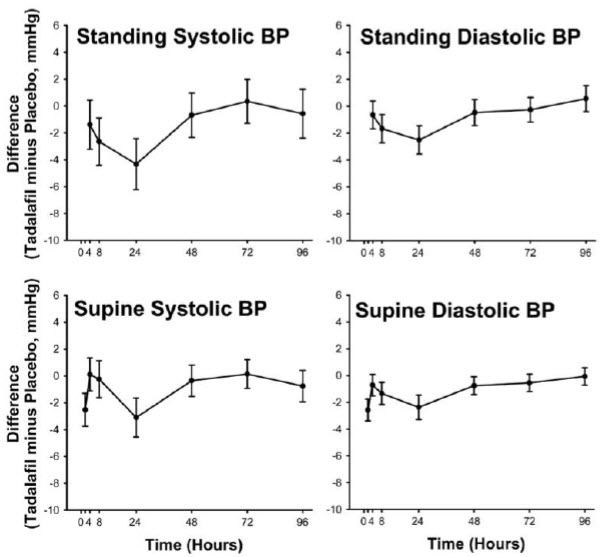
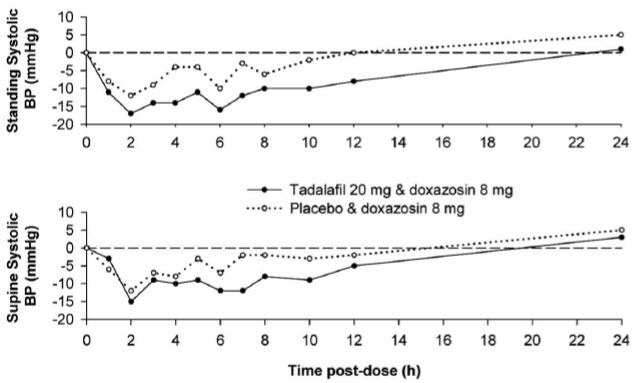
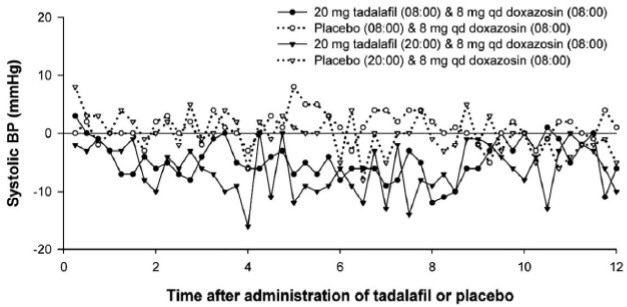
Cardiovascular Risk : Administer nitrates concomitantly only in life-threatening situations under close medical supervision. ( 5.1 ) Potential for Drug Interactions when taking ENTADFI : Use alpha-blockers, antihypertensives, strong CYP3A4 inhibitors and alcohol with caution due to the potential for symptomatic hypotension. ( 5.2 ), ( 5.3 ), ( 5.12 ) Consideration of Other Urological Conditions Prior to Initiation of Treatment for BPH : Carefully monitor patients with large residual urinary volume and/or severely diminished urinary flow for obstructive uropathy. Prostate cancer and BPH may coexist. ( 5.4 ) Effects of PSA and the Use of PSA in Prostate Cancer Detection : PSA reduction by approximately 50% within six months of treatment can be seen which can affect interpretation of serial and isolated PSA values. Evaluate any confirmed increase in PSA as it may signal the presence of prostate cancer. ( 5.5 ) Increased Risk of High-Grade Prostate Cancer : Increased incidence of high-grade prostate cancer has been observed. ( 5.6 ) Risk to Male Fetus from Topical ENTADFI Exposure to Pregnant Females : Pregnant women should not handle crushed or open ENTADFI capsules. ( 5.7 ) Hypersensitivity Reactions : Immediately discontinue if a hypersensitivity reaction occurs. ( 5.8 ) Prolonged Erection and Priapism : Use with caution in patients predisposed to priapism. Advise patients to seek emergency treatment if an erection lasts more than 4 hours. ( 5.9 ) Ocular Adverse Reactions : Stop use in the event of a sudden loss of vision in one or both eyes. Such an event may be a sign of non-arteritic anterior ischemic optic neuropathy (NAION). Use with caution in patients at increased risk of NAION. ( 5.10 ) Sudden Hearing Loss : Stop use and seek prompt medical attention. ( 5.11 ) 5.1 Cardiovascular Risk ENTADFI is contraindicated in patients taking any form of organic nitrate, either regularly and/or intermittently [see Contraindications ( 4 )] . Discuss with patients the appropriate action in the event that they experience anginal chest pain requiring nitroglycerin following intake of ENTADFI. In such a patient, who has taken ENTADFI, where nitrate administration is deemed medically necessary for a life-threatening situation, at least 48 hours should have elapsed after the last dose of ENTADFI before nitrate administration is considered. In such circumstances, nitrates should still only be administered under close medical supervision with appropriate hemodynamic monitoring. Therefore, advise patients who experience anginal chest pain after taking ENTADFI to seek immediate medical attention [see Contraindications ( 4 )] . Patients with left ventricular outflow obstruction, (e.g., aortic stenosis and idiopathic hypertrophic subaortic stenosis) can be sensitive to the action of vasodilators, including PDE5 inhibitors. The following groups of patients with cardiovascular disease were not included in clinical safety and efficacy trials for tadalafil, and therefore until further information is available, ENTADFI is not recommended for the following groups of patients: myocardial infarction within the last 90 days unstable angina or angina occurring during sexual intercourse New York Heart Association Class 2 or greater heart failure in the last 6 months uncontrolled arrhythmias, hypotension (<90/50 mm Hg), or uncontrolled hypertension stroke within the last 6 months. As with other PDE5 inhibitors, tadalafil, a component of ENTADFI, has mild systemic vasodilatory properties that may result in transient decreases in blood pressure. In a clinical pharmacology study, tadalafil 20 mg resulted in a mean maximal decrease in supine blood pressure, relative to placebo, of 1.6/0.8 mm Hg in healthy subjects [see Clinical Pharmacology ( 12.2 )] . While this effect should not be of consequence in most patients, prior to prescribing ENTADFI, carefully consider whether patients with underlying cardiovascular disease could be affected adversely by such vasodilatory effects. Patients with severely impaired autonomic control of blood pressure may be particularly sensitive to the actions of vasodilators, including PDE5 inhibitors. 5.2 Potential for Drug Interactions when Taking ENTADFI ENTADFI provides continuous plasma tadalafil levels. Consider this when evaluating the potential for ENTADFI interactions with medications (e.g., nitrates, alpha-blockers, anti-hypertensives and strong inhibitors of CYP3A4) and with substantial consumption of alcohol [see Drug Interactions ( 7 )] . 5.3 Concomitant Use with Alpha-blockers or Antihypertensives Discuss with patients the potential for ENTADFI to augment the blood-pressure-lowering effect of alpha-blockers and antihypertensive medications [see Drug Interactions ( 7.1 ) and Clinical Pharmacology ( 12.2 )] . Caution is advised when PDE5 inhibitors are coadministered with alpha-blockers. PDE5 inhibitors, including ENTADFI, and alpha-adrenergic blocking agents are both vasodilators with blood-pressure-lowering effects. When vasodilators are used in combination, an additive effect on blood pressure may be anticipated. In some patients, concomitant use of these two drug classes can lower blood pressure significantly [see Drug Interactions ( 7.2 ) and Clinical Pharmacology ( 12.2 )] , which may lead to symptomatic hypotension (e.g., fainting). Consider the following: BPH The efficacy of the coadministration of an alpha-blocker and ENTADFI for the treatment of BPH has not been adequately studied, and due to the potential vasodilatory effects of combined use resulting in blood pressure lowering, the combination of ENTADFI and alpha-blockers is not recommended for the treatment of BPH [see Drug Interactions ( 7.2 ), and Clinical Pharmacology ( 12.2 )] . Discontinue alpha-blockers at least one day prior to starting ENTADFI for once daily use for the treatment of BPH. 5.4 Consideration of Other Urological Conditions Prior to Initiating Treatment for BPH Prior to initiating treatment with ENTADFI for BPH, consider whether the patient has other urological conditions that may cause similar symptoms. In addition, prostate cancer and BPH may coexist. Carefully monitor patients with large residual urinary volume and/or severely diminished urinary flow for obstructive uropathy. These patients may not be candidates for ENTADFI therapy. 5.5 Effects on Prostate Specific Antigen (PSA) and the Use of PSA in Prostate Cancer Detection In clinical studies, finasteride, a component of ENTADFI, reduced serum PSA concentration by approximately 50% within six months of treatment. This decrease is predictable over the entire range of PSA values in patients with symptomatic BPH, although it may vary in individuals. For interpretation of serial PSAs in men taking ENTADFI, a new PSA baseline should be established at least six months after starting treatment and PSA monitored periodically thereafter. Any confirmed increase from the lowest PSA value while on ENTADFI may signal the presence of prostate cancer and should be evaluated, even if PSA levels are still within the normal range for men not taking a 5?-reductase inhibitor. Non-compliance with ENTADFI therapy may also affect PSA test results. To interpret an isolated PSA value in patients treated with ENTADFI for six months or more, double the PSA values for comparison with normal ranges in untreated men. These adjustments preserve the utility of PSA to detect prostate cancer in men treated with ENTADFI. ENTADFI may also cause decreases in serum PSA in the presence of prostate cancer. The ratio of free to total PSA (percent free PSA) remains constant even under the influence of ENTADFI. If clinicians elect to use percent free PSA as an aid in the detection of prostate cancer in men undergoing ENTADFI therapy, no adjustment to its value appears necessary. 5.6 Increased Risk of High-Grade Prostate Cancer Use of 5?-reductase inhibitors, including ENTADFI, may increase the risk of development of high-grade prostate cancer. Men aged 55 years and over with a normal digital rectal examination and PSA less than or equal to 3.0 ng/mL at baseline taking finasteride, a component of ENTADFI (5 mg daily) in the 7-year Prostate Cancer Prevention Trial (PCPT) had an increased risk of Gleason score 8 to 10 prostate cancer (finasteride 1.8% vs placebo 1.1%) [See Adverse Reactions ( 6.1 )] . Similar results were observed in a 4-year placebo-controlled clinical trial with a different 5?-reductase inhibitor. Whether the effect of 5?-reductase inhibitors to reduce prostate volume, or study-related factors, impacted the results of these studies has not been established. 5.7 Risk to Male Fetus from Topical ENTADFI Exposure to Pregnant Females ENTADFI is contraindicated in pregnant females and is not indicated for use in females. Based on animal studies and the mechanism of action of finasteride, ENTADFI may cause abnormal development of external genitalia in a male fetus if administered to a pregnant female. Pregnant females should not handle crushed or open ENTADFI capsules because of the possibility of absorption of finasteride and the subsequent potential risk to a male fetus. If a pregnant female comes in contact with crushed or broken ENTADFI capsules, the contact area should be washed immediately with soap and water [see Contraindications ( 4 ), Use in Specific Populations ( 8.1 )] . 5.8 Hypersensitivity Reactions ENTADFI is contraindicated in patients with a history of hypersensitivity reactions to finasteride, tadalafil, or to any component of ENTADFI [see Contraindications ( 4 )] . Immediately discontinue ENTADFI if a hypersensitivity reaction occurs. Hypersensitivity reactions have included Stevens-Johnson syndrome, exfoliative dermatitis, pruritis, urticaria, and angioedema [see Adverse Reactions ( 6.2 )] . 5.9 Prolonged Erection and Priapism Instruct patients who have an erection lasting greater than 4 hours, whether painful or not, to seek emergency medical attention. Use ENTADFI with caution in patients who have conditions that might predispose them to priapism (such as sickle cell anemia, multiple myeloma, or leukemia), or in patients with anatomical deformation of the penis (such as angulation, cavernosal fibrosis, or Peyronie's disease). There have been rare reports of prolonged erections greater than 4 hours and priapism (painful erections greater than 6 hours in duration) for this class of compounds. Priapism, if not treated promptly, can result in irreversible damage to the erectile tissue. 5.10 Ocular Adverse Reactions Advise patients to stop use of all phosphodiesterase type 5 (PDE5) inhibitors, including ENTADFI, and seek medical attention in the event of a sudden loss of vision in one or both eyes. Such an event may be a sign of non-arteritic anterior ischemic optic neuropathy (NAION), a rare condition and a cause of decreased vision, including permanent loss of vision, that has been reported rarely postmarketing in temporal association with the use of all PDE5 inhibitors. Based on published literature, the annual incidence of NAION is 2.5 to 11.8 cases per 100,000 in males aged 50 years and older. Consider whether patients with underlying NAION risk factors could be adversely affected by use of PDE5 inhibitors. Individuals who have already experienced NAION are at increased risk of NAION recurrence. Therefore, use PDE5 inhibitors, including ENTADFI, with caution in these patients and only when the anticipated benefits outweigh the risks. Individuals with "crowded" optic disc are also considered at greater risk for NAION compared to the general population; however, evidence is insufficient to support screening of prospective users of PDE5 inhibitors, including ENTADFI, for this uncommon condition. Patients with known hereditary degenerative retinal disorders, including retinitis pigmentosa, were not included in the clinical trials, and use of ENTADFI in these patients is not recommended. An observational case-crossover study evaluated the risk of NAION when PDE5 inhibitor use, as a class, occurred immediately before NAION onset (within 5 half-lives), compared to PDE5 inhibitor use in a prior time period. The results suggest an approximate 2-fold increase in the risk of NAION, with a risk estimate of 2.15 (95% CI 1.06, 4.34). A similar study reported a consistent result, with a risk estimate of 2.27 (95% CI 0.99, 5.20). Other risk factors for NAION, such as the presence of "crowded" optic disc, may have contributed to the occurrence of NAION in these studies. Neither the rare postmarketing reports, nor the association of PDE5 inhibitor use and NAION in the observational studies, substantiate a causal relationship between PDE5 inhibitor use and NAION [see Adverse Reactions ( 6.2 )] . 5.11 Sudden Hearing Loss Advise patients to stop taking ENTADFI and seek prompt medical attention in the event of sudden decrease or loss of hearing. These events, which may be accompanied by tinnitus and dizziness, have been reported in temporal association to the intake of PDE5 inhibitors, including ENTADFI. It is not possible to determine whether these events are related directly to the use of PDE5 inhibitors, such as ENTADFI, or to other factors [see Adverse Reactions ( 6.1 , 6.2 )] . 5.12 Concomitant Use with Alcohol Inform patients that both alcohol and tadalafil, a PDE5 inhibitor and a component of ENTADFI, act as mild vasodilators. When mild vasodilators are taken in combination, blood-pressure-lowering effects of each individual compound may be increased. Inform patients that substantial consumption of alcohol (e.g., 5 units or greater) in combination with ENTADFI can increase the potential for orthostatic signs and symptoms, including increase in heart rate, decrease in standing blood pressure, dizziness, and headache [see Drug Interactions ( 7.3 )] . 5.13 Concomitant Use with Strong Inhibitors of Cytochrome P450 3A4 (CYP3A4) Tadalafil, a component of ENTADFI, is metabolized predominantly by CYP3A4 in the liver. ENTADFI is not recommended in patients taking strong inhibitors of CYP3A4 [see Drug Interactions ( 7.1 ), Clinical Pharmacology ( 12.3 )] . 5.14 Effects on Bleeding Studies in vitro have demonstrated that tadalafil, a component of ENTADFI, is a selective inhibitor of PDE5. PDE5 is found in platelets. When administered in combination with aspirin, tadalafil 20 mg did not prolong bleeding time, relative to aspirin alone. ENTADFI has not been administered to patients with bleeding disorders or significant active peptic ulceration. Although tadalafil, a component of ENTADFI, has not been shown to increase bleeding times in healthy subjects, use ENTADFI with caution in patients with bleeding disorders or significant active peptic ulceration after a careful risk-benefit assessment.
CYP3A4 inducers : Concomitant use may increase tadalafil exposure. Use is not recommended. ( 7.2 ) 7.1 Effects of Other Drugs on ENTADFI CYP3A4 (e.g., Ketoconazole) - Concomitant use of strong inhibitors (e.g., ketoconazole) of CYP3A4 is not recommended as they may increase tadalafil exposure. 7.2 Effects of ENTADFI on Other Drugs Nitrates - Administration of ENTADFI to patients who are using any form of organic nitrate, is contraindicated. In clinical pharmacology studies, tadalafil was shown to potentiate the hypotensive effect of nitrates. In a patient who has taken ENTADFI, where nitrate administration is deemed medically necessary in a life-threatening situation, at least 48 hours should elapse after the last dose of ENTADFI before nitrate administration is considered. In such circumstances, nitrates should still only be administered under close medical supervision with appropriate hemodynamic monitoring [see Contraindications ( 4 ), and Clinical Pharmacology ( 12.2 )] . Guanylate Cyclase Stimulators - Administration of ENTADFI to patients taking a guanylate cyclase (GC) stimulator is contraindicated. ENTADFI may potentiate the hypotensive effects of GC stimulators [see Contraindications ( 4 )]. Alpha-Blockers - Caution is advised when PDE5 inhibitors are coadministered with alpha-blockers. PDE5 inhibitors, including ENTADFI, and alpha-adrenergic blocking agents are both vasodilators with blood-pressure-lowering effects. When vasodilators are used in combination, an additive effect on blood pressure may be anticipated [see Warnings and Precautions ( 5.3 ), and Clinical Pharmacology ( 12.2 )] . Antihypertensives - PDE5 inhibitors, including tadalafil, are mild systemic vasodilators. Clinical pharmacology studies were conducted to assess the effect of tadalafil on the potentiation of the blood-pressure-lowering effects of selected antihypertensive medications (amlodipine, angiotensin II receptor blockers, bendrofluazide, enalapril, and metoprolol). Small reductions in blood pressure occurred following coadministration of tadalafil with these agents compared with placebo [see Warnings and Precautions ( 5.3 ) and Clinical Pharmacology ( 12.2 )] . 7.3 Alcohol Both alcohol and tadalafil, a PDE5 inhibitor, act as mild vasodilators. When mild vasodilators are taken in combination, blood-pressure-lowering effects of each individual compound may be increased. Substantial consumption of alcohol (e.g., 5 units or greater) in combination with ENTADFI can increase the potential for orthostatic signs and symptoms, including increase in heart rate, decrease in standing blood pressure, dizziness, and headache. Tadalafil did not affect alcohol plasma concentrations and alcohol did not affect tadalafil plasma concentrations [see Warnings and Precautions ( 5.12 ) and Clinical Pharmacology ( 12.2 )] .