
İHALE DÜNYASI
İHALE DÜNYASI
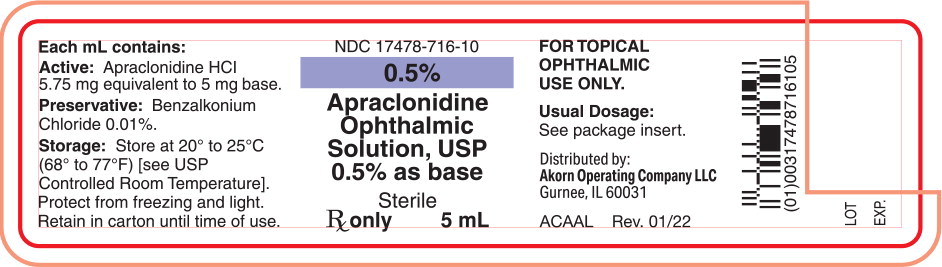
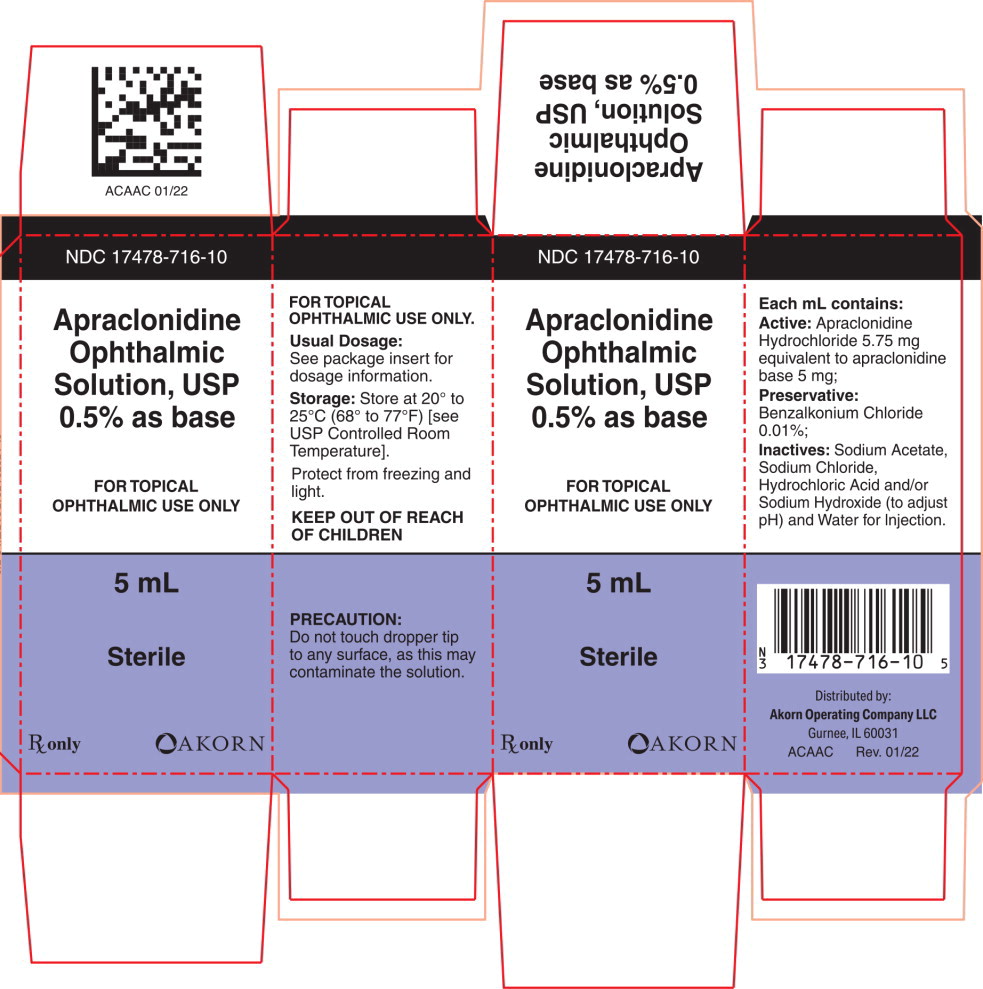
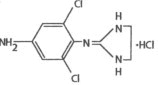
Apraclonidine Ophthalmic Solution, USP 0.5% as base contains apraclonidine hydrochloride, an alpha adrenergic agonist, in a sterile isotonic solution for topical application to the eye. Apraclonidine hydrochloride is a white to off-white powder and is highly soluble in water. Its chemical name is 2-[(4-amino-2,6 dichlorophenyl) imino]imidazolidine monohydrochloride with an empirical formula of C 9 H 11 Cl 3 N 4 and a molecular weight of 281.57. The chemical structure of apraclonidine hydrochloride is: Each mL of Apraclonidine Ophthalmic Solution, USP 0.5% as base contains: Active: apraclonidine hydrochloride 5.75 mg equivalent to apraclonidine base 5 mg; Inactives: sodium acetate, sodium chloride, sodium hydroxide and/or hydrochloric acid may be added to adjust pH (4.4 to 7.8) and water for injection; Preservative: benzalkonium chloride 0.01%. Chemical Structure
Apraclonidine Ophthalmic Solution, USP 0.5% as base is indicated for short-term adjunctive therapy in patients on maximally tolerated medical therapy who require additional IOP reduction. Patients on maximally tolerated medical therapy who are treated with Apraclonidine Ophthalmic Solution, USP 0.5% as base to delay surgery should have frequent follow-up examinations and treatment should be discontinued if the intraocular pressure rises significantly. The addition of Apraclonidine Ophthalmic Solution, USP 0.5% as base to patients already using two aqueous suppressing drugs (i.e., beta-blocker plus carbonic anhydrase inhibitor) as part of their maximally tolerated medical therapy may not provide additional benefit. This is because Apraclonidine Ophthalmic Solution, USP 0.5% as base is an aqueous suppressing drug and the addition of a third aqueous suppressant may not significantly reduce IOP. The IOP lowering efficacy of Apraclonidine Ophthalmic Solution, USP 0.5% as base diminishes over time in some patients. This loss of effect, or tachyphylaxis, appears to be an individual occurrence with a variable time of onset and should be closely monitored. The benefit for most patients is less than one month.
One to two drops of apraclonidine ophthalmic solution should be instilled in the affected eye(s) three times daily. Since apraclonidine ophthalmic solution will be used with other ocular glaucoma therapies, an approximate 5 minute interval between instillation of each medication should be practiced to prevent washout of the previous dose. NOT FOR INJECTION INTO THE EYE. NOT FOR ORAL INGESTION.
Apraclonidine ophthalmic solution is contraindicated in patients with hypersensitivity to apraclonidine or any other component of this medication, as well as systemic clonidine. It is also contraindicated in patients receiving monoamine oxidase inhibitors (MAO inhibitors).
In clinical studies the overall discontinuation rate related to apraclonidine ophthalmic solution was 15%. The most commonly reported events leading to discontinuation included (in decreasing order of frequency) hyperemia, pruritus, tearing, discomfort, lid edema, dry mouth, and foreign body sensation. The following adverse reactions (incidences) were reported in clinical studies of apraclonidine ophthalmic solution as being possibly, probably, or definitely related to therapy: Ocular The following adverse reactions were reported in 5 to 15% of the patients: discomfort, hyperemia, and pruritus. The following adverse reactions were reported in 1 to 5% of the patients: blanching, blurred vision, conjunctivitis, discharge, dry eye, foreign body sensation, lid edema, and tearing. The following adverse reactions were reported in less than 1% of the patients: abnormal vision, blepharitis, blepharoconjunctivitis, conjunctival edema, conjunctival follicles, corneal erosion, corneal infiltrate, corneal staining, edema, irritation, keratitis, keratopathy, lid disorder, lid erythema, lid margin crusting, lid retraction, lid scales, pain, photophobia. Nonocular Dry mouth occurred in approximately 10% of the patients. The following adverse reactions were reported in less than 3% of the patients: abnormal coordination, asthenia, arrhythmia, asthma, chest pain, constipation, contact dermatitis, depression, dermatitis, dizziness, dry nose, dyspnea, facial edema, headache, insomnia, malaise, myalgia, nausea, nervousness, paresthesia, parosmia, peripheral edema, pharyngitis, rhinitis, somnolence, and taste perversion. Clinical practice The following events have been identified during post-marketing use of apraclonidine ophthalmic solution in clinical practice. Because they are reported voluntarily from a population of unknown size, estimates of frequency cannot be made. The events, which have been chosen for inclusion due to either their seriousness, frequency of reporting, possible causal connection to apraclonidine ophthalmic solution, or a combination of these factors, include: bradycardia and hypersensitivity.
Not for injection or oral ingestion. FOR TOPICAL OPHTHALMIC USE ONLY.
Apraclonidine should not be used in patients receiving MAO inhibitors (see CONTRAINDICATIONS ). Although no specific drug interactions with topical glaucoma drugs or systemic medications were identified in clinical studies of apraclonidine ophthalmic solution, the possibility of an additive or potentiating effect with CNS depressants (alcohol, barbiturates, opiates, sedatives, anesthetics) should be considered. Tricyclic antidepressants have been reported to blunt the hypotensive effect of systemic clonidine. It is not known whether the concurrent use of these agents with apraclonidine can lead to a reduction in IOP lowering effect. No data on the level of circulating catecholamines after apraclonidine withdrawal are available. Caution, however, is advised in patients taking tricyclic antidepressants which can affect the metabolism and uptake of circulating amines. An additive hypotensive effect has been reported with the combination of systemic clonidine and neuroleptic therapy. Systemic clonidine may inhibit the production of catecholamines in response to insulin-induced hypoglycemia and mask the signs and symptoms of hypoglycemia. Since apraclonidine may reduce pulse and blood pressure, caution in using drugs such as beta-blockers (ophthalmic and systemic), antihypertensives, and cardiac glycosides is advised. Patients using cardiovascular drugs concurrently with apraclonidine ophthalmic solution should have pulse and blood pressure frequently monitored. Caution should be exercised with simultaneous use of clonidine and other similar pharmacologic agents.