
İHALE DÜNYASI
İHALE DÜNYASI
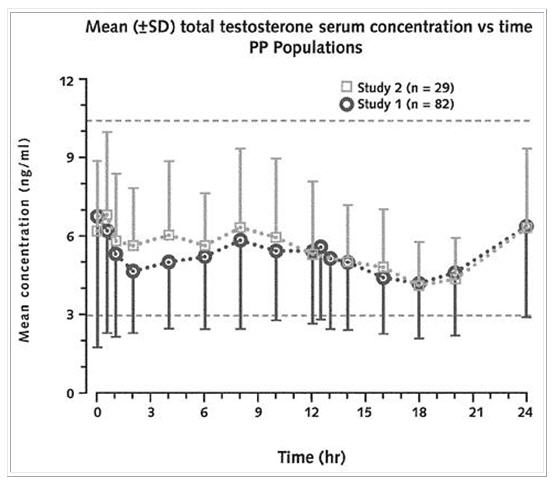
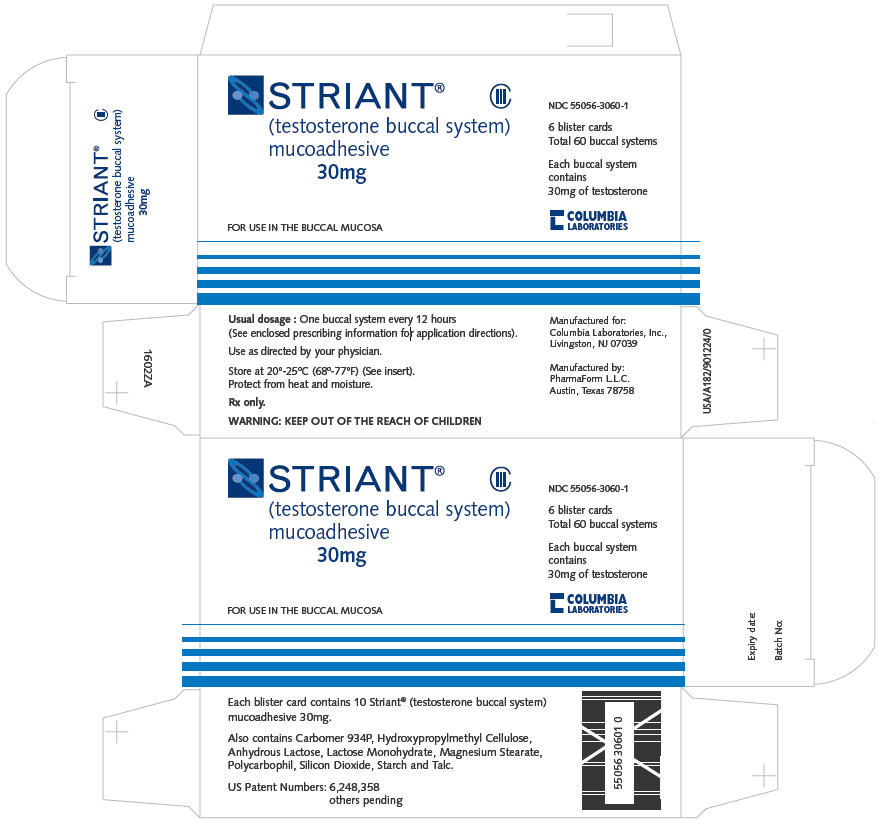
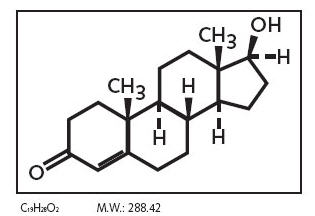
Striant (R) (testosterone buccal system) is designed to adhere to the gum or inner cheek. It provides a controlled and sustained release of testosterone through the buccal mucosa as the buccal system gradually hydrates. Insertion of Striant (R) twice a day, in the morning and in the evening, provides continuous systemic delivery of testosterone. Striant (R) is a white to off-white colored, monoconvex, tablet-like, mucoadhesive buccal system. Striant (R) adheres to the gum tissue above the incisors, with the flat surface facing the cheek mucosa. The active ingredient in Striant (R) is testosterone. Each buccal system contains 30 mg of testosterone. Testosterone USP is practically white crystalline powder chemically described as 17-beta hydroxyandrost-4-en-3one. Chemical Structure: Other pharmacologically inactive ingredients in Striant (R) are anhydrous lactose NF, carbomer 934P, hypromellose USP, magnesium stearate NF, lactose monohydrate NF, polycarbophil USP, colloidal silicon dioxide NF, starch NF and talc USP.
Striant (R) is indicated for replacement therapy in males for conditions associated with a deficiency or absence of endogenous testosterone: Primary hypogonadism (congenital or acquired) - testicular failure due to cryptorchidism, bilateral torsion, orchitis, vanishing testis syndrome, orchidectomy, Klinefelter's syndrome, chemotherapy, or toxic damage from alcohol or heavy metals. These men usually have low serum testosterone levels and gonadotropins (FSH, LH) above the normal range. Hypogonadotropic hypogonadism (congenital or acquired) -- idiopathic gonadotropin or LHRH deficiency, or pituitary hypothalamic injury from tumors, trauma, or radiation. These patients have low serum testosterone levels but have gonadotropins in the normal or low range.
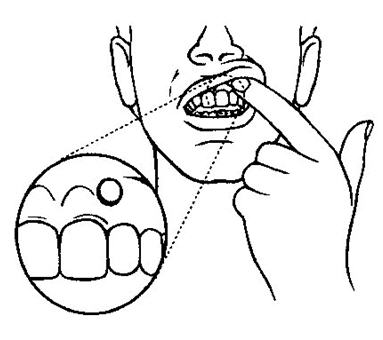
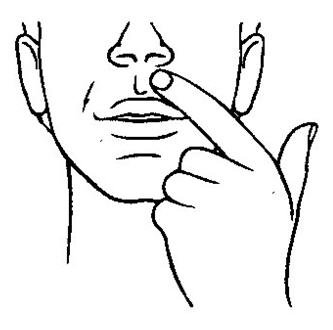
The recommended dosing schedule for Striant (R) is the application of one buccal system (30 mg) to the gum region twice daily; morning and evening (about 12 hours apart). Striant (R) should be placed in a comfortable position just above the incisor tooth (on either side of the mouth). With each application, Striant (R) should be rotated to alternate sides of the mouth. Upon opening the packet, the rounded side surface of the buccal system should be placed against the gum and held firmly in place with a finger over the lip and against the product for 30 seconds to ensure adhesion. Striant (R) is designed to stay in position until removed. If the buccal system fails to properly adhere to the gum or should fall off during the 12-hour dosing interval, the old buccal system should be removed and a new one applied. If the buccal system falls out of position within 4 hours prior to the next dose, a new buccal system should be applied and it may remain in place until the time of next regularly scheduled dosing. Patients should take care to avoid dislodging the buccal system. Patients should check to see if Striant (R) is in place following toothbrushing, use of mouthwash and consumption of food or alcoholic/non-alcoholic beverages. Striant (R) should not be chewed or swallowed. To remove Striant (R) , gently slide it downwards from the gum towards the tooth to avoid scratching the gum.
Androgens are contraindicated in men with carcinoma of the breast or known or suspected carcinoma of the prostate. Striant (R) is not indicated for use in women, and must not be used in women. Testosterone supplements may cause fetal harm. Striant (R) should not be used in patients with known hypersensitivity to any of its ingredients, including testosterone USP that is chemically synthesized from soy.
In all clinical studies combined, a total of 308 patients were treated with Striant (R) for up to 12 months Twelve Week Trials In the pivotal, Phase 3, open-label controlled study (Study 1), 98 patients received Striant (R) for up to 12 weeks. Adverse events judged possibly, probably, or definitely related to the use of Striant (R) and reported by >/= 1% of patients in Study 1 are listed in Table 2. Table 2. Incidences of Adverse Events Possibly, Probably or Definitely Related Use of Striant (R) in Study 1 Adverse event Striant (R) (n=98) Gum or Mouth Irritation 9.2% Taste Bitter 4.1% Gum Pain 3.1% Gum Tenderness 3.1% Headache 3.1% Gum Edema 2.0% Taste Perversion 2.0% Please see " Gum-related adverse events and gum examinations " subsection for further information. The majority of gum-related adverse events were transient. Gum irritation generally resolved in 1 to 8 days. Gum tenderness resolved in 1 to 14 days. The following adverse events judged possibly, probably or definitely related to the use of Striant (R) occurred in 1 patient each in Study 1: abdominal cramp, acne, anxiety, asthma (acute), breast enlargement, breast pain, buccal mucosal roughening, difficulty in micturition, fatigue, gingivitis, gum blister, gustatory sense diminished, hematocrit increased, lipids serum increased, liver function tests abnormal, nose edema, stinging of lips, and toothache. There was one additional 12-week study in 12 patients. In this study, additional adverse events judged at least possibly related to Striant (R) and reported by 1 patient each included emotional lability and hypertension. Long-Term Extension Trials In two long-term extension trials, a total of 117 and 51 patients received Striant (R) for at least 6 months and 1 year, respectively. Of 117 patients treated for at least 6 months, adverse events judged possibly, probably, or definitely related to treatment and reported by 1 patient each included: anxiety, buccal inflammation, depression, dry mouth, gastrointestinal disorder, gum redness, hypertension, infection, medication error, nausea, pruritis, renal function abnormal, stomatitis, taste bitter, taste perversion, and toothache. Polycythemia and increased serum prostate specific antigen (PSA) were reported in three and two patients, respectively. Adverse events reported in the 51 patients treated for at least one year were similar to those reported after 6 months of treatment and lower in incidence. Gum-related adverse events and gum examinations In the pivotal controlled study (Study 1), all reported gum-related adverse events were collected and gum examinations were conducted at Baseline and every month thereafter. In Study 1, a total of 16 patients reported 19 gum-related adverse events. Of these, ten patients (10.2%) reported 12 events of mild intensity, four patients (4.1%) reported 5 events of moderate intensity, and two patients (2.0%) reported 2 events of severe intensity. Most of these events were judged probably or definitely related to treatment with Striant (R) . Four patients (4.1%) discontinued treatment with Striant (R) due to gum or mouth-related adverse events including two with severe gum irritation, one with mouth irritation, and one with "bad taste in mouth". The majority of gum-related adverse events were transient. Gum irritation generally resolved in 1 to 8 days. Gum tenderness resolved in 1 to 14 days. In Study 1, monthly gum examinations were conducted to assess for gingivitis, gum edema, oral lesions, ulcerations or leukoplakia. No cases of ulceration or leukoplakia were observed. No new oral lesions were observed. Gingivitis was common at Baseline (32.6%), and was reduced at Week 4 (10.2%), Week 8 (10.2%) and Week 12 (11.2%). Similar findings were seen for gum edema. In the two long-term extension trials, gum examinations were conducted every 3 months while on treatment. In one of these trials, no patient had a gum abnormality, and in the other trial, moderate gingivitis and mild gum edema were reported by 1 patient each.
Prolonged use of high doses of orally active 17-alpha-alkyl androgens (e.g., methyltestosterone) have been associated with serious hepatic adverse effects (peliosis hepatis, hepatic neoplasms, cholestatic hepatitis, and jaundice). Peliosis hepatis can be a life-threatening or fatal complication. Long-term therapy with testosterone enanthate, which elevates blood levels for prolonged periods, has produced multiple hepatic adenomas. Testosterone is not known to produce these adverse effects. Geriatric patients treated with androgens may be at an increased risk for the development of prostatic hyperplasia and prostatic carcinoma. Geriatric patients and other patients with clinical or demographic characteristics that are recognized to be associated with an increased risk of prostate cancer should be evaluated for the presence of prostate cancer prior to initiation of testosterone replacement therapy. In men receiving testosterone replacement therapy, surveillance for prostate cancer should be consistent with current practices for eugonadal men (see PRECAUTIONS: Carcinogenesis, Mutagenesis, Impairment of Fertility and Laboratory Tests ). Edema with or without congestive heart failure may be a serious complication in patients with preexisting cardiac, renal, or hepatic disease. In addition to discontinuation of the drug, diuretic therapy may be required. Gynecomastia frequently develops and occasionally persists in patients being treated for hypogonadism. The treatment of hypogonadal men with testosterone esters may potentiate sleep apnea in some patients especially those with risk factors such as obesity or chronic lung diseases.
Oxyphenbutazone Concurrent administration of oxyphenbutazone and androgens may result in elevated serum levels of oxyphenbutazone. Insulin In diabetic patients, the metabolic effects of androgens may decrease blood glucose and therefore, insulin requirements. Corticosteroids Concurrent administration of testosterone with ACTH or corticosteroids may enhance edema formation and should be administered cautiously, particularly in patients with cardiac or hepatic disease.