
İHALE DÜNYASI
İHALE DÜNYASI


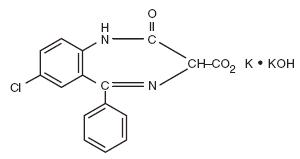
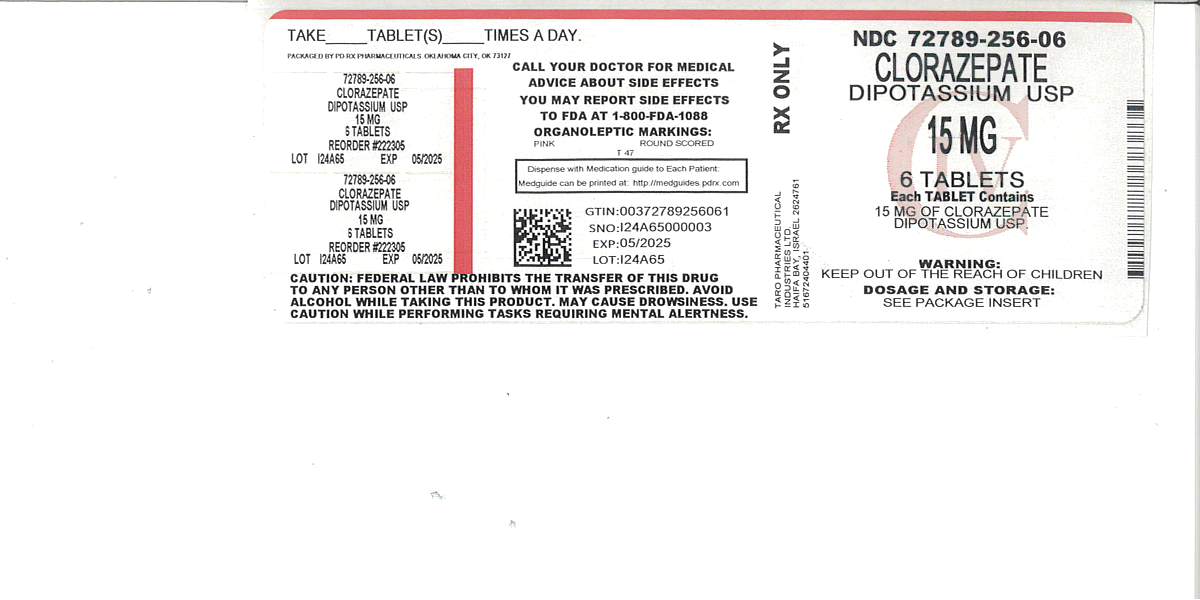
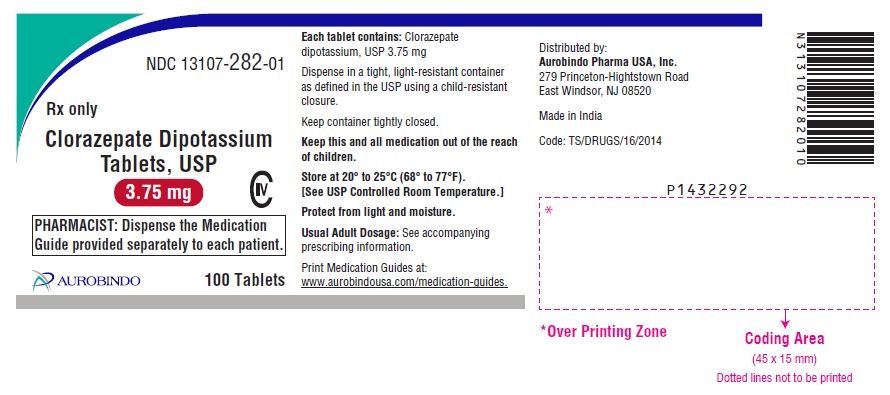
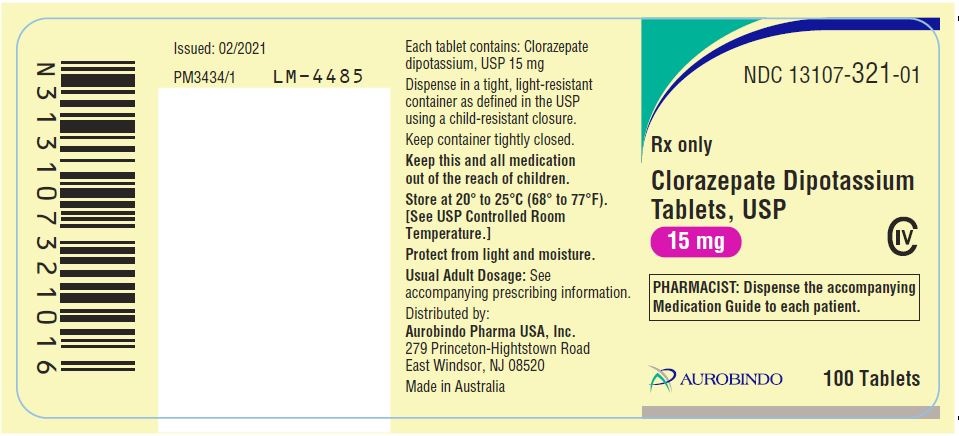
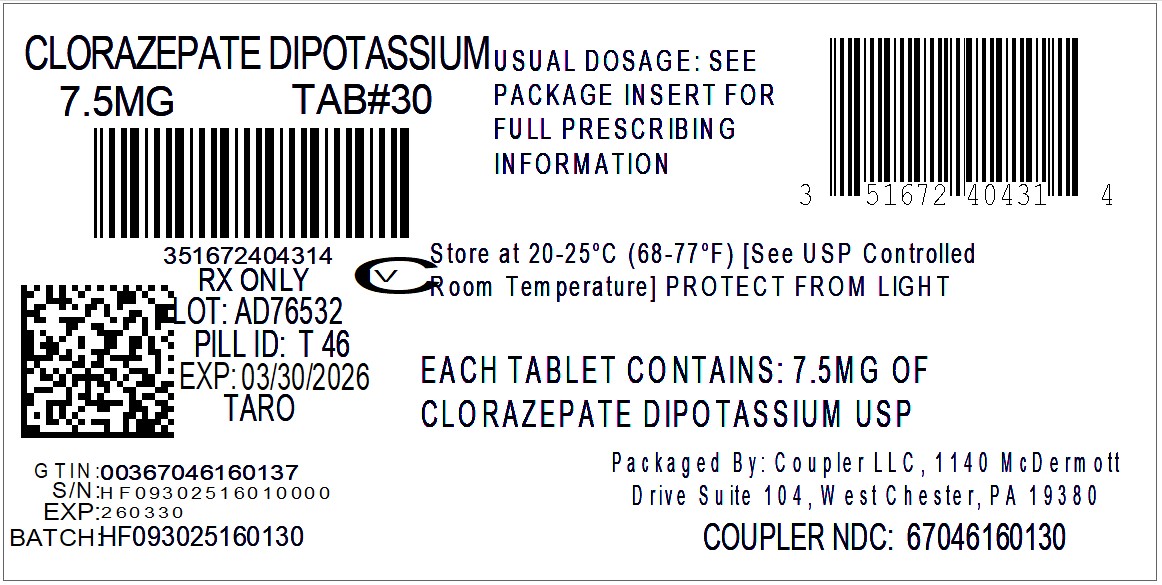
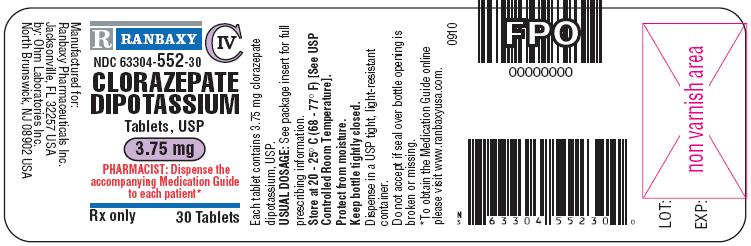
Chemically, clorazepate dipotassium is a benzodiazepine. The molecular formula is C 16 H 11 ClK 2 N 2 O 4 ; the molecular weight is 408.92; 1 H -1, 4-Benzodiazepine-3-carboxylic acid, 7-chloro-2,3-dihydro- 2-oxo-5-phenyl-, potassium salt compound with potassium hydroxide (1:1) and the structural formula may be represented as follows: The compound occurs as a light yellow, crystalline powder. It darkens on exposure to light. It is soluble in water but upon standing may precipitate from the solution, slightly soluble in alcohol and in isopropyl alcohol, practically insoluble in acetone, in benzene, in chloroform, in ether and in methylene chloride. Clorazepate dipotassium tablets, USP contain either 3.75 mg, 7.5 mg or 15 mg of clorazepate dipotassium, USP for oral administration. Inactive ingredients for clorazepate dipotassium tablets, USP: colloidal silicon dioxide, FD&C Blue No. 2 aluminum lake (3.75 mg only), FD&C Yellow No. 6 aluminum lake (7.5 mg only), FD&C Red No. 40 aluminum lake (15 mg only), magnesium oxide, magnesium stearate, microcrystalline cellulose, potassium carbonate, and potassium chloride. structural formula
Clorazepate dipotassium tablets, USP are indicated for the management of anxiety disorders or for the short-term relief of the symptoms of anxiety. Anxiety or tension associated with the stress of everyday life usually does not require treatment with an anxiolytic. Clorazepate dipotassium tablets, USP are indicated as adjunctive therapy in the management of partial seizures. The effectiveness of clorazepate dipotassium tablets, USP in long-term management of anxiety, that is, more than 4 months, has not been assessed by systematic clinical studies. Long-term studies in epileptic patients, however, have shown continued therapeutic activity. The physician should reassess periodically the usefulness of the drug for the individual patient. Clorazepate dipotassium tablets, USP are indicated for the symptomatic relief of acute alcohol withdrawal.
For the symptomatic relief of anxiety: Clorazepate dipotassium tablets are administered orally in divided doses. The usual daily dose is 30 mg. The dose should be adjusted gradually within the range of 15 to 60 mg daily in accordance with the response of the patient. In elderly or debilitated patients it is advisable to initiate treatment at a daily dose of 7.5 to 15 mg. Clorazepate dipotassium tablets may also be administered in a single dose daily at bedtime; the recommended initial dose is 15 mg. After the initial dose, the response of the patient may require adjustment of subsequent dosage. Lower doses may be indicated in the elderly patient. Drowsiness may occur at the initiation of treatment and with dosage increment. For the symptomatic relief of acute alcohol withdrawal: The following dosage schedule is recommended: 1 st 24 hours (Day 1) 30 mg initially; followed by 30 to 60 mg in divided doses 2 nd 24 hours (Day 2) 45 to 90 mg in divided doses 3 r d 24 hours (Day 3) 22.5 to 45 mg in divided doses Day 4 15 to 30 mg in divided doses Thereafter, gradually reduce the daily dose to 7.5 to 15 mg. Discontinue drug therapy as soon as patient's condition is stable. The maximum recommended total daily dose is 90 mg. Avoid excessive reductions in the total amount of drug administered on successive days. As an Adjunct to Antiepileptic Drugs: In order to minimize drowsiness, the recommended initial dosages and dosage increments should not be exceeded. Adults: The maximum recommended initial dose in patients over 12 years old is 7.5 mg three times a day. Dosage should be increased by no more than 7.5 mg every week and should not exceed 90 mg/day. Children (9 to 12 years): The maximum recommended initial dose is 7.5 mg two times a day. Dosage should be increased by no more than 7.5 mg every week and should not exceed 60 mg/day.
Clorazepate dipotassium tablets are contraindicated in patients with a known hypersensitivity to the drug and in those with acute narrow angle glaucoma.
The side effect most frequently reported was drowsiness. Less commonly reported (in descending order of occurrence) were: dizziness, various gastrointestinal complaints, nervousness, blurred vision, dry mouth, headache, and mental confusion. Other side effects included insomnia, transient skin rashes, fatigue, ataxia, genitourinary complaints, irritability, diplopia, depression, tremor, and slurred speech. There have been reports of abnormal liver and kidney function tests and of decrease in hematocrit. Decrease in systolic blood pressure has been observed. To report SUSPECTED ADVERSE REACTIONS, contact Ranbaxy Pharmaceuticals Inc. at 1-888-Ranbaxy (726-2299) or FDA at 1-800-FDA-1088 or www.fda.gov/medwatch.
Use in Depressive Neuroses or Psychotic Reactions: Clorazepate dipotassium tablets are not recommended for use in depressive neuroses or in psychotic reactions. Use in Children: Because of the lack of sufficient clinical experience, clorazepate dipotassium tablets are not recommended for use in patients less than 9 years of age. Interference with Psychomotor Performance: Patients taking clorazepate dipotassium tablets should be cautioned against engaging in hazardous occupations requiring mental alertness, such as operating dangerous machinery including motor vehicles. Concomitant Use with CNS Depressants: Since clorazepate dipotassium has a central nervous system depressant effect, patients should be advised against the simultaneous use of other CNS depressant drugs, and cautioned that the effects of alcohol may be increased. Physical and Psychological Dependence: Withdrawal symptoms (similar in character to those noted with barbiturates and alcohol) have occurred following abrupt discontinuance of clorazepate. Withdrawal symptoms associated with the abrupt discontinuation of benzodiazepines have included convulsions, delirium, tremor, abdominal and muscle cramps, vomiting, sweating, nervousness, insomnia, irritability, diarrhea, and memory impairment. The more severe withdrawal symptoms have usually been limited to those patients who had received excessive doses over an extended period of time. Generally milder withdrawal symptoms have been reported following abrupt discontinuance of benzodiazepines taken continuously at therapeutic levels for several months. Consequently, after extended therapy, abrupt discontinuation of clorazepate should generally be avoided and a gradual dosage tapering schedule followed. Caution should be observed in patients who are considered to have a psychological potential for drug dependence. Evidence of drug dependence has been observed in dogs and rabbits which was characterized by convulsive seizures when the drug was abruptly withdrawn or the dose was reduced; the syndrome in dogs could be abolished by administration of clorazepate. Suicidal Behavior and Ideation Antiepileptic drugs (AEDs), including clorazepate dipotassium, increase the risk of suicidal thoughts or behavior in patients taking these drugs for any indication. Patients treated with any AED for any indication should be monitored for the emergence or worsening of depression, suicidal thoughts or behavior, and/or any unusual changes in mood or behavior. Pooled analyses of 199 placebo-controlled clinical trials (mono- and adjunctive therapy) of 11 different AEDs showed that patients randomized to one of the AEDs had approximately twice the risk (adjusted Relative Risk 1.8, 95% CI:1.2, 2.7) of suicidal thinking or behavior compared to patients randomized to placebo. In these trials, which had a median treatment duration of 12 weeks, the estimated incidence rate of suicidal behavior or ideation among 27,863 AED-treated patients was 0.43%, compared to 0.24% among 16,029 placebo-treated patients, representing an increase of approximately one case of suicidal thinking or behavior for every 530 patients treated. There were four suicides in drug-treated patients in the trials and none in placebo-treated patients, but the number is too small to allow any conclusion about drug effect on suicide. The increased risk of suicidal thoughts or behavior with AEDs was observed as early as one week after starting drug treatment with AEDs and persisted for the duration of treatment assessed. Because most trials included in the analysis did not extend beyond 24 weeks, the risk of suicidal thoughts or behavior beyond 24 weeks could not be assessed. The risk of suicidal thoughts or behavior was generally consistent among drugs in the data analyzed. The finding of increased risk with AEDs of varying mechanisms of action and across a range of indications suggests that the risk applies to all AEDs used for any indication. The risk did not vary substantially by age (5 to 100 years) in the clinical trials analyzed. Table 1 shows absolute and relative risk by indication for all evaluated AEDs. Table 1: Risk by indication for antiepileptic drugs in the pooled analysis Indication Placebo Patients with Events Per 1000 Patients Drug Patients with Events Per 1000 Patients Relative Risk: Incidence of Events in Drug Patients/Incidence in Placebo Patients Risk Difference: Additional Drug Patients with Events Per 1000 Patients Epilepsy 1 3.4 3.5 2.4 Psychiatric 5.7 8.5 1.5 2.9 Other 1 1.8 1.9 0.9 Total 2.4 4.3 1.8 1.9 The relative risk for suicidal thoughts or behavior was higher in clinical trials for epilepsy than in clinical trials for psychiatric or other conditions, but the absolute risk differences were similar for the epilepsy and psychiatric indications. Anyone considering prescribing clorazepate dipotassium or any other AED must balance the risk of suicidal thoughts or behavior with the risk of untreated illness. Epilepsy and many other illnesses for which AEDs are prescribed are themselves associated with morbidity and mortality and an increased risk of suicidal thoughts and behavior. Should suicidal thoughts and behavior emerge during treatment, the prescriber needs to consider whether the emergence of these symptoms in any given patient may be related to the illness being treated. Patients, their caregivers, and families should be informed that AEDs increase the risk of suicidal thoughts and behavior and should be advised of the need to be alert for the emergence or worsening of the signs and symptoms of depression, any unusual changes in mood or behavior, or the emergence of suicidal thoughts, behavior, or thoughts about self-harm. Behaviors of concern should be reported immediately to healthcare providers. Usage in Pregnancy: An increased risk of congenital malformations associated with the use of minor tranquilizers (chlordiazepoxide, diazepam, and meprobamate) during the first trimester of pregnancy has been suggested in several studies. Clorazepate dipotassium, a benzodiazepine derivative, has not been studied adequately to determine whether it, too, may be associated with an increased risk of fetal abnormality. Because use of these drugs is rarely a matter of urgency, their use during this period should almost always be avoided. The possibility that a woman of childbearing potential may be pregnant at the time of institution of therapy should be considered. Patients should be advised that if they become pregnant during therapy or intend to become pregnant they should communicate with their physician about the desirability of discontinuing the drug. To provide information regarding the effects of in utero exposure to clorazepate dipotassium, physicians are advised to recommend that pregnant patients taking clorazepate dipotassium enroll in the North American Antiepileptic Drug (NAAED) Pregnancy Registry. This can be done by calling the toll-free number 1-888-233-2334, and must be done by patients themselves. Information on the registry can also be found at the website http://www.aedpregnancyregistry.org/. Usage during Lactation: Clorazepate dipotassium tablets should not be given to nursing mothers since it has been reported that nordiazepam is excreted in human breast milk.
If clorazepate dipotassium is to be combined with other drugs acting on the central nervous system, careful consideration should be given to the pharmacology of the agents to be employed. Animal experience indicates that clorazepate dipotassium prolongs the sleeping time after hexobarbital or after ethyl alcohol, increases the inhibitory effects of chlorpromazine, but does not exhibit monoamine oxidase inhibition. Clinical studies have shown increased sedation with concurrent hypnotic medications. The actions of the benzodiazepines may be potentiated by barbiturates, narcotics, phenothiazines, monoamine oxidase inhibitors or other antidepressants. If clorazepate dipotassium tablets are used to treat anxiety associated with somatic disease states, careful attention must be paid to possible drug interaction with concomitant medication. In bioavailability studies with normal subjects, the concurrent administration of antacids at therapeutic levels did not significantly influence the bioavailability of clorazepate dipotassium tablets.